
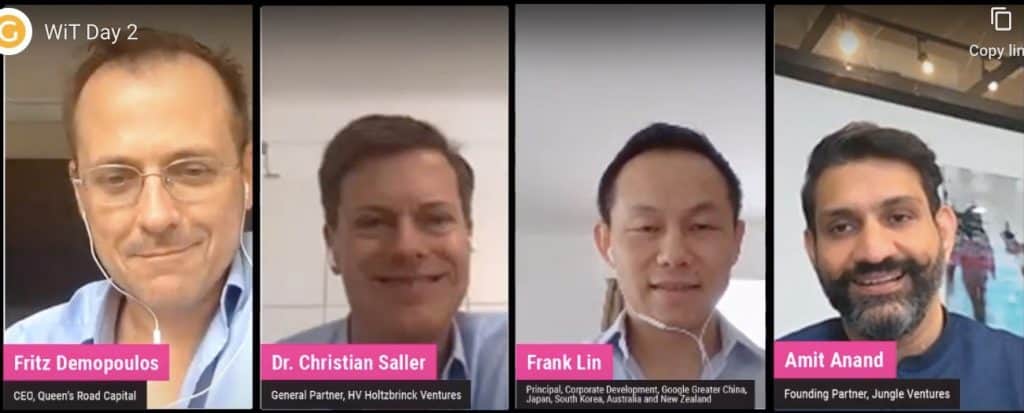
While most investors are staying away from travel due to the uncertainty of recovery, Amit Anand, founding partner of Jungle Ventures, remains excited about the space which he said has been kind to him.
He’s made two exits – Voyagin to Rakuten and Travelmob to HomeAway – and while he said it’s hard to make a call on travel “because it’s hard to understand consumer behaviour with no data to go by”, he said, “I’d still invest – I’d invest in product development, something low burn, something that will last beyond Covid, something that, when the floodgates open, will be first out of the gate.”
Anand, whose fund raised US$240 million late last year, also sits in a region that he says is unique in how it is transforming and thus his risk appetite may be different from his counterparts in other markets.
“There are 300 million new millennials in the region that are behaving so differently from their predecessors and are so like each other. This is why companies like RedDoorz (another of his portfolio companies) is able to scale across 20-30 cities in less than two years. That’s unseen before.”
Speaking at the opening panel of Day 2 of WiT Experience Week, he offered this advice to startups – focus on what’s next, not on what’s now. Citing Builder.AI, he said the founder had been building for the last four to five years “for the time he’s living now”. “He has to do a lot more but he’s building for the future.”
However, there’s no escaping the harsh reality that travel is a hard space right now.
No one has ever seen demand disappear almost 90% within weeks and that is why DR Christian Saller, general partner at HV Holtzbrinck Ventures who’s fully into travel with his investments (and his wife who works at Airbnb, an aside shared with us by moderator Fritz Demopoulous), is staying away from travel for the next one or two years.
“Long term view, I am positive, but how long is the period in between,” he said. “I am telling my companies customer focus is important but at this time, it’s really being flexible and adjusting to the situation, preserve cash, use opportunities, scale down if necessary.”
He cited an example of one of his portfolio companies who runs tours in Iceland, which scaled up but then had to shut down again with recurring wave of infections.
Anand agreed that one has to be realistic and “we need to call a spade and spade. Market feedback is really hard now. Founders need to have frank conversations with investors and call a spade a spade”.
What’s super important, both agreed, is that in the intermediate period, a year or two, startups will have to react very fast to the changes.
Dr Saller said deals are still being done – he’s done five deals over the last two months, the latest being in education tech, a platform that allows students to learn from home.
“I don’t think I will be doing any travel deals in the next couple of months, otherwise I am open to everything else.”
Anand, citing One Animation which does content creation, distribution and licensing, is hot on entertainment tech, which is where most people have spent their time on these past months.
Frank Lin, principal for corporate development for Google in Greater China, Japan, South Korea, Australia and New Zealand, said that Google takes a longterm perspective and foresees that more changes will happen in the next 10 years than in the last 30 years.
He feels it’s harder to do deals right now because there’s a “gap between what founders are looking for and what the market can bear” and he’s seeing more deals with more creative structures.
“Longterm, we believe in travel but in the short term, it is not clear what the next one or two years will look well. SaaS and collaboration software have done well but then you get surprises that some stocks are doing well when they shouldn’t – It’s hard to sense of it right now.”
However he feels there’s been less ground breaking innovation in travel in terms of tech being the core enabler than in other sectors such as entertainment.
Anand observed that industries were blurring – for example, entertainment and hospitality – and so “travel, entertainment, hospitality could be bundled together”.
Dr Saller said the hotel experience was being changed, faster check-ins, contactless tech, and there’s a trend towards more solo trips.
Lin feels that China is really leading the way in video technology and that other markets could take a leaf from its book. In Japan and South Korea, software as a service was standing out – “it’s not explosive growth but steadiness of revenue growth”.
Back to Anand’s point about product, that’s certainly been the breakout star of Covid and it is here too that both Stuart Crighton, CEO of Cleartrip and Stephan Ekbergh, CEO of Travelstart, see the opportunities.
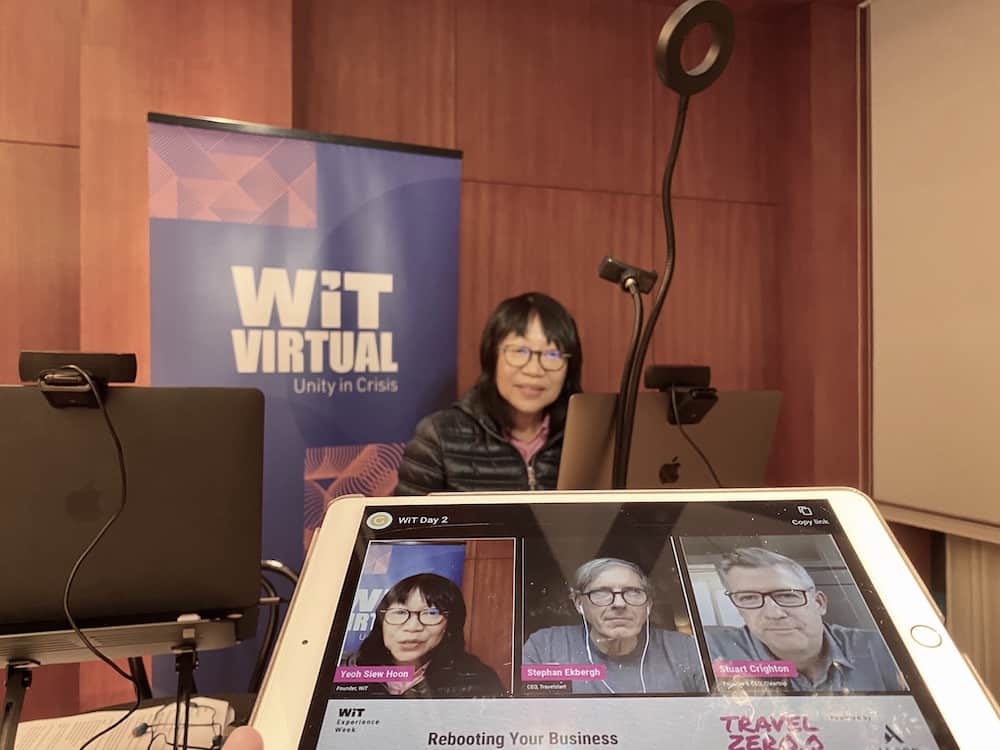
In the closing panel, Crighton said this crisis had reminded himself of why he started Cleartrip – to build something for the future – and its roots of being a scrappy, product-led startup. He’s trimmed staff from 1,300 to 350 and hunkered down on product and believes the future is about customer care, which had been coming, but has been accelerated.
He said that for the last 10 years, growth had been taken for granted and it was a matter of projecting 20% here and there. Now it’s time to build products that will make the difference.
Travelstart cut its staff from 850 to 400 and also doubled down on product for the African market. In 2019, it had been actively making acquisitions to build up an ecosystem in Africa and Ekbergh sees opportunities for Travelstart to invest in product-led startups that have solid products but may lack the resources to bring to market and scale.
“This is such an exciting time,” he said. “I’ve learnt humility, gratitude and found my warrior spirit again.”
A good note on which to start Day 3 of WiT Experience Week, “Rebuild”, when we will meet product heroes, a road warrior as well as a startup warrior, who built a business in quarantine.
And the three finalists building new products for the future, Hepstar, Dream Drive and Kyte, will pitch on October 1 at the WiT Startup Pitch Grand Finals.