You could say the hospitality industry is currently in the throes of a technological revolution. Traditional roles in hospitality will not exist in the way we know them in the near future. Naturally, changes in technology bring change in the people that work with and around it.
Pressure is building on the hospitality industry to figure out what lies ahead for the new working economy and how it can best prepare young talent for what’s to come. How can we empower the next generation to carve their own paths and build fulfilling careers in an industry in the throes of change?
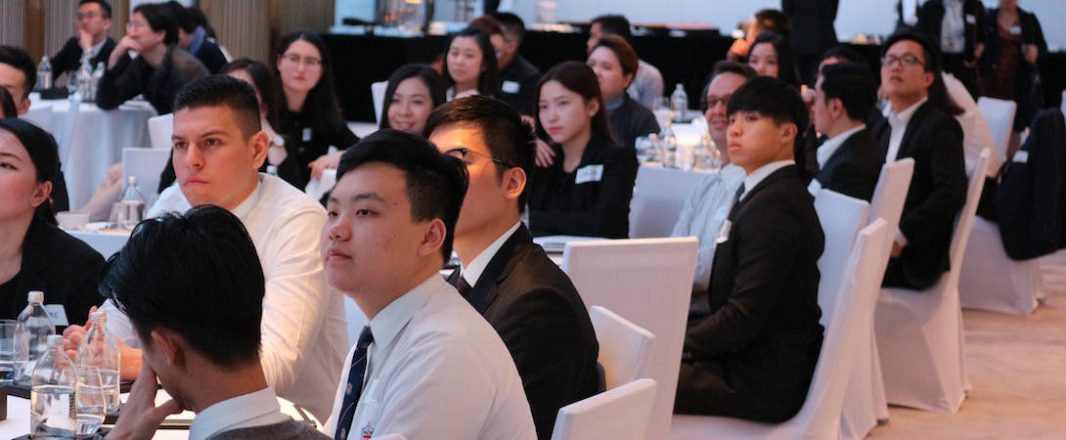
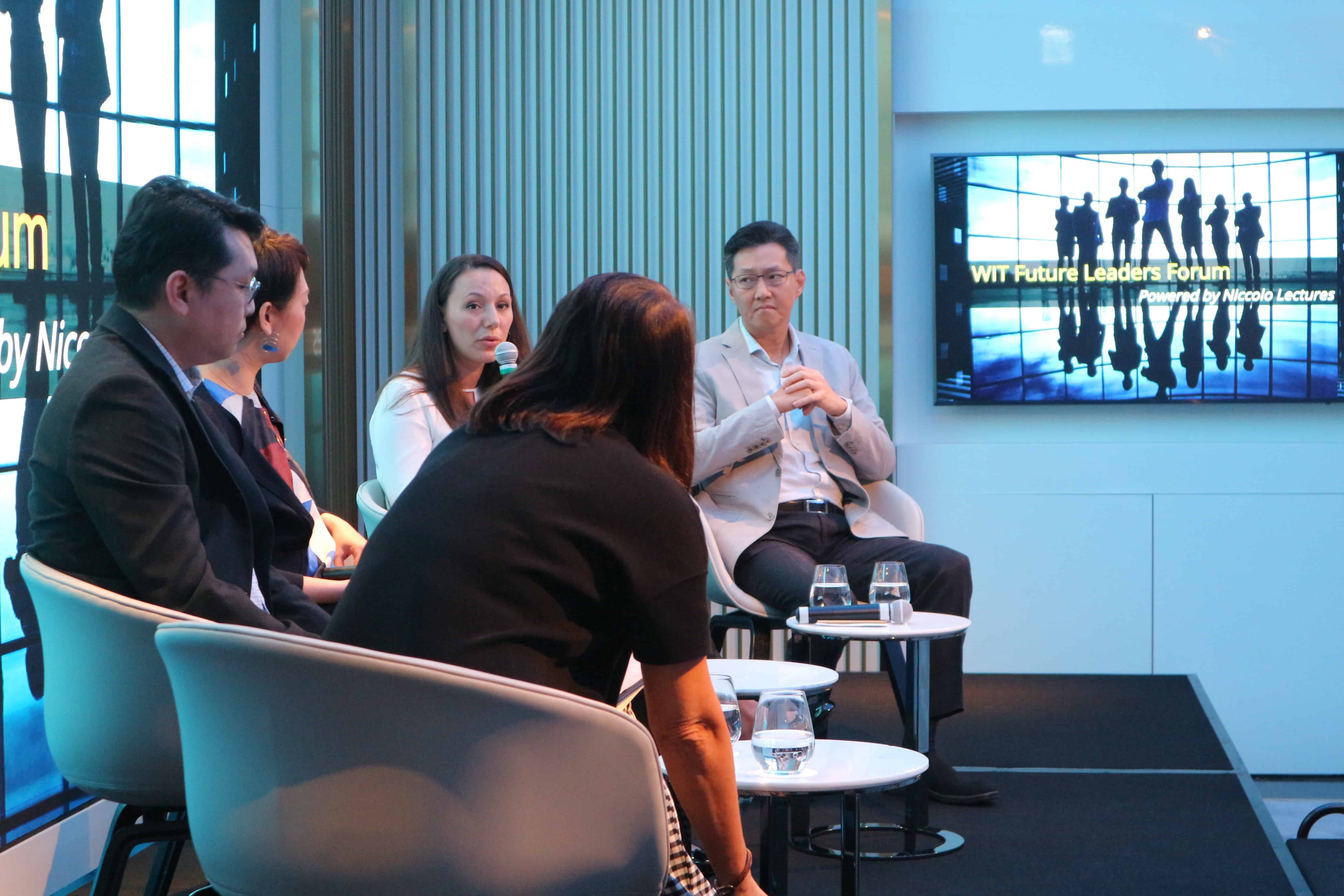
At WIT’s inaugural Future Leaders Forum – hosted at The Murray, Hong Kong – a Niccolo Hotel – last week, roughly 100 young executives (aged 35 and below) gathered to share insights and voice ideas on what it will take to build better careers in the travel and hospitality industry.
It tackled issues around how to best prepare for new jobs that arise as a result of technology, strategic methods on how to maximise your own career potential and what it would take to effectively build diversity in the workplace.

Claire Hatton, co-founder, Full Potential Labs
Here are five key takeaways:
- It’s not about your background or experience, but your capacity to adapt to change
Claire Hatton (Co-founder, Full Potential Labs) cited that “80% of jobs in 2030 haven’t been invented yet”. Technology will not only disrupt how businesses operate between each other, but also how individuals operate within them.
Hatton argued that people (regardless of what stage of their career) must constantly test their adaptability – whether in the form of developing new skill sets or living and working in totally new environments.
Companies too have a responsibility to test their capacity to change and “future proof” themselves. Given the uncertainty of what jobs will exist in future, Wilfred Fan (VP Partnerships, Agoda) said that companies must focus on finding people that are very good at learning. When recruiting, candidates should be assessed extensively on their ability to adjust to new demands, and their openness to change.
Aya Aso (founder and CEO, Savvy Collective) agreed, reflecting on how different the travel industry was between launching her first and second startup and the separate challenges that came with each. While she admits that she had “more passion than common sense of the reality of running a business”, her ability to adapt to each obstacle contributed to the success of her hotel company.
- The power of the ‘human touch’ isn’t going to change
While we may not be certain what jobs will still exist in the next decade, “empathy cannot be replaced by technology,” said Ana Dobreva (Director, Shangri-La Global Academy). Roles that require high degrees of emotional intelligence will always have a place in hospitality.
During the main WIT Hospitality 2018 conference the following day, Hatton argued that, “in a world of omnipresent technology, it is humans that will provide a competitive edge”.
Regardless of what roles are automated in the future, the essence of a hospitality career is to “fulfill human desire and dreams, and to enrich [people] in [new] ways that you don’t even realise you will do just yet”, said Hatton.
- Realise your full potential, take ownership of your career
Dr Jennifer Cronin (President, Wharf Hotels) stressed how effective leadership rests on a strong understanding of how every part of a business operates. With that in mind, Cronin reminded the audience that career progression is not just a race to reach an end goal but about constant process learning and growth.
Hatton echoed the same sentiment, however the two women took contrasting approaches in how to achieve their own potential. Cronin, for one, said that building a robust career takes a lot of strategic planning and setting milestone targets to create a clear idea of how you will progress from one stage to another.
Hatton, on the other hand, took a more unstructured approach as she acknowledged how life is often unpredictable and as a result, what you define as a successful career can change over time. Said Hatton, “your career is not linear. It should be about your passions, interests and knowledge… you should grow [and change] with it.”
The key commonality between the two is that realising your full potential takes a lot of grit (constant effort) and a sense of purpose about what exactly you are trying to achieve. It also takes a strong degree of self-awareness of one’s own strengths and shortcomings, coupled with an intellectually curious and critical mind to help realise what type of working environment you thrive in.
- Diversity needs to span age, as well as gender and race
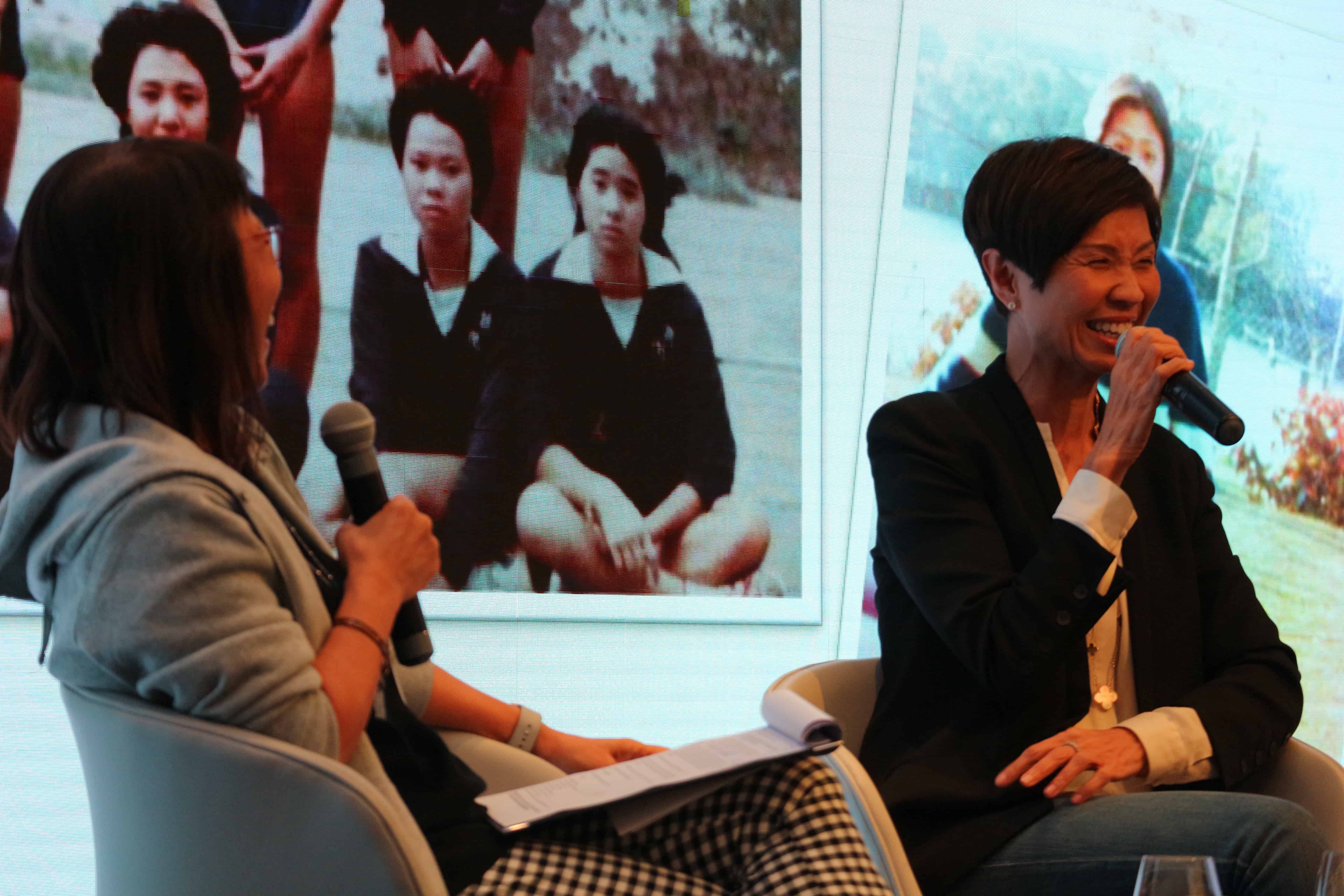
In a one-on-one, Rainy Chan (The Hongkong and Shanghai Hotels, Limited) discussed how the efforts to inspire and incentivise young people to join the hospitality industry have often come at a cost for older generations of staff.
“I think as an industry, there are so many things we have to do to evolve to make our industry more interesting and attractive. I know it’s right to focus on young people because it’s sad for me that young people don’t want to join [it].”
That being said, “I think there’s a great need for improvement in how we look at experienced staff that have been in the industry for a long time and stay more or less in the same position. There is not enough for them to grow and companies are not encouraging them,” beyond offering pay increases to maintain their roles.
With a staff body at the Peninsula Hong Kong that spans four generations, Chan said that to keep older workers engaged and inspired, company leaders must bridge the generation gap between their employees. Chan asked herself, “How do I impose a standard with four different approaches? So that each generation feels relevant to what the hotel is trying to do.
“We created different ways of communicating with different generations so they can see information and execute goals in a way they can relate to.”
- Future leaders want to feel the difference they make to the company
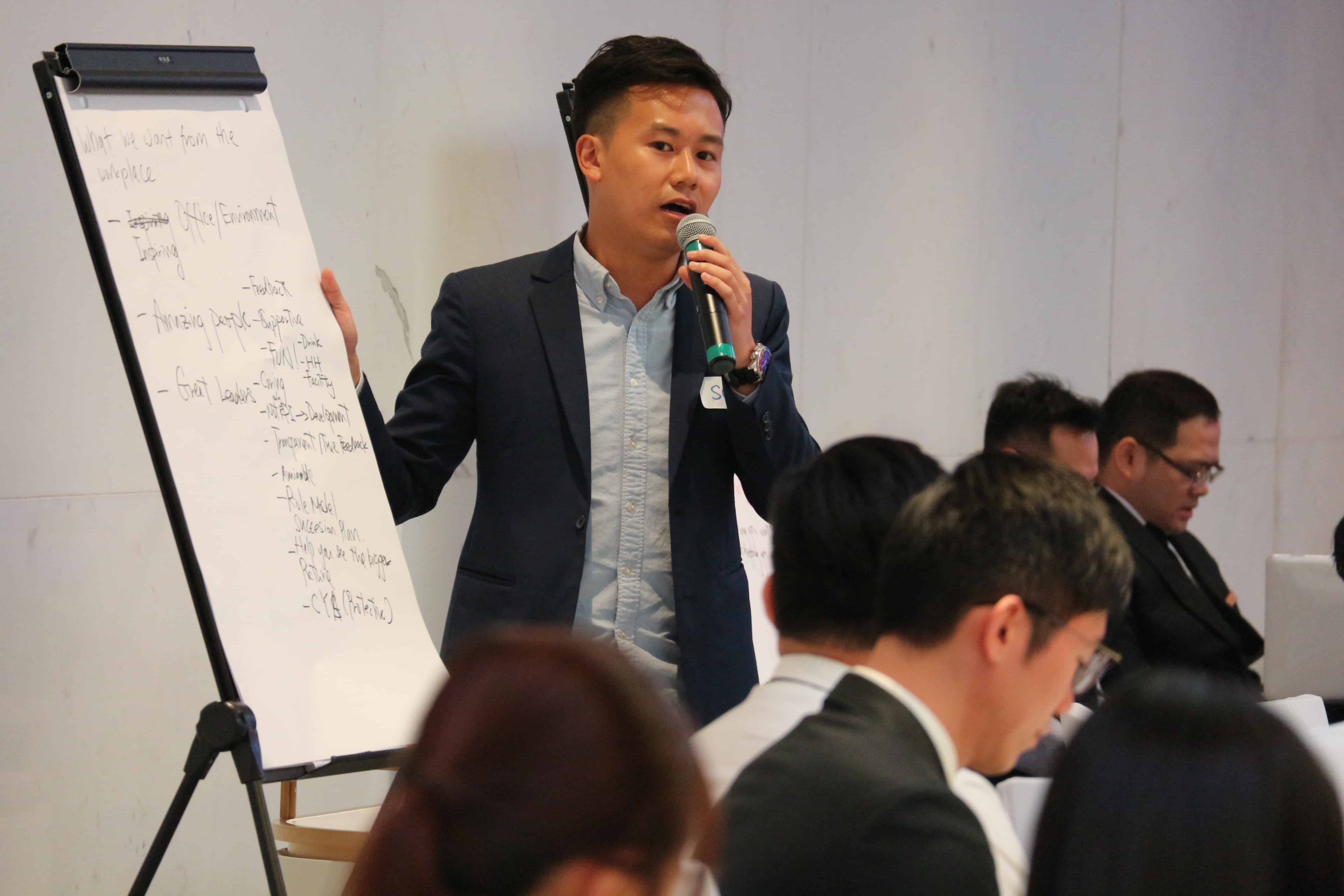
When it comes to what future leaders envision as being the ideal place to work, the dominant theme that arose was a company that operates like a “collaborative community.”
Future leaders placed greater importance on feeling empowered at work to make important decisions without feeling the need to constantly seek approval from upper management. “Foster trust from your team and trust them to manage their own roles,” said one group leader following a brainstorming session. “Give them the trust and credit they deserve.”
Participants also emphasised the desire to work for a company whose vision is in alignment with their own values. “Let your staff know what you stand for.” That will effectively come from having a strong leader that can help staff understand the company’s bigger picture, and inspire staff to pursue its goals.
It comes down to fostering a culture of collaboration wherein all voices are acknowledged and respected by open-minded upper management.
Other leadership qualities deemed desirable to work for are: protectiveness over the team, ability to provide development feedback, respect for individuality, rewarding initiative, valuing success without an obsessive pre-occupation over KPIs.