The weekly news roundup: Airlines’ enhancement of inflight entertainment, AirAsia’s gift of free flights to Asean Olympians, first driveless taxi in Singapore
TECHNOLOGY: Airlines adapting IFE offerings to meet changing consumer demands
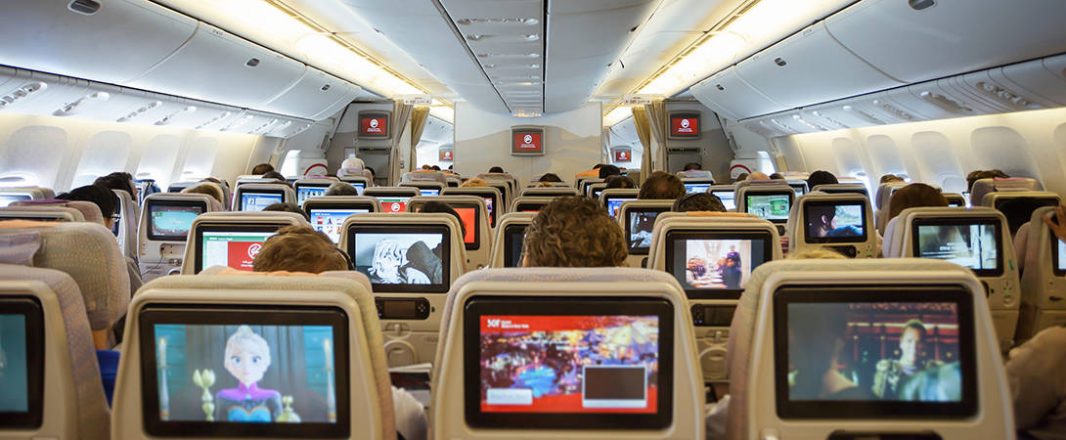
More passengers prefer to have IFE on a personal device than the aircraft’s seat back screen. (Image credit: chameleonseye/iStock)
Airlines worldwide are making adjustments in their inflight entertainment (IFE) systems to meet the changing needs and demands of passengers.
According to a report by Future Travel Experience, most carriers are adapting their IFE systems to ensure they stay relevant, driven by the BYOD (Bring Your Own Devices), binge watching and dual screen technology.
“While it is widely accepted that embedded IFE screens are here to stay – at least on long-haul services operated by legacy carriers – the likes of Norwegian Air Shuttle and Lufthansa, in addition to a number of North America-based carrier, now offer live TV to complement stored content,” said the report.
Other carriers such as XL Airways, Iberia Express, Estonian Air and Transavia, are offering portable, scalable IFE solutions to enable passengers to stream content directly to their portable electronic devices (PEDs).
Low cost carrier, Norwegian Air Shuttle, goes a step further by being the first airline in Europe to offer live TV in-flight.
“The increase in popularity of ‘binge watching’ and the increasing number of PEDs being brought on board – a trend known in the industry as ‘Bring Your Own Device’ (BYOD) – are shaping airlines’ IFE strategies now and impacting how they will look in the future,” added the report.
According to a recent SITA survey of passengers worldwide, IFE is now more commonly consumed via WiFi on a personal device, rather than on the aircraft’s seat back screen (46% vs 44%, with 10% using both). Additionally, two thirds (65%) of passengers would choose to access it via their own devices if wireless IFE was available.
Asian airlines are also reshaping their IFE strategies to meet this demand. Low cost carrier AirAsia is offering its guests free in-flight entertainment with the roKKi platform. This is part of the airline’s recent enhancement to the existing on-board roKKi WiFi service that was launched in 2014.
The airline has 33 aircraft equipped with roKKi. Free content available for streaming on-board include curated videos from travel, fashion and sports produced by AirAsia, and local blockbuster movies from Astro Shaw.
roKKi users also have access to destination guides by Travel3Sixty, in-flight menu, duty-free shopping catalogues, and interactive games.
Aireen Omar, chief executive officer of AirAsia, said with the enhancement to the roKKi platform the airline’s guests would be able to enjoy free entertainment on their own devices while they fly.
Meanwhile Philippine Airlines is upgrading its inflight offering with SITAOnAir wireless in a deal with AeroMod International.
AeroMod started installation of the IFE system on the carrier’s Airbus A321 fleet in July. Under the programme, Philippine Airlines will have one wireless IFE-installed aircraft returned to service every day.
“86% of passengers take a smartphone onto a plane and they would prefer to also use them to access IFE. These networks therefore need to be highly robust in order to deliver HD quality video to all passengers,” said David Lavorel, CEO of SITAOnAir.
AIRLINES: AirAsia’s gift to Asean Olympian medal winners: Free flights

Asean medal winners at Rio Olympics fly for free with AirAsia. (Image credit:tumoxasan/istock)
Olympians from all participating nations are lauded for their haul of medals at the recently concluded Rio 2016 Olympics in Brazil with heroes welcome, rewards of money (some becoming instant millionaires) and even free houses/condominums.
Now low cost carrier AirAsia has joined the rewards wagon with gift of free flights for Asean Olympians who won medals at the Games for “making us dream and believe”, as group CEO Tan Sri Tony Fernandes put it.
“What an Olympics this was for Asean. AirAsia, which has its roots in Asean, wants to reward those who gave us so much joy,” he wrote on his Facebook page.
The eligible athletes from the 10 Asean member nations will be able to fly for free to any of the more than 120 destinations within AirAsia and AirAsia X’s network in Asia, Australia, the Middle East and Africa.
Gold medallists including Singapore’s swimmer Joseph Schooling, Vietnam’s sports shooter Hoang Xuan Vinh, Thai weightlifters Sukanya Srisurat and Sopita Tanasan, and Indonesian badminton duo Liliyana Natsir and Tontowi Ahmad can look forward to free flights for life.
Silver winners like Malaysia’s top badminton player, Lee Chong Wei, will receive free flights for five years, while bronze medal winners get two years of the same.
“They proved we can achieve anything as long as we believe in ourselves and work tireless towards our dream. This is the least we could do for them,” said Fernandes.
“Also, they taught and reminded us never to give up on your dreams and never stop believing you can be the best in the world,” he added.
TECHNOLOGY: World’s first self-driving cab debuts in Singapore
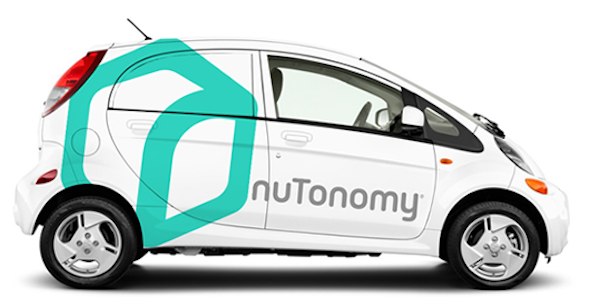
World’s first driverless taxi in Singapore (Image credit: nuTonomy)
nuTonomy, US-based developer of advanced software for autonomous vehicles, achieved a world’s first with the launch of a robo-taxi service in Singapore on a trial run.
In doing so it beats global ride-hailing giant Uber, which has plans to launch a similar service in the US city of Pittsburgh by end August.
For the trial run “select” residents in the island republic can use nuTonomy’s ride-hailing smartphone app to book free rides, said the company.
The six taxis are Renault Zoe or Mitsubishi i-MiEV electric vehicles that nuTonomy has specially configured for autonomous driving.
The cab are operating in Singapore’s one-north business district – within a 4 square kilometre area with set pick-up and drop-off points. This is where nuTonomy has been conducting daily autonomous vehicle (AV) testing since April.
An engineer from nuTonomy rides along with the passenger to observe system performance and assume control if needed to ensure passenger comfort and safety (watch video below).
nuTonomy said it would evaluate the data collected to assess software system performance, vehicle routing efficiency, the vehicle booking process, and the overall passenger experience.
The company could refine the software from the data collected to prepare the launch of a widely available driveless taxi service in Singapore in 2018.
“The trial represents an extraordinary opportunity to collect feedback from riders in a real-world setting, and this feedback will give nuTonomy a unique advantage as we work toward deployment of a self-driving vehicle fleet in 2018,” said Karl Iagnemma, CEO and co-founder of nuTonomy.
Earlier this month, the company was selected by the Singapore Land Transport Authority (LTA) as an R&D partner to support the development of a commercial AV service in Singapore.
According to nuTonomy it is “the first, and to date only, private enterprise approved by the Singapore government to test AVs on public roads.”
In May of this year nuTonomy completed a US$16 million Series A funding led by Highland Capital Partners that included participation from Fontinalis Partners, Signal Ventures, Samsung Ventures, and EDBI, the corporate investment arm of the Singapore Economic Development Board.
Apart from Singapore nuTonomy is operating self-driving cars in Michigan and the United Kingdom in partnership with automotive manufacturers including Jaguar Land Rover.
https://www.youtube.com/watch?v=Fp13jIr8Y7E&feature=youtu.be
• Featured image credit (inflight entertainment): marcoprati/iStock