
In the news: MasterCard survey on Southeast Asian travellers, Wego’s insight on attracting Chinese tourists, fifth London property for Tune Hotels, sales promise from Worldhotels
Strong appetite for travel among Southeast Asian globetrotters

Singaporeans are avid travellers. (Image credit: yongkiet/iStock)
A recent MasterCard study reveals 80% of South East Asian travellers who went overseas last year, plan to holiday abroad the same or more this year.
According to the MasterCard Consumer Purchasing Priorities survey, Singapore residents display the most desire to travel internationally in the next 12 months, with 87% of respondents intending to travel the same or more. This is followed by Malaysia (84%) and Myanmar (80%).
Singapore is also a hot favourite among travellers from the region, with survey respondents consistently listing the island republic within their top three most-desired destinations globally for 2015.
Indonesia, Myanmar and Vietnam ranked Singapore as the top global destination for travel, favouring the neighbouring country over farther choice locations such as London, Paris and Tokyo.
The respondents, when asked to choose a destination in the APMEA region (Asia Pacific, Middle East and Africa) for an all-expenses paid holiday, Singapore again emerged as the top choice for most markets.
People from Malaysia, however prefer to visit Dubai, while Singapore and Thailand holiday-makers want to visit Tokyo.
The top international travel spenders from Southeast Asia in 2014 came from Thailand (68,388 Baht/US$2,100), followed by Singapore (S$2,272/US$1,800), and Myanmar (1,802,667 Kyat/US$1,750).
The most travelled people are from Singapore, with 82% having travelled internationally in the past 12 months followed by Malaysia at 67% and Thailand at 65%.
The strong travel appetite of respondents coincided with an upbeat consumer outlook. Overall consumer sentiment in the Southeast Asia region stood at 77.7 index points, rising moderately by 6.4 index points compared to last year, according to the MasterCard Index of Consumer Confidence.
All seven Southeast Asia markets surveyed reported optimistic sentiments with the exception of Malaysia, which maintained a neutral outlook of 49.9 index points.
Matthew Driver, president of Southeast Asia, MasterCard, said: “In the last few years the region’s economies have been rapidly developing and optimism is generally high in Southeast Asia with the exception of Malaysia, which has a neutral outlook. In tandem with economic progress, we are seeing a steady rise in the middle class with a higher disposable income which allows people to venture overseas more often for leisure travel. 2015 is critical for the Southeast Asian region because of ASEAN’s goal to establish the ASEAN Economic Community by year-end and we are looking forward to seeing how the region progresses,” .
Topping the Index again as the most optimistic market in Southeast Asia, is Myanmar. Consumers in the country are now even more optimistic than last year and have recorded a near-perfect score of 97.2 index points, with 100 being the maximum possible.
• Methodology: 2,865 respondents aged 18-64 from Indonesia, Malaysia, Myanmar, Philippines, Singapore, Thailand, Vietnam took part in the MasterCard survey from October to November 2014.
How to tap the huge Chinese outbound market

Visa relaxation helps to draw Chinese tourists to a destination. (Image credit: Wego)
China’s outbound travel market is estimated to exceed 100 million travellers in 2015, and last year they spent about US$140 billion, both of which have spurred inbound destination marketers worldwide to compete for this lucrative segment.
Outbound travel from China peaks annually during the Lunar New Year holidays, as it is the biggest holiday period for China.
With the approaching Year of Goat, which falls on 19 February, travel website Wego shares some insights into how destination marketers are attracting Chinese traveller to their countries.
The relaxation of visa restrictions, food and wine tours, pop stars, and social media competitions from tourism bodies are some of the methods currently employed.
James Huang, Wego’s market development manager for North Asia, said the lifting of complex visa regulations by some countries last year had made them more attractive to the Chinese traveller.
For example, Indonesia included China in the five nationalities not required to purchase a Visa on Arrival (VoA), which is a significant development especially with the increased popularity of Bali with Chinese holidaymakers. The official date for implementation of this new ruling has yet to be announced.
Last November the United States and China entered into reciprocal visa extension agreements for short-term business and tourist travel between the two countries, and India added Chinese nationals to the list of countries eligible to apply online for VoA.
“Thailand, a longtime favourite destination of the Chinese, also removed visa fees and directly marketed to travellers last month appointing Thai pop sensation Mario Maurer (who has an enormous Chinese fan base) as a cultural ambassador,” Huang added.
Destination marketers are also making the most of their country’s unique offerings to specifically target the needs and wants of an evolving Chinese tourist. Australia is attracting the Chinese with seafood and wine promotions, as well the country’s natural beauty and wildlife.
Huang said that the World Tourism Cities Federation listed five points, which are key to swaying the selection of a destination by a Chinese traveller – easier visa processes, direct flights, dedicated tours with Mandarin speaking guides, more tax refunds, discounts and payment gateways, and specific marketing campaigns within China.
Tune Hotels adds Canary Wharf property to its UK hotel portfolio

Tune Hotel Canary Wharf to open on 2 February. (Image credit: Tune Hotels)
Global hotel chain, Tune Hotels, expands its reach in the UK with its fifth London hotel and the seventh in the UK – Tune Hotel Canary Wharf that will open on 2 February -.
Located in the heart of London’s financial district the 130-roomTune Hotel Canary Wharf is just a short walk from the major banks and financial institutions, as well as near local attractions such as the O2, ExCeL and the Olympic Park.
The new hotel sees the group continuing its strategic focus on London, with Shoreditch earmarked as home of the sixth in the city. Due to open in 2016, the hotel group said that details of further openings are currently being finalised, and will contribute new investment in excess of £40m in the capital.
Tune Hotels, which opened a new hotel in Newcastle in late 2014, recently confirmed an expansion plan equivalent to £200m investment into the UK market. On the drawing board are 25 new properties scheduled to open by 2020, and it anticipates this will create significant employment growth in the hospitality sector.
Mark Lankester, group CEO of Tune Hotels, said London would continue to form a crucial part of the company’s overall UK plans for growth.
“London is where we started in the United Kingdom and remains the heart of our expansion into the regions of the UK. There is no foreseeable saturation point for Tune Hotels in London as the capital offers so many locations where our value for money concept would be welcomed by domestic and international travellers alike, especially by those who are familiar with the concept from staying at our hotels in other countries.”
A sales promise from Worldhotels
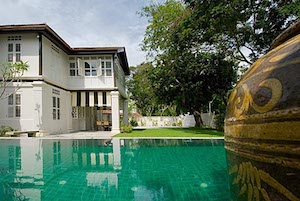
Clove Hotel, Penang
Hotels are now able to hold Worldhotels to its sales promise with its recently launched “Check 5” programme, a bundle of key initiatives designed to help hotels build their sales intelligence.
The programme comes with a confident guarantee – affiliates can leave the network if Worldhotels fails to deliver the promised activities.
As part of this guarantee hotels are given the opportunity to focus their sales efforts in five core markets of their choice:
- Access to market intelligence and information collected from Worldhotels sales experts that provides hoteliers with essential insights into the economy, politics, and segmentation of their key feeder markets
- Quarterly webinars hosted by Worldhotels’ sales experts that update hoteliers on all “real time” happenings within their markets
- Dedicated face-to-face working sessions with Worldhotels’ sales experts during the Worldhotels annual conference
- A personal introduction to the selected markets, that walk hoteliers through the “need to know” info for their business trips
- An annual review of the hotel’s Check 5 guarantee and the delivered Worldhotels activities
Affiliates can adjust their market focus and reassemble their top five markets each year.
Worldhotels COO, Geoff Andrew, said, “Sales has always been our strongest suit. It’s why many of our hotels have chosen Worldhotels. With our Check 5 guarantee, we take our sales efforts to the next level and offer our hotels a more focused and efficient approach, ensuring the depth and breadth of their local success.”
Added Kristin Intress, Worldhotels CEO: “A promise without consequence is no promise at all. If we fail to deliver the Check 5 activities, our hotels are free to leave us.”