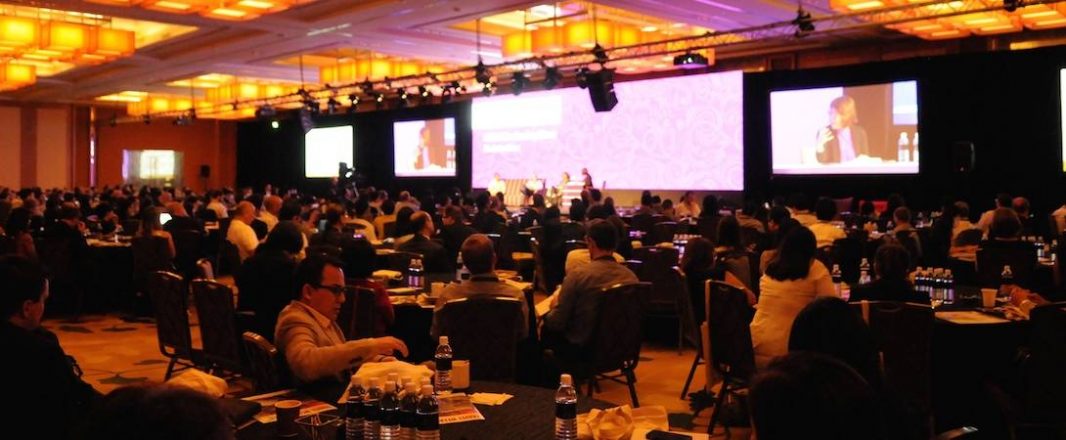
 When we started 2014, it was with the intention to run 10 events to celebrate our “Little Big 10” anniversary. As the year unfolded, I lost count – what is it they say about life being a journey and not a destination.
Well, now that we’ve nearly reached the destination – year end 2014 – I find myself recollecting the year that was and so I invite you to come on the year’s journey with me as I write this piece because I have no idea how it will end.
First adventure in the desert
The year started off in the desert, our first event in the Middle East, and we picked Dubai for our launch. I recall ending the event with these words, “That first bungy jump. That first butterfly kiss. Our first time. A new adventure. A new land.”
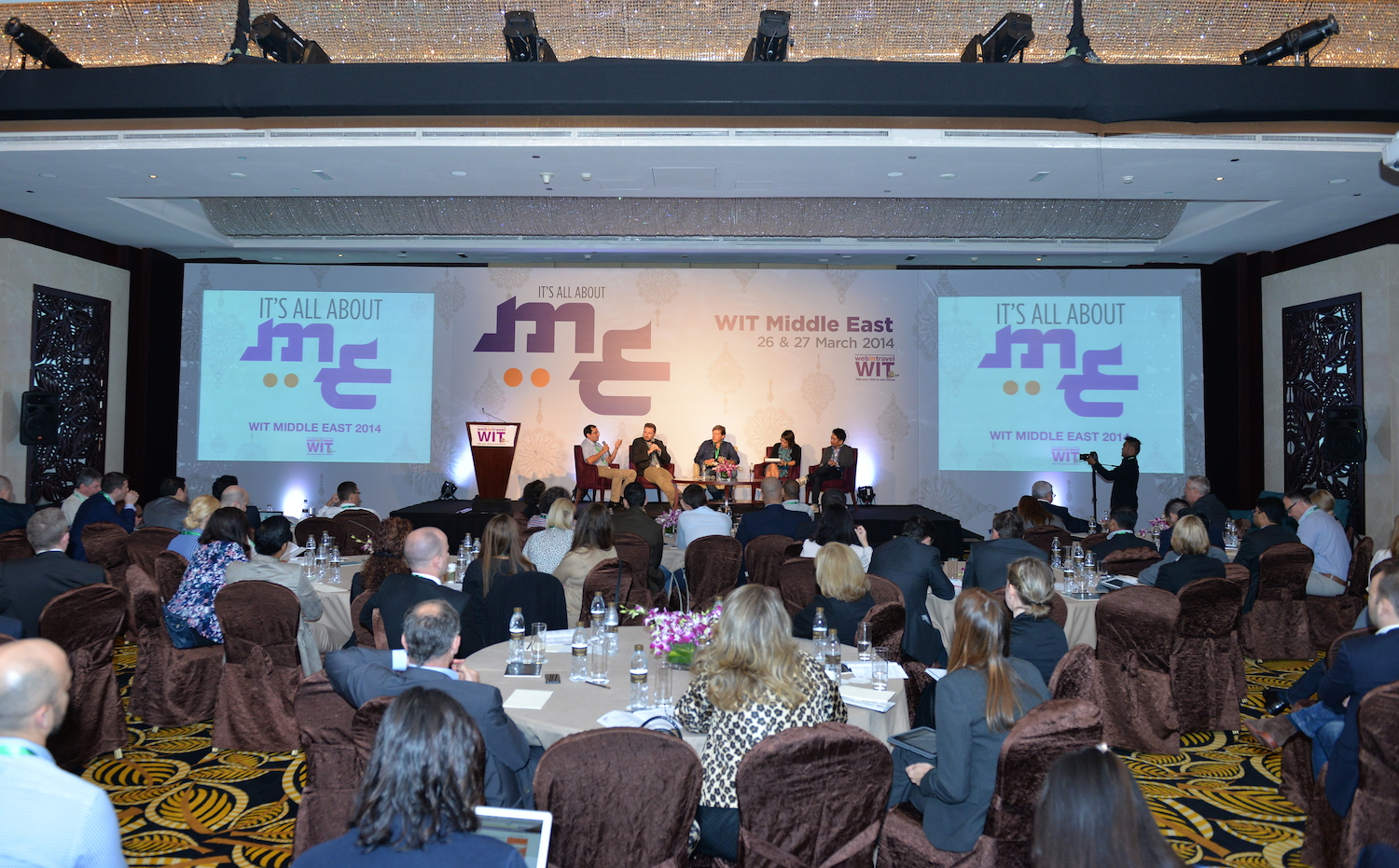
Founders’ Panel sharing their insights & experiences at WIT ME
It taught us plenty – that new adventure. It taught us the Middle East travel market was also changing and it could change overnight because you’ve got a young population – 60% under 30 years old – and as we know, this is the generation built on speed and hyper-ADD.
Just as it did with India, China and Indonesia, the three big markets of Asia Pacific, mobile is underpinning the change. This is the region with the highest smartphone penetration and traditional suppliers are having to play catch-up. Hotels have long been focused on hardware – this is the region with the world’s fanciest hotels – now they have to get armed with new skills to reach these new customers.
Their airlines have led the way – Emirates and Etihad – are among the world’s super carriers in terms of product and service. We heard from Emirates on how it is investing heavily in technology and innovation and supporting developers and start-ups.
OTAs are just beginning to make their moves with the two big Indian brands, MakeMyTrip and Cleartrip, investing in the region. Musafir, the local OTA, is digging in deep, as well as expanding to India. Meanwhile, new start-ups are appearing on the scene, eager to disrupt in a market that’s about to reach inflexion point and can only get more interesting.
All in, a happy start to the events year – as this video made of the event shows.
Yeoh Siew Hoon with President of Blue Bird Group, Noni Purnomo.
Super city, super competitive
Our second outing in Jakarta revealed a market that in 12 months went from “emerging” to “super competitive”. That’s how fast things can change in online travel.
For years, there wasn’t much activity, just murmurings of this-and-that doing this-and-that and suddenly, there’s been an explosion of online travel players all fighting for a small, albeit fast growing, share of the market.
Indonesia’s travel market is still dominated by traditional players, most of them family-owned, and in a market that’s big on connections (the human kind) and relationships (the business kind) – and remember, this is a very diverse country, it’s hard to make the shift from offline to online.
But as with all things technology, you will get the curve from “slowly, slowly and then suddenly” and the discussion at WIT Indonesia was around when this tipping point would be reached.
That magic point when mobile and social collide with rising income and consumer aspirations to move this fifth largest domestic travel market in the world. According to IATA, the Indonesian domestic market will grow at 6.4%, adding an extra 136 million passengers a year by 2034. The total Indonesian domestic market will be 191 million.
For the moment, the market remains wide open as to which OTA will win – will it be the local brands – the Traveloka, bookpanorama, Nusatrip, eztravel – or the regional players – PegiPegi (by Recruit) or Agoda – or global names such as Expedia or Booking.com?
Definitely a market to watch as it gets more competitive and market forces weed out winners from losers …
A new Japan arising
In May, the WIT tour reached the shores of Tokyo Bay, Hotel Nikko at Odaiba, our home for the last three years. Japan’s an interesting contrast with Indonesia and Middle East. Here is a matured, some say stagnant, economy, a greying population and incredibly entrenched traditions of protocol and hierachy.
One of my most vivid impressions from the early days when we were sowing the seeds for WIT Japan – yes, in Japan, you sow seeds and you wait for them to take root, patiently, no instant cultivation here – was how we went from meetings with senior officials that were like tea ceremonies to meetings with start-ups that combined green tea with Silicon Valley appetite.
 It is this new blend that we see brewing at WIT Japan – from our opening speaker Yoshihiro Kitamura, president director of Recruit Lifestyle (pictured right), who delivered his first ever speech in English to our closing “Wild Card” Ray Hatoyama, president & CEO of Sanrio Inc, the company behind “Hello Kitty”.
Both executives exemplify a new Japan that’s about globalisation and taking on the world with services and products. Start-ups in Japan are also going beyond their boundaries – a good example is Trippiece, started by Ian Ishida when he was a student, and now has a South-east Asian base in Singapore.
It’s also about a new Japan that’s more welcoming of foreigners. Its exemption of visas for South-east Asians (first announced at WIT 2013) has led to a double-digit increase in inbound travellers. This coupled with low cost carriers making Japan more affordable and the competitive yen will turn the focus in Japan from purely outbound to promising inbound – the challenge of course being how suppliers adapt to having foreign guests versus serving domestic customers.
To me, this third WIT Japan captured a nation in transition as it basked in its triumph of winning the Olympics 2020 bid and an industry in transformation as market forces shift from outbound to inbound and from offline to mobile.
The in-betweeners – Taipei on the cusp of change

Morris Sim of Brand Karma in a discussion with young professionals on career opportunities and what the Gen Y look out for in planning their work lives
In between our main events, we took our WITNext Evenings on the road – ending the year in Taipei where we were inspired by the enthusiasm and optimism of a new generation of Taiwanese who are excited by the career opportunities in tourism.
Our timing to launch our first event in Taipei couldn’t be better. Inbound tourism is on the rise. Some call it Taiwan’s golden years. New jobs are opening up and young Taiwanese who’ve studied abroad are returning home. This is when societies get a fresh injection of talent and capital.
The Taiwan travel market remains in the hands of traditional travel agents, some of whom have made the successful migration to online, but foreign online travel brands are making their presence felt, from Ctrip through its investment in eztravel Taiwan and Expedia which is expanding aggressively in the market.
Definitely a market to keep an eye on in 2015.

In conversation with Douglas Khoo, co-founder of Qunar, in Phuket.
Our Hospitality Roadshow took us to Bali, Phuket and Penang and it is interesting to see a similar trend taking place in Asia’s resort destinations – increased awareness among hoteliers that they need to wean themselves off the traditional wholesaler “drug” and increase business through their own channels.
There is definite hunger to learn more about channel and revenue management and the different distribution channels now available for a hotel to control its own distribution destiny.
For most of the highly fragmented hotel market in Asia, this journey is only just beginning. What this means, huge opportunities for vendors, many of whom have set up regional bases and expanding their business reach in the region.
Definitely a space to keep an eye on in 2015.
The journey ends in Singapore but really it’s only beginning
From the desert to the bay – we ended our events year with our 10th WIT Conference in Singapore where we rolled out the “Little Big 10” trends and we tackled each trend in great detail.
The event blended nostalgia – for the nine years past – and imagination – for what the future will bring. All the trends we discussed – from Middle East to Japan to Indonesia –came to a head at this conference attended by our largest ever and most international audience.
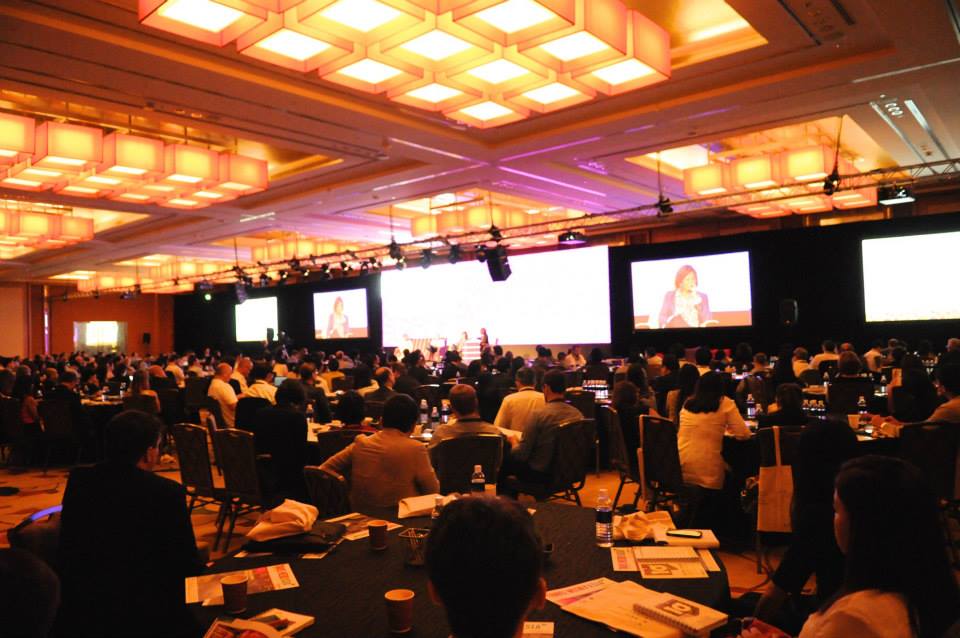
Our biggest stage for our largest and most international audience to celebrate our “Little Big 10”
Throughout Asia, the industry is transforming. It has to because the customers are. Competition is intensifying because Asia’s become the new frontier for global brands and homegrown players have both the confidence and resources to grow and defend their own turf. Start-ups are emerging from Hong Kong to Jakarta to Kuala Lumpur, all hoping to be the next big thing. Outsiders are coming into the space – first, it was Google and Facebook, now Alibaba is the one to watch.
Over the last decade, we have seen the online travel industry in Asia change beyond recognition. If you had told us in 2005, when we started our first event, that in 2014, there’d be a company that has made it possible for Asians to rent places from strangers or a company that made it possible for us to hail taxis anywhere with a phone in hand – we’d have laughed.
But as fast as the market has changed and grown, it’s remarkable to note that, really, things are just beginning in Asia – in other words, the real fun’s about to begin. All that happened the last nine years, that was just the dress rehearsal
Now for the main act.