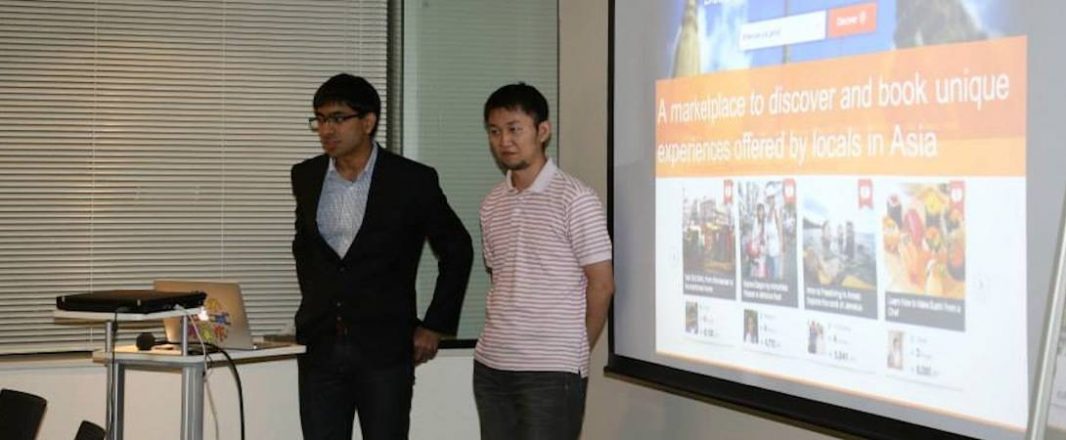

I am writing this as I am listening to the start-ups pitching at our first WIT Japan Bootcamp in Tokyo while facilitating discussions – yes, we all have to multi-task these days.
And I am amazed at the energy and enthusiasm in the room and among the entrepreneurs vying for the judges’ attention.
I have to confess I had some reservations when we first thought of the idea of bringing the Start-Up Pitch to Japan – the perception is there is a lack of entrepreneurial activity, that the economy is dominated by the large corporations and that young Japanese weren’t really into starting their own businesses, preferring to be salaried employees.
But the response has been nothing short of encouraging – by the end of today, our panel of judges would have listened to six highly motivated and passionate entrepreneurs all looking to make their mark in travel.
Kei Shibata, CEO of Venture Republic, where the Bootcamp is being held, is also quick to correct what he says is a misconception about the Japanese start-up scene.
Quoting Ernst & Young data on Q1 2013 Global IPO activity, he said that Japan had the second largest number of IPOs, trailing only the US and ahead of China. Asia Pacific accounted for 56% of activity, and of that, Japan led with 12% of the deals.
He says he’s seen an increase in interest in the travel sector by entrepreneurs and investors. And it’s easy to understand why. Japan is Asia’s most matured and among the largest travel markets in the world and its consumers are among the most tech-savvy – yet the travel industry remains highly traditional and dominated by legacy players.
So the opportunities are there for disruption – for smart new players who can come up with fresh models to look after these emerging consumers who may be ready for something different.

Masahiko Honma
Masahiko Honma, general partner of Incubate Fund and Corepeople Partners, one of our judges, says he’s seeing more entrepreneurs pitch him ideas in travel and that investors are keen to invest in the sector. “It’s easy to get money in travel today,” he said.
The more upbeat mood is in keeping with the general optimism in Japan, caused by a phenomenon called “Abenomics”, the new economic measures being put in place by Prime Minister Shinzo Abe.
A New York Times article said, “His plan, one of the world’s most audacious experiments in economic policy in recent memory, combines a flood of cheap cash (doubling the money supply in two years), traditional fiscal stimulus and deregulation of Japan’s notoriously ingrown corporate culture.
“The hope is that this will yank Japan from a debilitating deflationary spiral of lower prices and diminished expectations, stirring what Keynes called the “animal spirits” of investors and consumers.”
Travel industry professionals are hopeful there will be a trickle-down effect on travel. As it is, share prices are on the rise and wealthier consumers seem more inclined to spend on more high-end items.
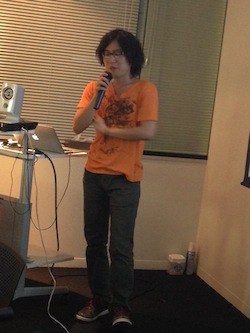 “It’s only a question of time when there will be a general trickle down onto the general consumer and travel will be one of the beneficiaries,” said Shibata.
So far, most of the ideas being pitched today are focused on the social side of travel, helping people plan trips with friends, source local activities and have great local experiences – seems to be a hot spot in travel these days.
But what I am most impressed by is the courage of these Japanese entrepreneurs to first, pitch their ideas to a global panel of judges who don’t hesitate to ask tough questions and second, to do it in a language not their own.
This, to me, represents a new face of Japan travel that must be encouraged and shared. Young voices. New skills. Fresh perspectives.
Today, they will be coached and mentored for their final pitch tomorrow which is when we will open our second WIT Japan conference whose theme is “No More Walls”.
If today is any indication, then we’re onto a good start to breaking walls in travel.