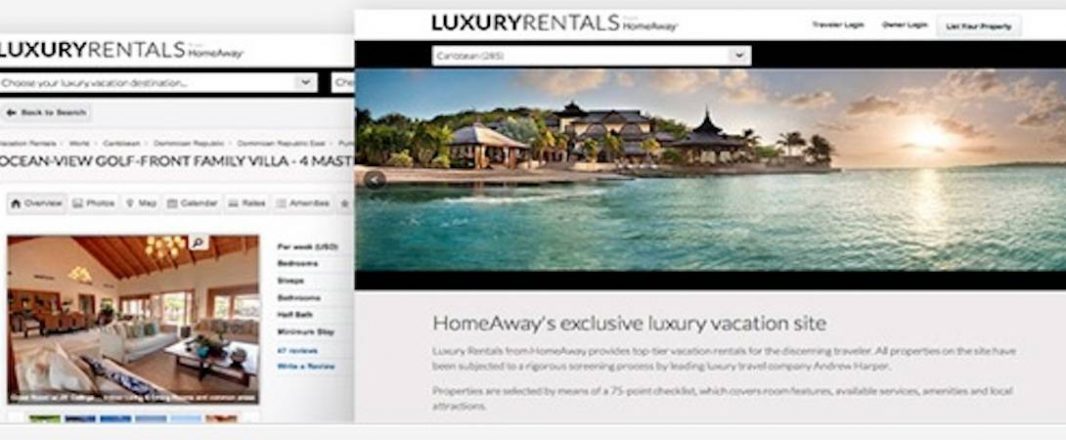
It signed a partnership agreement with Travelmob. It opened a regional office in Bangkok. It’s all part of plans by HomeAway, the leading vacation rental marketplace, to spread its wings in South-east Asia.

James Cassidy
In Bangkok, it’s hired Panicha Thananaken, formerly with hoteltravel.com and Agoda, as regional sales manager, and plans to scale the office to a team of six.
James Cassidy, general manager Australasia, said the Bangkok office would focus on building up inventory in Thailand, with Bali as a secondary focus. Other markets such as the Philippines and Vietnam would also come under the radar.
“We have plenty of demand – what we need is more property choice particularly in South-east Asia and we see big opportunities in Thailand and Bali. But we are careful about adding the right properties.”
There’s also a lack of inventory in markets like Hong Kong, Japan and Singapore. “All those areas have similar geographical characteristics – high population density, high property value, more expensive to own a second home.”
Currently, HomeAway, which celebrates its seventh anniversary this year, has 700,000 paid listings globally out of which 1,500 are in South-east Asia. The majority of listings are annual subscriptions which start at US$300 a year.
When owners list their properties on HomeAway, they are featured on a network of 22 sites, and they can buy priority listing on these sites.
Currently HomeAway does not have any domain that’s specific to any country in Asia – for eg, dot.sg or co.ind – but Cassidy said the plan was to launch more geographic-focused sites shortly.
HomeAway’s growth has mainly been driven by acquisitions, it’s made 15 acquisitions thus far. In Australia, it acquired realholidays.com.au from realestate.com.au in April 2011. Cassidy was the senior product manager at realholidays.com.au. Before that, he was general manager of stayz.com.au.
Vacations rental is a huge market in the US. PhoCusWright’s “Vacation Rental Marketplace: Poised for Change” report in 2009 placed the value at a more than $24 billion opportunity in the US, more than one fifth of all hotel room revenue and 8% of the total US travel market.
Asked if the vacations rental market in Asia was different from the US or Australia’s, Cassidy said culture and customs are different. “In Australia, there is a long history of holiday home ownership and a relatively long history of commercialization of holiday homes. There isn’t that history in other markets. For example, in China, owning a holiday home is a real luxury and if you can afford to buy one, you probably don’t need to rent it.”
There is also the cultural difference around travel preferences. “The hotel experience is preferred in Asia over other types of accommodation, people are used to high service levels and being looked after.
“We saw that in Japan, but independent travel is increasing – people are looking to try different experiences. Anecdotal research shows there is an increase in acceptance of this form of accommodation and it will grow over time.”
In China, its minority stake in Tujia.com, China’s leading vacation rentals marketplace, has delivered very good early results for South-east Asia, he said. “We translated a set of our properties translated into Chinese and in January, our first full mont, we saw very good bookings.”
Currently, most of the demand is coming from US and Europe and although HomeAway’s initial focus is to increase content to give travellers more choice in the region, ultimately the company wants to grow its brand in Asia and generate demand as well.
Most of HomeAway’s listed homes are secondary properties. “We don’t have this situation like in AirBnB where it’s a primary residence and people live in the place and move out where there is a booking for the entire property,” he said.
“Our model is, you have a holiday house, you stay there maybe five to six weeks a year and you rent it out. What our customers value is privacy, space, control and value – the experience of enjoying it on their own or as a family.”
Most bookings, while secured online, are not transacted through the website. “Payment happens over email and off our network,” said Cassidy.
However it does give owners the ability to sign up and receive credit card payments from HomeAway and that facility is being rolled out across the network.
“A big part of our strategy is to help owners process bookings. Travellers want to pay online but sometimes the booking value is quite large and they are more comfortable with a bank transfer. One size does not fit all – there is no GDS, no allocation, no yield management.”
Note: James Cassidy will be speaking at WITX – Women Redefining Travel (April 26, Bangkok) to share insights into the vacation rentals market.