“Lessons should be learnt from tourism on Earth”
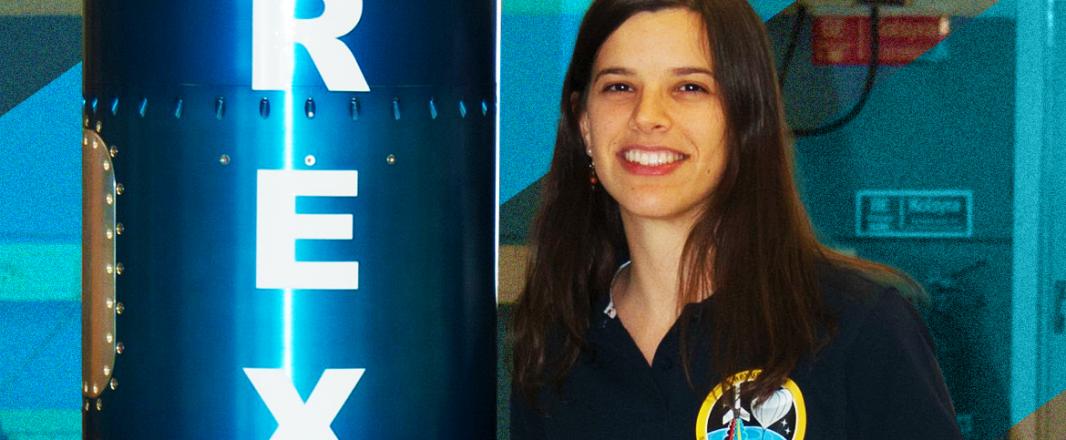
Anna Sabate Garcia: “There’s a lot that we have yet to understand about space, and space tourism raises a lot of new questions that require answers that we don’t have.”
As curious as she is about space and having built her career in the sector, space scientist Anna Sabate Garcia of Singapore-based Space Faculty is in two minds about the prospect of space travel being accessible to the masses.
“It is a tricky one,” said the Spanish-born Sabate, who is technical head and business development manager, for the Singapore-based organisation that positions itself as “Asia’s pioneer in creating opportunities for experimentation, learning and leadership through space”.
“Humans love to explore which is why space is the next frontier and we already have space tourists going up on Virgin Galactic and others and that’s why many have booked future flights. But it’s sometimes hard to justify because of the resources required to do so as well as from a sustainability point of view, unless there’s a more meaningful purpose associated to the flight.”
There’s no denying that there is growing interest in this new frontier. Last week, Virgin Galactic and its partner in Asia, Intriq Journey, held media events in Singapore, Hong Kong, Beijing and Shanghai to promote its space flights.
The same week, Saudi Arabia announced plans to host a test flight next month for Spanish company Halo Space which is developing a balloon and capsule that flies up to the stratosphere. It plans to offer $164,000 passenger flights on its Aurora capsule, which will be carried by a helium-filled balloon to altitudes of up to 35km. This will be the sixth test flight by the company and is crucial before it can begin its commercial operations planned for 2026.
Said Sabate, “If space tourism could incorporate some form of scientific research though, it might be a lot more meaningful. There’s a lot that we have yet to understand about space, and space tourism raises a lot of new questions that require answers that we don’t have.
“For example, what regulations and laws do we need to ensure we don’t disturb what’s there,” she said, citing the “Mars: The Red Mirror” exhibition in Singapore, a collaboration between Space Faculty and ArtScience Museum, which ended in April. One of the exhibits showed a piece of plastic left on the Red Planet.
“Imagine if we pollute space as we have done places on Earth. We have to be a lot more mindful about the impact we may have and of the resources we are using.”
Sabate hails from Catalunya, Spain, which has been making the news for its residents’ protests against over-tourism. Although she does not agree with the protestors, who have targeted tourists, saying “it’s not the tourists’ fault”, she said, “It’s the regulators’ fault, the politicians and regulators. If you want to slow down tourism, you have to do it at the policy level.”
Her concern is “the space sector is moving faster than regulations, and regulations are always playing catch-up”.
Sabate, who has two kids aged two and four, believes her children may get to see a more normalized version of space tourism, without having to pay astronomical sums, in their lifetimes. “It could be a possibility in say 20-30 years’ time.”
She points to the end of the shelf life of the International Space Station, which will be decommissioned and sent on a crash course with the Pacific Ocean in 2031, after 30 years of service. “There are companies developing private space stations. One, Axiom, is partnering with Prada to develop space suits, so you could see more interesting partnerships develop, for example, with hotel companies?”
In 2022, Hilton announced a partnership with Voyager Space, a global leader in space exploration, to be the official hotel partner of Starlab, Voyager’s planned free-flying commercial space station, one of the four being built by US companies to succeed the ISS.
Plans call for Hilton to design an Earth-orbiting space hotel called Starlab. Although its initial use is by astronauts, the partners said at the time the project is taking humanity one step closer to making space travel more commonplace and accessible.
“The ISS is only 400km above air – that’s about the distance between Kuala Lumpur and Singapore. It turns around Earth on an average of 90 minutes which means you get to experience a lot of sunrises and sunsets in a day,” said Sabate.
Investing in space tech and growing the space economy
Space Faculty Asia, which Sabate joined over a year ago, is a private company that was established in 2021 responding to the increasing demand to nurture the space sector’s talent pipeline.
In this article, CEO Lynette Tan, said that the space sector has attracted a lot of attention in recent years – and in the last decade, the space industry has grown over 91% and is conservatively valued at US$546 billion, with the commercial market representing around 70% to 80% of the sector.
Space Faculty, whose mission is to develop people and technology for a better world, is leveraging its team’s decades of combined experience to advance the global space agenda in Asia. By developing the learning roadmap for youths and professionals, enabling experiments in space, and collaborating with governments on talent, R&D, and industry development roadmaps. Space Faculty is empowering individuals and organizations to contribute to the future of science and technology.
Sabate said, “Space tech is so exciting. In areas of life sciences, we know that in zero gravity, you can form proteins better, create more efficient drugs that are more targeted at specific diseases. In space manufacturing, you can get higher quality semiconductors which might lead to electronic devices that perform better and in turn consume less energy.”
One of its outreach programmes is the annual International Space Challenge where participants from nine to 25 years old are encouraged to different challenges in the space sector, often benefiting Earth as well. The 17th ISC this year has the theme “Living in Space”. The top team will be crowned at Expand Space winning a S$10,000 prize.
It also runs programmes where it brings in astronauts to inspire children. “It’s not just space for space’s sake but how space influences our everyday lives, from STEM to finance and urban planning. It’s making everyone aware of the resources we have and what we can tap into, and how we can benefit from the space sector,” said Sabate.
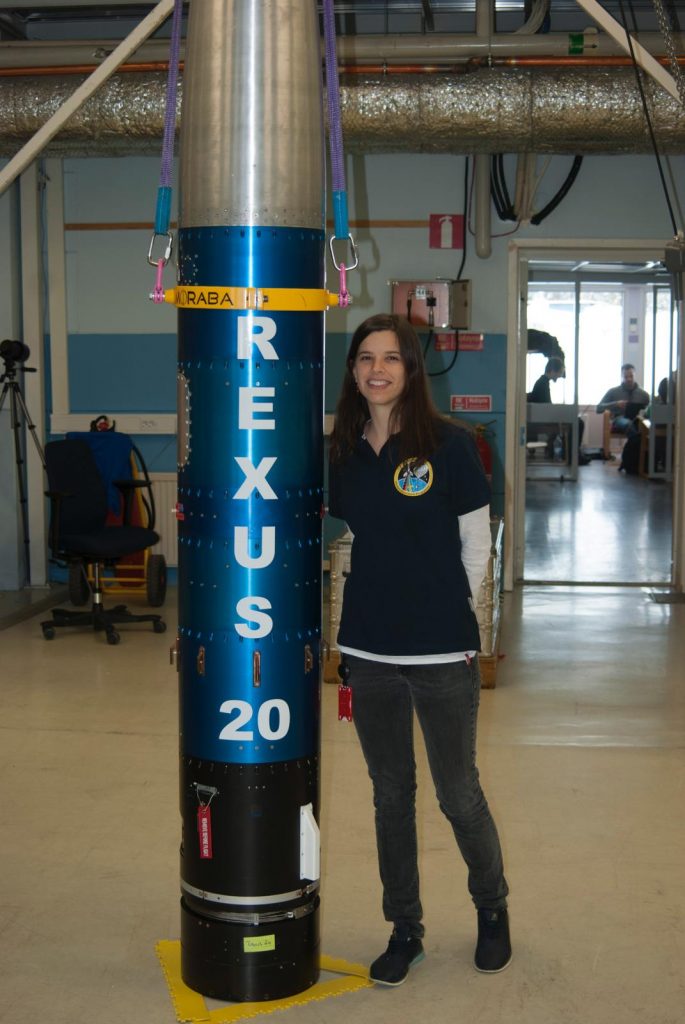
As a child growing up in a small village in Catalunya, Sabate has always been intrigued by space. She first fell in love with aeronautics and flight after a visit to Airbus but when she was a student, she listened to a lecture by a Spanish scientist on parabolic (Zero G) flights, got so interested in it that she ended up working 10 years in the university’s lab.
“I worked on understanding how fluids and gases behave in space with the goal of making systems more efficient, how to use fuel more efficiently, how to have better thermal control in space aircraft. Given the wineries in Catalunya, we would’ve liked to research how cava would behave in space – so astronauts could have cava along with their coffee.”
The lesson learnt is “space research takes a long time, and you have to embrace failure, learn from it and improve”.
Anna Sabate Garcia will be speaking at WiT Singapore: Next Generation, Oct 14 – 16. Get your tickets now.