
Like everywhere else, Singapore is trying to figure out what to do with the sharing economy or, more specifically, short-term rentals.
This week, Airbnb and travelmob sent out emails to their members, encouraging them to take part in a survey being conducted by the URA (Urban Redevelopment Authority) on short-term rentals.
In the survey, URA said, “We would like to seek your views on whether private residential properties in Singapore should be allowed to be used for shorter-term stays i.e. fewer than six months. This review does not include HDB residential properties. (HDB refers to the public Housing Development Board flats which are largely subsidised by the government and short-term rentals have been declared illegal for this segment of housing).
“Some residential property owners have given feedback that shorter-term stays should be allowed as they enable property owners to supplement their income by renting out either spare rooms or whole units and help meet the accommodation needs of exchange students, visiting working professionals and tourists who prefer to stay with locals.
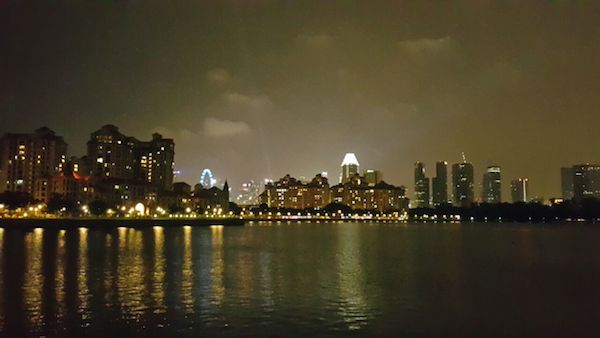
Singapore: Lobbying has begun by companies such as Airbnb and Travelmob to stave off an outright ban on short-term rentals.
“However, other residents have given feedback that they are affected by the noise, loss of privacy and security arising from these short-term stayers. Others have also raised concerns about damage or misuse of common facilities by short-term stayers.”
Like everywhere else, Singapore is trying to figure out what to do with sharing models like Airbnb and travelmob which allow home owners to let either their primary or second homes for short-term stays.
This survey is expected to be the first step in an ongoing process and both companies are doing their best to stave off, at worst, a total ban on short-term rentals in Singapore.
Prior to sending out the email, Airbnb hosted a Town Hall in which it invited its hosts and guests to learn more about the URA’s process.
One point in their favour is the news from London this week, in which housing minister Brendan Lewis set out plans for short-term lets to be deregulated in London.
According to this article, the government wants to scrap a 42-year-old London law which says that anyone wanting to rent out their home for less than 90 days must get planning permission to do so, or pay a £20,000 ($30,450) penalty per offence.
It quotes Lewis as saying, “We live in the 21st century, and London homeowners should be able to rent out their home for a short period without having to pay for a council permit. These laws … need to be updated for the internet age”.
However, the government would still restrict short-term letting to 90 days per calendar year or less, so that the properties don’t effectively become hotels. The properties also can’t be business premises, and councils will be able to apply for “small localised exemptions from the new flexibility, where there is a strong case to do so”, said the article.
Hotels are unhappy with the news. The British Hospitality Association policy director Jackie Grech said the relevant clause had been “hastily pushed through … without any concern for the consequences such as security, employment, housing shortages, anti-social behavior and the high quality reputation of tourism in the U.K.”
Airbnb in its Public Policy blog played up the news, saying, “More and more cities across the world are embracing home sharing and implementing progressive rules that back innovation and support local residents. San Francisco, San Jose, Paris and Amsterdam are among those that have already done so – and the list is growing.
“We know that 40% of our London hosts on Airbnb are self-employed, freelancers or part-time workers, and 30% are entrepreneurs or starting their own businesses. They regularly tell us that the additional income they receive through hosting is helping them to take chances they wouldn’t otherwise be able to afford.”
This is of course the position both Airbnb and travelmob, a HomeAway company, takes – that businesses like theirs which match consumer-to-consumer and allow them to trade benefit the economy and individuals, which you can’t deny.
Taxi drivers in Singapore seem happier for example. Their demand channels have opened up – Grab Taxi, Easy Taxi and now, Hailo which has also entered Singapore. The taxi driver I was with yesterday said, “I hardly bother about calls from my company anymore.” He said 70% of his calls come from Grab Taxi. “I drive and then I go home,” he said.
UberX allows me to call a private car. The vehicles are usually very well-maintained and clean, and the drivers are pleasant. There’s also Smove now which allows you to rent out your car and for anyone to rent it from S$5.
These businesses allow anyone to become a business owner and they will change the way people work.
At a time when the Singapore government is encouraging its citizens to be more innovative and entrepreneurial, it would seem these new sharing models fit right into the scheme of things. It does empower the individual to do what he or she likes with their assets whether it be selling their used handbags and shoes, or renting out their apartment or car.
To me, a total ban on short-term rentals in Singapore would go against this spirit.
One option is self-regulation – make it the responsibility of companies like Airbnb and travelmob to police themselves and weed out the elements that generate complaints. Let them come up with a code of conduct, which I am sure they already have, and let them operate in the light so that all is transparent.
The fact of the matter is, this is a new world. And governments have to recognise that. Airbnb now has one million homes listed on its site. To date, more than 30 million people have stayed with Airbnb. HomeAway has over one million listings in 19,000 locations and generated an estimated $11b in bookings for the vacation rental properties on its site. It acquired travelmob in September 2013 to enter the Asia market.
You can’t hold back the tide of change, but you can guide the way it flows.
PS Here’s a local blogger’s take on the subject.