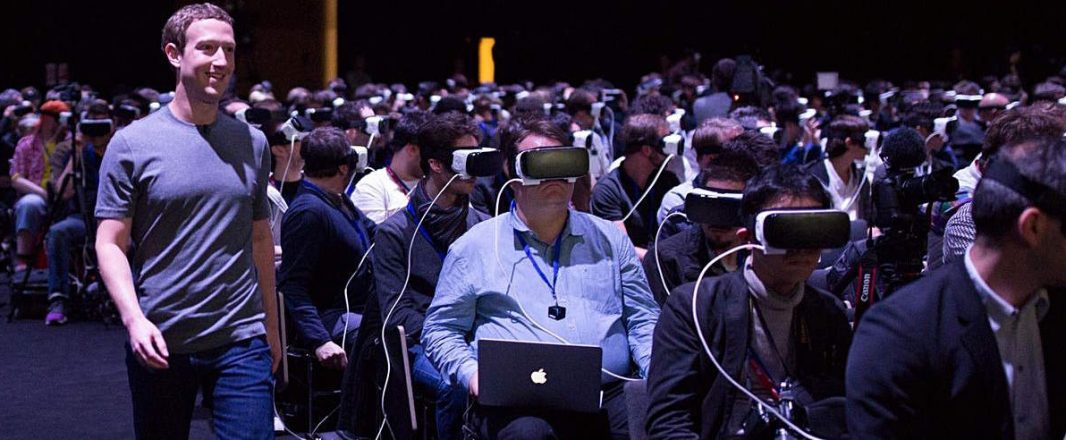
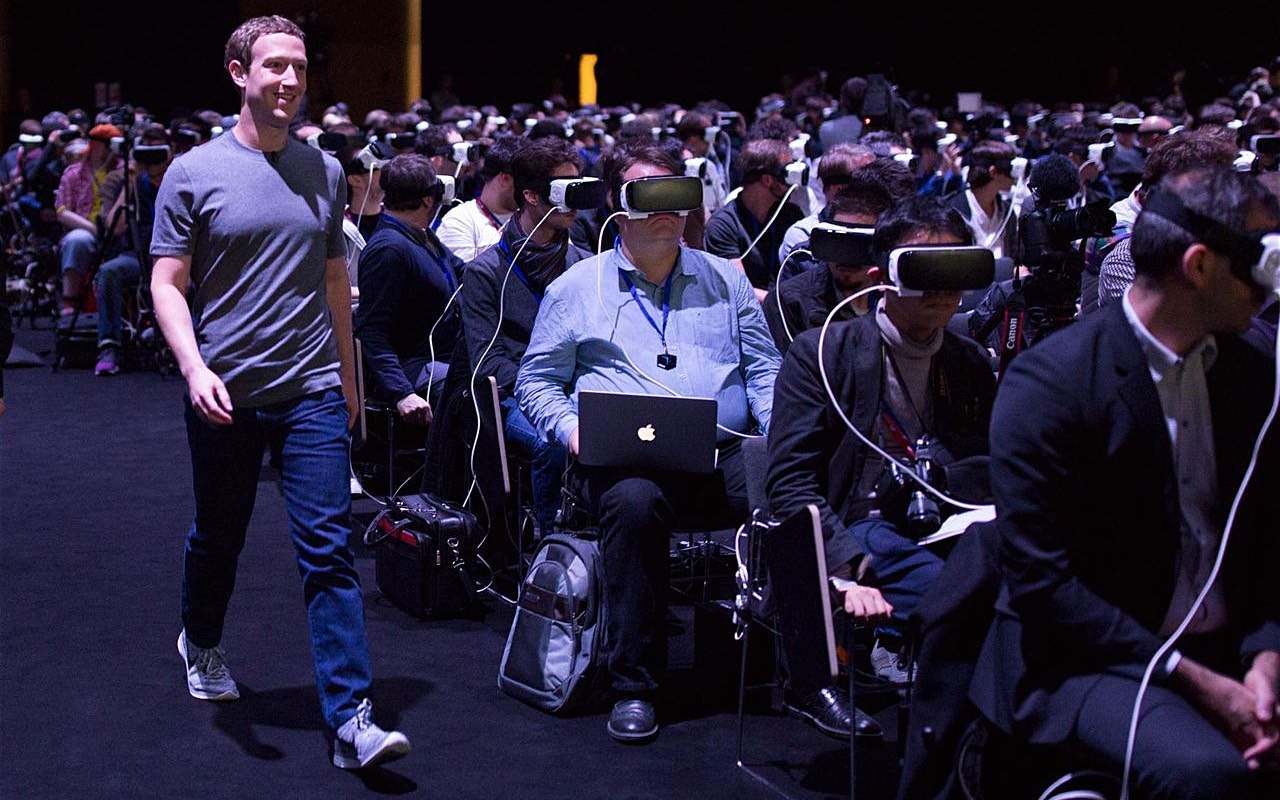
There’s a by-now famous photo that’s been making the rounds in the digital world – it shows Mark Zuckerberg striding very confidently down an aisle in a room full of people wearing Virtual Reality headsets.
What struck me in the photo was not that Zuckerberg looked inordinately pleased with himself or that humans were wearing these odd contraptions on their heads but that the humans in the picture were all MEN. Not a single woman in the whole picture.
Pundits are calling VR the next game changer in content. Michael Tchong of Ubercool said CES was a coming out party for virtual reality with Facebook now pushing VR to ad agencies.
In his newsletter, The Inside Scoop, he said “the buzz is sparking interest globally, with 39% wanting to watch VR movies and 38% interested in VR gaming. Since 2012, investors have poured nearly $1.5 billion into VR companies, says CB Insights.”
My concern is that leadership in the VR space will be as male-dominated as it is in other areas of technology, and there will be an over-emphasis on content for hardcore gamers to the exclusion of everyone else, regardless of gender.
It seems with VR, the industry has got a chance to get things right, make it more balanced and there needs to be a more diverse voice that’s shaping the technology as well as the content that will be possible with this new form of storytelling.
So I want to make a case for why VR storytelling especially in travel will resonate better with women than men. And forgive me if I have to generalise but in such matters, there’s no avoiding generalisations – just bear in mind there are always exceptions – but generally, generalisms are true.
Women are more ruled by our emotions. When I show VR travel content to both sexes, there’s a marked difference in the reaction. Women show more excitement. Men try to look cool. Women marvel at the moments, men are rationalising and thinking of the practical applications.
I remember tearing up at my first VR experience of seeing Shangri-La because I could see the old town of Gyalthang and the parts that had been burnt in the great fire of January 2014 and I felt such a sense of sadness for the loss of thousands of years of heritage.
Last weekend, I asked four girlfriends to give my new Samsung VR gear a whirl and shared with them travel content created by Brand Karma. Their responses were both endearing and amusing.
Uttara Sarkar Crees who runs Gyalthang Eco Travel in Shangri-La knows the place like the back of her hand – she’s lived there for 17 years. She said, “The experience was so real that as I virtually started driving on the roads in Shangri-La, I almost started being a guide and telling you all what was on the right of the mountain we were seeing.” Of course she also jested that it almost gave her a “high altitude headache”.
Susana Rodriguez: “All I want to do is travel to the same places I saw and felt but this time feel it on my skin.”
Susana Rodriguez was most animated, moving her head up and down and walking around she almost bumped into my furniture. “I felt as if I was entering into a box, like a surreal dream. I wanted to run but there was emptiness. All I want to do is travel to the same places I saw and felt but this time feel it on my skin.”
I sent the photo of Mark Zuckerberg to George Mitchell, CTO of Brand Karma, for his comments, pointing out the lack of women, and this is what he said, “Amazing –I have seen that picture all over Reddit and Facebook and you’re the first one that has pointed out to me the fact that it’s a bunch of dudes. As excited as I am about VR, if our brave new future is lacking a woman’s touch, you can count me out.
“A consistent recurring theme that Mario (Jobbe, co-founder) and I have noticed in the VR community is the overemphasis on hardcore gamers to the exclusion of everyone else. The thinking being that only people willing to spend thousands of dollars on the latest hardware will be willing to pay for the expensive headsets. But if VR is going to be mainstream it needs to appeal to casual gamers and non-gamers.
“Whether this picture represents this particular demo’s lack of appeal to women, the general skew of the MWC, or an indication of the overall state of VR, content providers should be aware that if they ignore women, they do so at their peril.”
If VR is the next level in travel inspiration – in exciting and engaging travellers at the Dream stage – and we already know that women play a highly influential role in purchasing decisions in leisure travel, well, I reckon it’s going to need a woman’s touch to make it real and get us away from the gender stereotypes that we still see in travel marketing and advertising. Who’s with me?