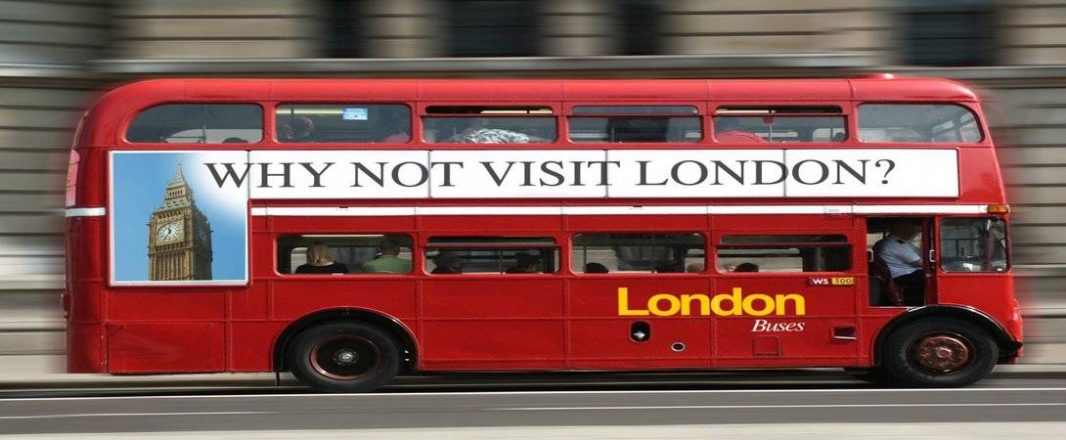

The experiment, which took place during Social Media Week, saw Martin Pasquier take on Singapore while Daphne, who confesses she is addicted to both social media and travel, trundled off to London.
Said Daphne, “The thing that I was most afraid of before the trip was the cold and it was the most challenging part of this entire experiment, in my opinion.”
She said she did not even have the opportunity to worry if social media would let her down because within six hours of her sharing the Facebook page with her friends, she got an offer from a stranger who offered her a night’s stay and food “in exchange for a non-social media night of board games”.
“As such, the inability of not being able to find food nor accommodation never really did surface as a challenge.”
She was fortunate to also receive three hotel stays – Mayfair Hotel London, Town Hall Hotel and Apartments and Sanderson.
“What surprised me was seeing how strangers were willing to help this girl who was alone in London. There was this girl, Kate, from Texas, who offered a lot of things – from accommodation, food, to even buying me clothes from Oxford Street. She thought I had insufficient clothes and wanted to help.
“I suspect it is because she too, had moved to London from Texas on her own, and understood what it is like to be alone in a big city. I was extremely heartened by her gesture. And no, she didn’t have to buy me clothes in the end, but she did treat me to a coffee.”
She used mainly Facebook and Twitter to communicate. “Facebook was useful for me to share a lot of information or photos and it was a good way for people who were following me to get a quick glimpse of what I was doing.
“However, Twitter was a much easier platform to communicate, make arrangements for meals etc, and get immediate responses for questions I had about London and the challenge.
“I won’t say that one was more useful than the other. Rather, they were quite complementary. Which was why I chose to sometimes put different content up on both Twitter and Facebook instead of replicating the same content as I reckon some people would have been following my journey on both platforms.”
As to whether she was concerned about her safety, Daphne said, “London is a fairly safe place that’s easy to get around. The main precaution I took was to try not to stay out too late. I did not think there was any danger in meeting up with people for meals.”
She said the experiment proved that kindness does exist and people are willing to help others “in need”.
“But if I had to pick a single memorable moment, it is when I met up with this Australian named Ben. He was a friend of a friend living and working in London. He wrote on my page offering accommodation and food. When I got to London, I asked if he was keen to meet for dinner.
“When I met him at the Tube station near his place, I realised he did not even know my name; he must have thought that his friend’s friend must be trustworthy. Moreover, there must have been some miscommunication as he thought I was going to stay with him. Turns out he had cleaned out his entire room, bought me 5 cans of beer, milk, a sandwich, and even prepared a fruit bowl. He was even going to pass me his keys and stay at his friend’s that night. I felt terrible as he had put in so much effort to help me yet I had to reject him as I had already checked into a hotel.
“But Ben definitely showed me the kindness in people to help a stranger whose name he didn’t even know. He eventually even bought me dinner and drinks that night and introduced me to his friends and colleagues. This kindness is something that’s worth talking about.”