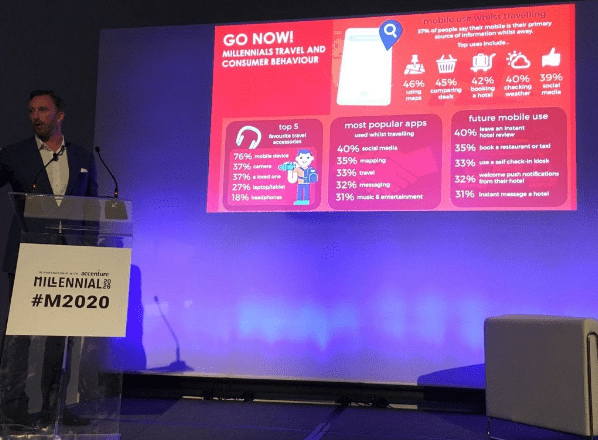
The Millennial 20/20 Summit Singapore saw the venue packed with fresh, young talent and industry veterans alike, asking the age (not very) old question – what do millennials want?
With Accenture predicting millennials in Asia will have US$6 trillion in disposable income by 2020, it comes as no surprise that every industry – from travel to F&B, fashion and sport – is vying to either catch or keep hold of our apparently shortening attention span.
Mark Liversidge, chief marketer and vice president of Hilton Worldwide, APAC, provided a refreshing take on the subject when instead of painting the typical simplistic image of millennials as narcissistic, self-entitled ‘youths’ with plenty of cash to spend, he argued that being a millennial “is not an age thing” at all.
Fundamentally, “age is irrelevant, geography is irrelevant and affluence is irrelevant,” Liversidge said. Instead, he regarded millennials as simply “an audience… in the heart of commerce of the next 30 years.”
More specifically, in his eyes, millennialism is all about being mobile – “the device that has become [another] organ in the human body” – something that transcends age. Putting ‘millennial spending power’ to one side, it is mobile that ultimately evolves every tech-savvy individual into an “instant retail consumer.”
“In travel,” he said, “that is becoming all pervasive.”
Liversidge argued that mobile phones have made us more spontaneous, savvier and arguably even pickier about how we plan and book our stays.
He shared statistics from Hotels.com’s Mobile Travel Tracker study, highlighting that 42% of global travellers have booked same-day hotels via their smartphones. Slightly more surprising still, 10% have even booked their stay right in front of the hotel itself.
The mobile device is what will ultimately enable industry players to provide end-to-end facilitation throughout the customer journey – from check-in straight through to digital billing upon check out.
The typical traveller will be more connected than ever before. It opens plenty of opportunities for brands and marketers to actively engage with consumers anytime, anywhere.
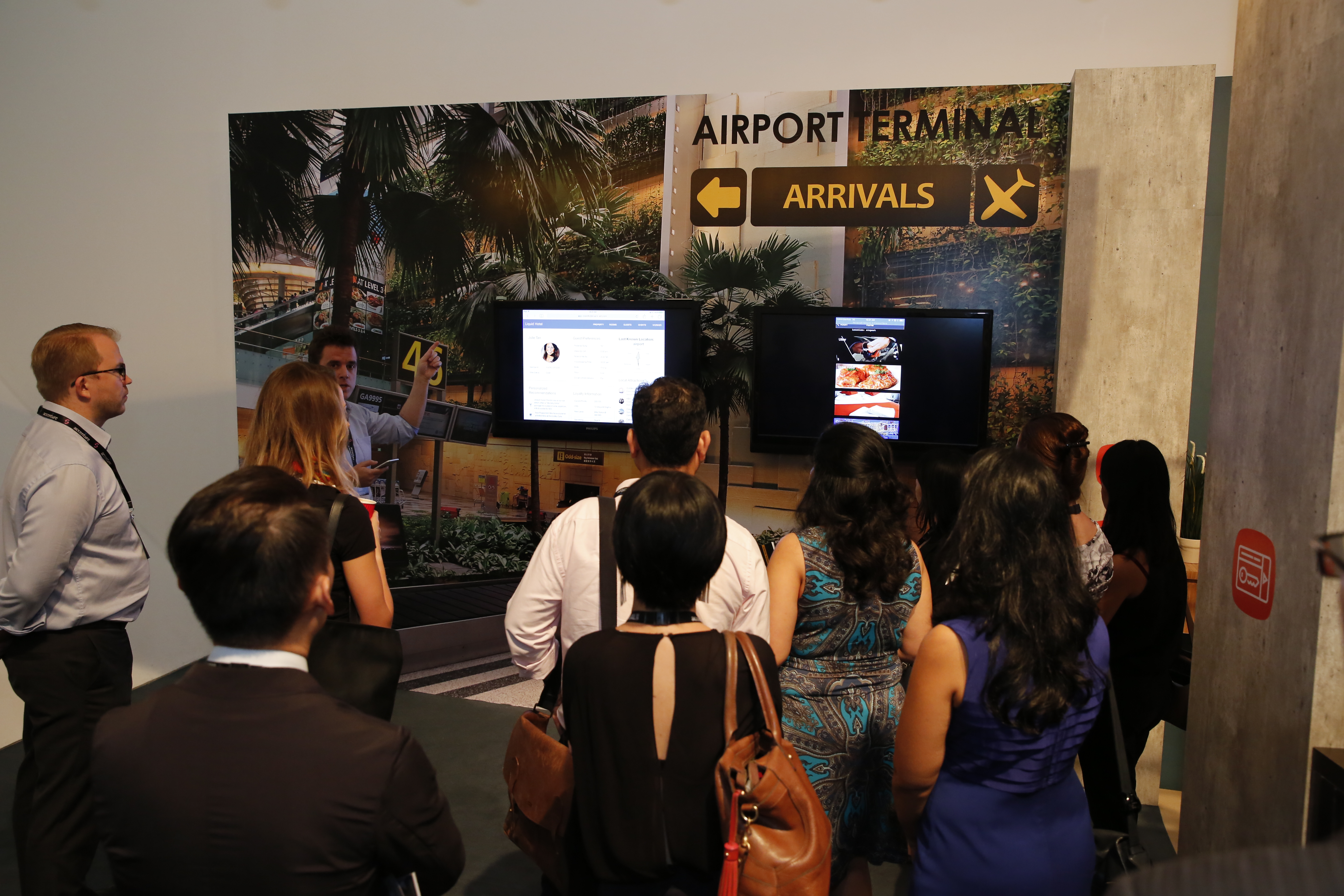
Accenture’s Connected Travel Showcase at Millennial 20/20
A tour of Accenture’s The Connected Travel showcase later revealed the many ways in which this sort of ‘instant’ service could be realised. It gave a sneak preview into what the ‘hotel stay’ or ‘airport journey’ of the future may look like.
It predicted that guests would be in far greater control of every aspect of their stay just through their smartphone. For example, building an online ‘travel profile’ of sorts would enable travellers to do everything from access their booking to identifying their exact needs before and during their stay, right down to the preferred thermostat temperature of their room.
Not least, the data provided through these digital identities would allow hoteliers to provide much greater degrees of personalised service and hospitality. Coupled with in-room technology, it would make everything from housekeeping to in-room dining far more efficient.
In turn, this sort of heightened connectivity through every moment of a traveller’s journey could do wonders for fostering greater consumer loyalty. If hotels can strike the right balance between giving guests the coveted ‘unique travel experience’, while catering to their personal needs, they’d surely hold an edge over their competitors.
All in all, while the travel industry has gone digital, the basic wants and needs of any given traveller ultimately remains the same. That being, when we enter a hotel (or any form of accommodation for that matter), we want to feel at home.
Embracing mobile to not only foster greater engagement with consumers but to build an almost personal connection with each and every guest.
To achieve this, Liversidge advocated that travel industry players get truly stuck into every aspect of the consumer journey. Corporations can attempt to build a unique community of consumers by creating a platform with a full lifecycle experience.
Or, failing that, companies can look towards a “build in community’ by going to where their primary consumers tend to interact already, and have a “purposeful presence and functionality, all the way through the purchasing funnel.”
Doing so would develop a clearer understanding of unique customer behaviours on both an individual and a demographic level, again, helping to reach that level of personalisation digital-savvy travellers are pining for.