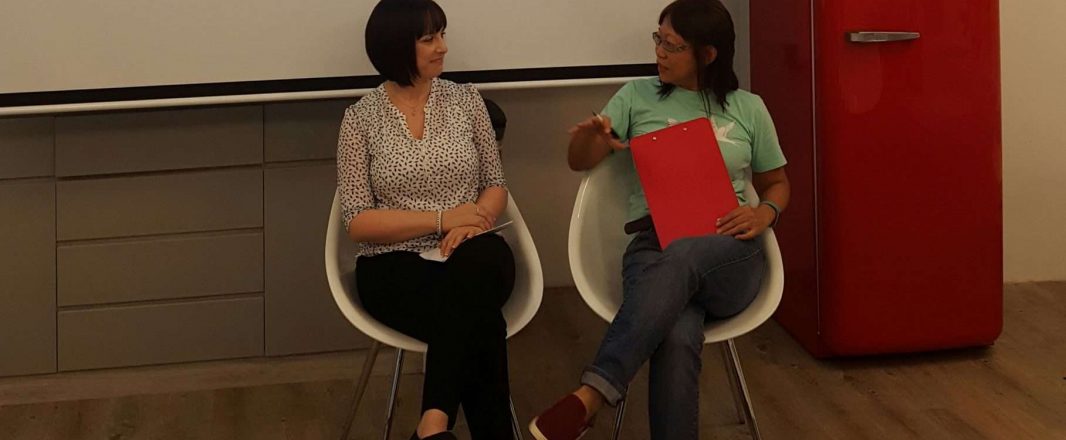
The inaugural Tern Tables was launched on Wednesday last week at Spacemob, the co-working space in Singapore. Sponsored by The Travel Corporation and HotelsCombined and in partnership with Travel Massive, the travel career coaching session focused on the power of emotional intelligence in a high-tech industry like travel.
Tern Tables is an off-shoot series by Tern that aims to reshape perceptions of travel as technology becomes more influential, as well as to showcase the new career opportunities that are arising in the space.
The first event saw Dr. Sarah Whyte, a specialist in EQ, teaching the audience various techniques that would benefit any individual in the workplace. She shared multiple strategies to reduce stress, manage conflicts and build an effective team were – all skills that actually transcend the workplace and into every aspect of life.
It comes at a great time. As travel goes online and startups are increasingly geared towards providing an automated service, the human to human connection that so much of the travel experience is built upon, is at risk of fading into the background.
Arguably, as technology becomes more pervasive, the “human” element of the entire experience must be emboldened. Establishing that same level of connection becomes increasingly more challenging and it is crucial that it is not lost beneath the pursuit of efficiency.
After all, as great as tech solutions like one-click mobile bookings can be, there is certainly always comfort in knowing that customers’ needs are understood on a human level, as well as a transactional one.
But even beyond making a true connection through technology, the benefits of boosting your EQ are countless. For example, Fast Company cited research by the Carnegie Institute of Technology that demonstrated that 85% of financial success was due to personality, ability to communicate, negotiate and lead. 15% was due to actual technical ability.
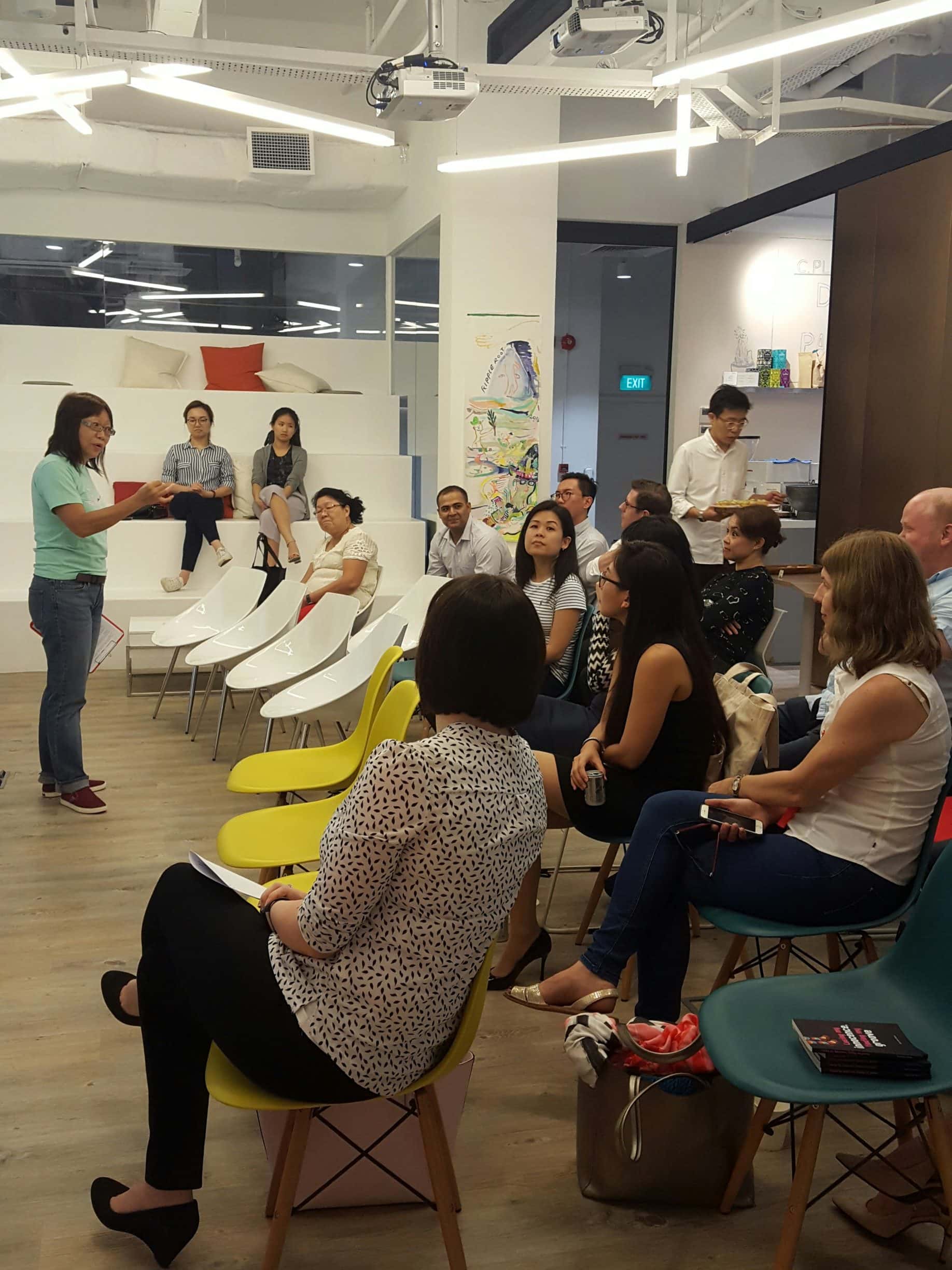
The event marked the first Tern Tables travel careers coaching session, launched by Yeoh Siew Hoon
Of the crowd that came to attend, comprising members of various startups as well as more established companies, it was refreshing to see everyone actively partaking in the conversation at Tern Tables. It achieved the ‘Tern Table ambition’ – to allow attendees to have some degree of control in shaping the outcome of the coaching session, maximising its benefit.
Members (both new and returning Tern delegates) asked targeted questions relevant to their own personal experiences in the workplace, as well as joining in various EQ exercises that can easily be adopted in daily life.
For example, to reduce stress, Dr. Whyte introduced a very simple deep breathing exercised that involved inhaling slowly for four counts through the nose, holding for two counts, then exhaling for six counts through the mouth. Whilst simplistic in format, a visible difference was observed amongst the audience (most of which had attended straight from the office) as their shoulders relaxed and their posture slackened.
One interesting exercise involved audience members naming the emotion or feeling they often experienced at work but were never sure of how to deal with. For example, one member cited feeling anxious when handling large tasks with tight deadlines, despite knowing that she was fully capable of completing them.
Dr. Whyte used the exercise to demonstrate that the simple act of being able to physically name the feeling out loud, acted as the first step towards being better able to process and manage that emotion. She then asked everyone to consider the variety of reasons why the named feelings continued to occur and observe whether there were any recurring patterns. Doing so, Dr. Whyte argued, would enable you to evaluate and come up with more effective ways to tackle negative emotions.
Enquiries spanned topics as broad as how to handle impatience with a colleague to effective ways to communicate with your boss or superior. For that Dr. Whyte highlighted that engaging in a conversation should mean far more than ‘listening to respond’.
Too often individuals fail to recognise what is truly being communicated to them as their focus rests on anticipating their answer or what question they should pose next. Simply drawing your attention to non-verbal cues shared by a conversational partner could do wonders for opening up new avenues for understanding.
When it comes to individuals that are more difficult to connect with, mirroring the other by subtly imitating their gestures and intonations can steadily cultivate a stronger rapport. Not to draw stereotypes, but this would be especially useful between more introverted software developers and typically extraverted startup founders!
Developing new planes of understanding would not only foster a more supportive company culture but also allow each individual to feel more comfortable when expressing themselves.
The event closed with The Element Pitch competition, where delegates were asked to pitch the unique quality that has helped distinguish them in their careers. Some of the highlights included: not being afraid to embrace change, positivity, persistence, and even simply understanding the power of gratitude at work.