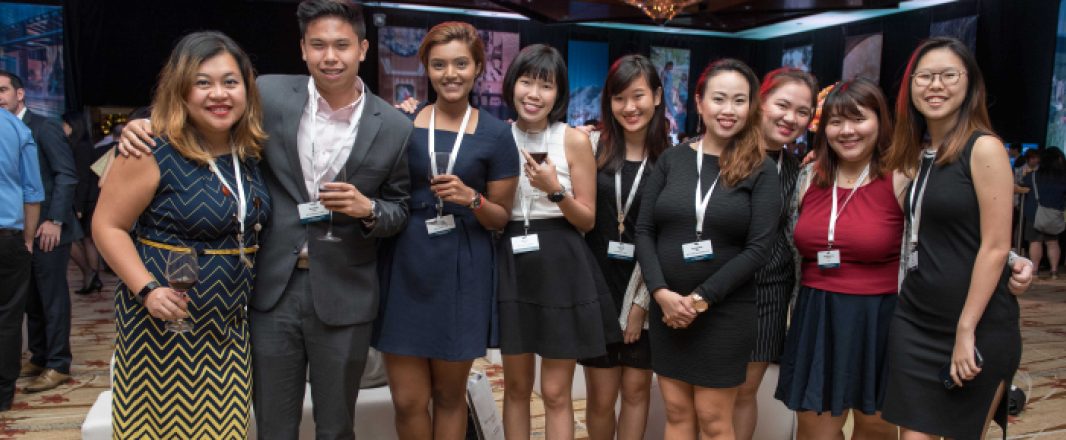
I was at the Accor Hotels Showcase last week. This is an annual roadshow put together by the fastest-growing hotel company in Asia Pacific to showcase their range of hotels across the region.
It’s an event that’s been going for 13 years (formerly named World of Accor) and Singapore was the final destination of the year and over a day, hundreds of travel agents, wholesalers, clients, airline partners and event organisers took time out to meet and contract with sales executives of Accor properties.
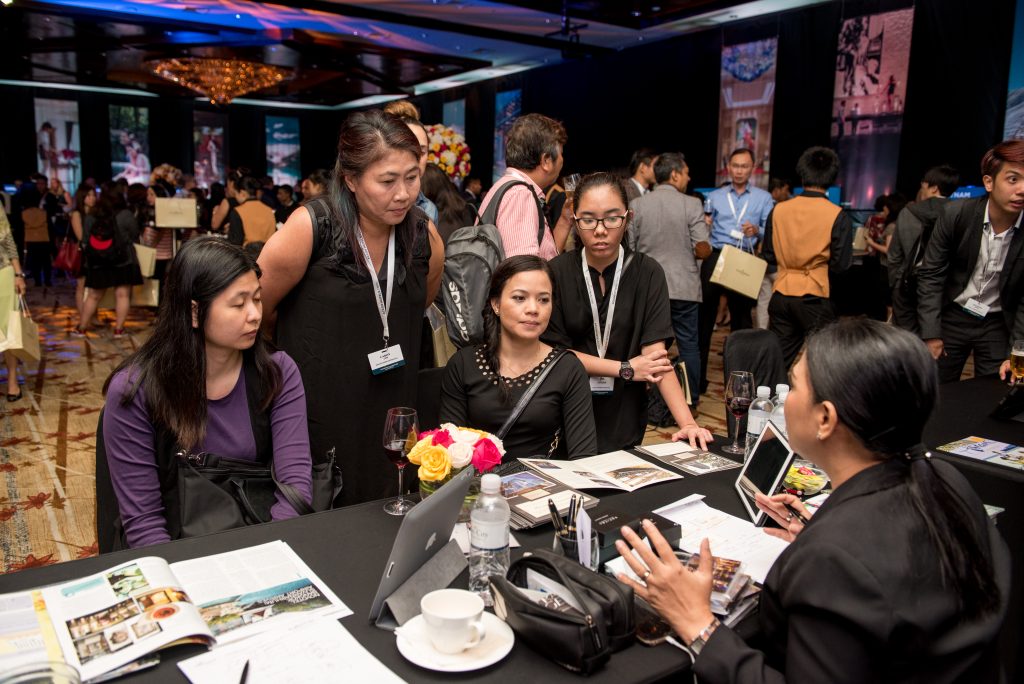
People selling to people at the Showcase
This year was particularly big because the group now includes Fairmont, Raffles and Swissotel brands in addition to your staples of Pullman, Novotel, Sofitel, Sofitel So, Ibis ( have I left out any?) – they ought to give prizes to those who can rattle off the Accor house of brands in 60 seconds or less.
Having just been immersed in two travel technology conferences – WIT Singapore and Phocuswright in Los Angeles – in the last two months, attending this very brick-and-mortar event and meeting real people who sell real stuff came as a bit of a jolt to the senses.
Maybe it was the real Christmas trees lit up at the entrance to the ballroom but I felt a sudden uplifting of the spirit to be among real people selling real stuff – people who still hand out brochures, people who take time to talk to you about their hotel rooms and facilities, people whose eyes light up when they talk about the different features of the bedroom, bathroom and ballroom.
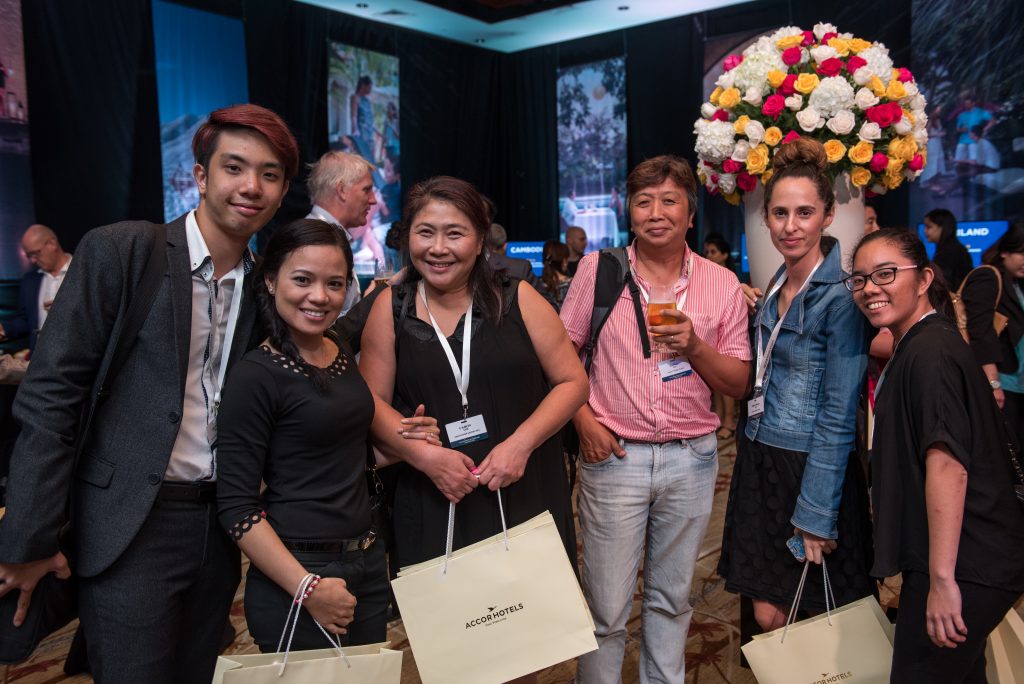
The foot soldiers of travel
These are the foot soldiers of travel, the sales executives whose job it is to put heads in beds. No last-click attribution or conversion ratios for them, just face-to-face look-you-in-the-eye selling.
With all the talk of Artificial Intelligence and chat bots and how it will change travel still ringing in my ears, it was refreshing to interact with Human Intelligence and I found myself wondering, is there a case for us to become more Human in a world where technology is crushing us with reams of information and brainwashing us with social filter bubbles?
Perhaps we need to dial up the EQ factor more so that humans become more human and elevate themselves beyond any level machine learning could possibly reach? After all it’s the one thing we can do that machines can’t yet – feel and empathise.
But EQ is more than just being touchy-feely, said Sarah Whyte at the inaugural Tern Table last week, a coaching session organised by Tern, the travel careers event created to bring new talent into travel as well as to impart life and critical job skills to ensure everyone remains relevant in a fast-changing workplace. (see related article)
Whyte started out as a primary school teacher in the Northeast of England and ended up in Singapore as an EQ coach and now finds herself in great demand by corporations in industries such as banking, technology and academia. And no brainer, it’s easier to teach kids EQ than adults because they haven’t had the chance to form bad habits yet.
With the right EQ skills and training, you can learn to manage stress (vital in a startup world in particular), deal with bullies or difficult people in the workplace, learn to work with people you don’t like, understand what’s not being said, engender trust and, ultimately, build relationships – the bedrock of any career no matter the profession you are in.
Remember, people get you places, not jobs.
EQ is also the bedrock of leadership – it helps you build great teams and get them to go into battle for you.
Whyte said how we communicate today – chats, emails, tweets, posts – affects our ability to hold real life conversations. We should listen with the intent to converse, not just respond, and we should look for visual clues beyond the words being said. We should not be obsessed with fixing problems we think exist – another characteristic of the startup world – but rather understanding and listening to clients’ problems. The challenge is to even get them to trust you enough to tell you their problem.
At the Accor Hotels Showcase, I was approached by a sales executive who had spotted me standing alone with a glass of wine in my hand. She comes up to me, gives me her name card and starts talking about her hotel. The cold call, the sales pitch, hard to do but it’s her job.
If she had attended the Tern Table event and picked up tips from Sarah Whyte, this is how she would have done it. Asked me a question about myself, listen, respond, look for visual clues as to whether I’m engaged or bored, strike up a conversation, lead into her sales pitch with a question asking, “Hey have you been to (the place where her hotel is located)” and take it from there, That way, I would feel I had been engaged with by a human who saw me rather than getting information I could easily find online.