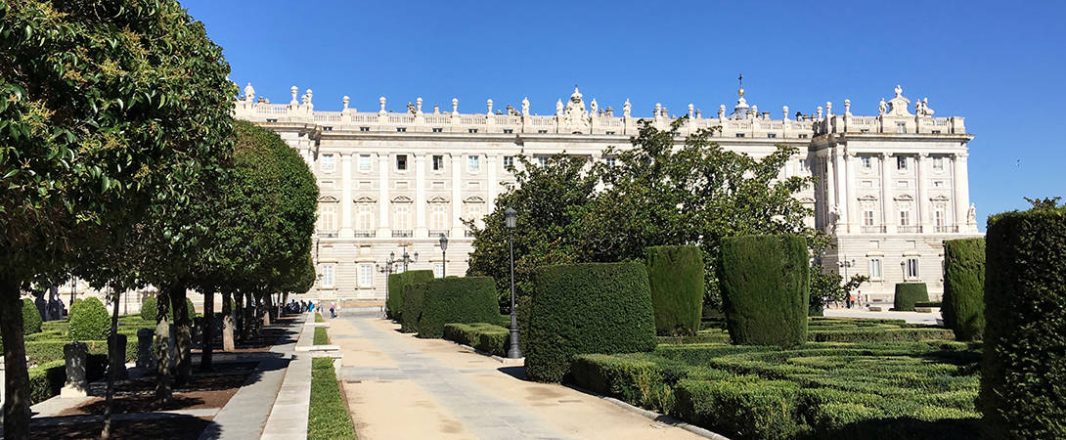
We arrived in Madrid on a Sunday, the last day of the Gay Pride weekend in which we were told two million people descended on the city. Across from the Westin Palace, a protest was being staged.
The hotel doorman shrugged his shoulders when I asked what they were protesting about. “Happens all the time,” he said.

A protest in Madrid on the day we arrived.
Madrid is a city as old as time, perhaps that’s why not much fazes its people who’ve been through so much turmoil and turbulence in their centuries of history. Indeed Spain is full of cities that are as old as time. In Toledo, the medieval city an hour outside Madrid, they are excavating archaeological remains dating back to 2,000 BC.
Before Madrid, we stopped over in Salamanca, the city famous for its university where Christopher Columbus studied and the first woman in the world, Beatriz Galindo, was admitted in 1495.
Salamanca was the first land stop after our seven-day Duoro River cruise with Uniworld. On our last night onboard Queen Isabel, we slept on the Spanish side of the river at Vega de Terron and then hopped on the coach to Madrid for the post-cruise excursion.
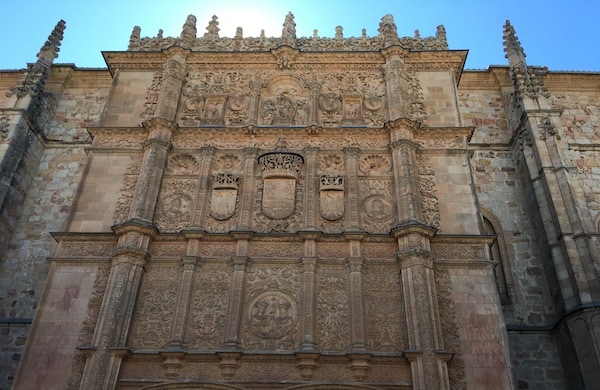
The university of Salamanca where Christopher Columbus was a scholar and it’s where most foreign students come to learn Portuguese
It’s been interesting and eye-opening, this first river cruise and I dare say my first ever group holiday with strangers. It’s not something I ever contemplated doing – after all, for the past 12 years and more, I’ve been writing about how technology has changed travel and how it’s empowered people to travel more freely and independently, plan and book their trips and discover places for themselves.
But now that I’ve done it, I can understand its appeal and why there’s still a huge segment of travellers who continue to book holiday packages and use travel agents. In fact in Asia, from Japan to Indonesia, it remains the bulk of the market and what this experience has reiterated for me is the power of the human touch.
It can never be replaced by technology but can be enhanced by it, if travel agents adapt and use it wisely to become better at what they do and add value to the traveller at every touchpoint.
1. It starts with distribution
The folks we travelled with were all web-savvy. They do their research online and enjoy doing it. That’s their dreaming. Some booked it through their travel agent, some direct. The group from the UK booked through a wholesaler, and they weren’t happy with that channel. This shows the importance of controlling your distribution – make sure whoever you have given the rights to sell you represent you well, otherwise it’s your brand that suffers.
2. Do what Google cannot do
Tour guides make or break the shore excursions. Most of the ones we had were good. A couple gave over-lengthy explanations and kept going over the same points and some were more information-dispensing than story-telling and let’s face it, it’s hard for humans to beat Google for information-dispensing.
So tour guides should do what Google cannot do – tell stories, do it with animation and humour and inject personal anecdotes.
Pilar, our guide in Lisbon, was great at sharing current political, social and economic information and relating that to everyday life so that we could relate better to the place we were guests of – how the population is declining, how the country is soccer-mad, how much the footballer Cristiano Ronaldo makes a year.
Frederico, our guide to Castelo Rodrigo, told us the story of the stork in the neighbouring village – how the bird was wounded and nursed back to health by villagers, who named it Joanna, how it became the town’s mascot only to be injured fatally in a fight with a dog and how they found out on embalming her that Joanna was a John. To this day, there’s a statue of Joanna/John in the village.
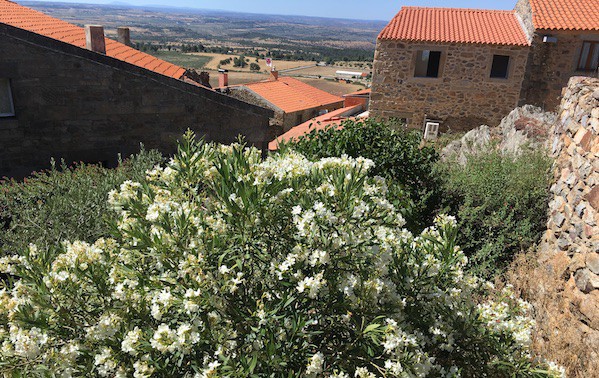
Castelo Rodrigo, a charming medieval town, known for its almond flowers and where we tasted everything made with almonds
Alicia in Salamanca told us of the declining fortunes and population of the Castille and Leon region and how tourism was being seen as the knight in shining armour that could help restore its fortunes – 60% of Spain’s cultural heritage sites are here and there are 400 museums and 500 castles.
Ana in Madrid made the history and art of Spain come alive when she took us on a tour of the masterpieces in the Prado museum in Madrid, and told stories that made us appreciate the brilliance of El Greco and the change in Goya’s work and style before and after the Napoleonic Wars – from light and hope to darkness and despair as seen in “The Black Paintings” series.
What guides should not do is give lectures. At the Museo de Duoro, the museum of wine, we sat through a Powerpoint presentation in a theatre and listened to a lecture about the wine-growing history of the region. It was too dry a delivery which did not do justice to the wines and the beauty of the surrounding landscapes.
3. Do what TripAdvisor cannot do
At every stop, our guides gave us their own recommendations of where to eat, shop and do during our spare time. And they made sure they weren’t tourist traps or places rated highly on review sites. In Lisbon, they recommended a “eat with local hosts” site called vizeat.com. We were seldom disappointed with their recommendations. Tip from Alicia: In Madrid, the best place for shoes is Calle de Augusto Figueroa in Chueca.
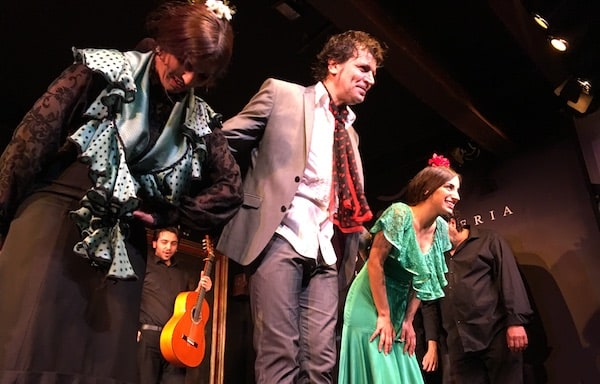
The flamenco performance at Corral de la Moreria, Madrid, which impressed us with their intensity and passion
In Madrid, we were taken to a flamenco performance at Corral de la Moreria. Frankly I wasn’t looking forward to it because I thought it would be too touristy. But the dinner and the performances were outstanding, and the performers true artists. The producer of the show, in explaining flamenco, said, “What you see on the stage is only the flower, flamenco is the roots underneath.” You wouldn’t get that on a TripAdvisor review.
4. Use technology to scale human power
During the walking tours, we had individual Vox devices so that however big the group was, we could always listen in on the commentary. It’s handy for tour guides because they don’t have to shout to be heard and great for travellers because we can wander off and still stay tuned in. It’s technology that scales the human touch.
Last year, I joined an alternative walking tour of London and had to leave the group midway because there were just too many in the group and I couldn’t hear the guide.
5. When all else fails, ask the customer there and then
Midway through the cruise, we were given a feedback form to ask what could be improved about the dining experience. On the last two nights, our requests for Portuguese cuisine were met.
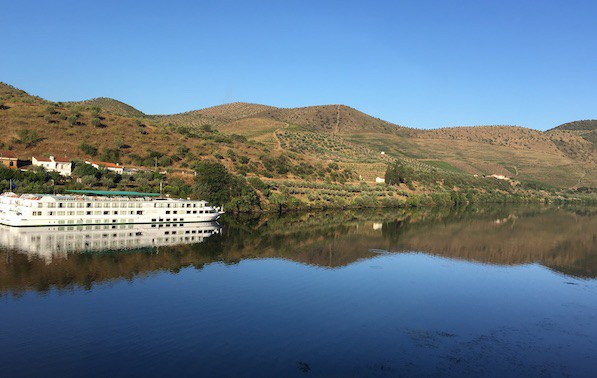
An early morning scene on the Duoro River
What this proves to me is that if humans do what technology cannot – such as use common sense, be creative, add personality and focus on service and experience – and use technology smartly and wisely to enhance all of that, you’ve got a recipe for better travel that your customers will come back for.
Now excuse me while I dream of my next river cruise.