Yeoh Siew Hoon catches up with the power woman who runs people and culture at Amadeus IT Group, Sabine Hansen Peck, and talks Asia, diversity, gamification, and even animals and flying.
If she wasn’t yet convinced, her latest whirlwind trip through Asia Pacific, which covered Bangkok, Tokyo, three cities in China, Sydney and Singapore, has left Sabine Hansen Peck with no doubt in her mind that “the future is happening here”.
The senior vice president for human resources, communication and branding for travel technology giant Amadeus IT Group said, “You don’t have to go to Silicon Valley anymore, Silicon Valley is really here. Having seen all the entrepreneurs, initiatives here, it’s really amazing.”
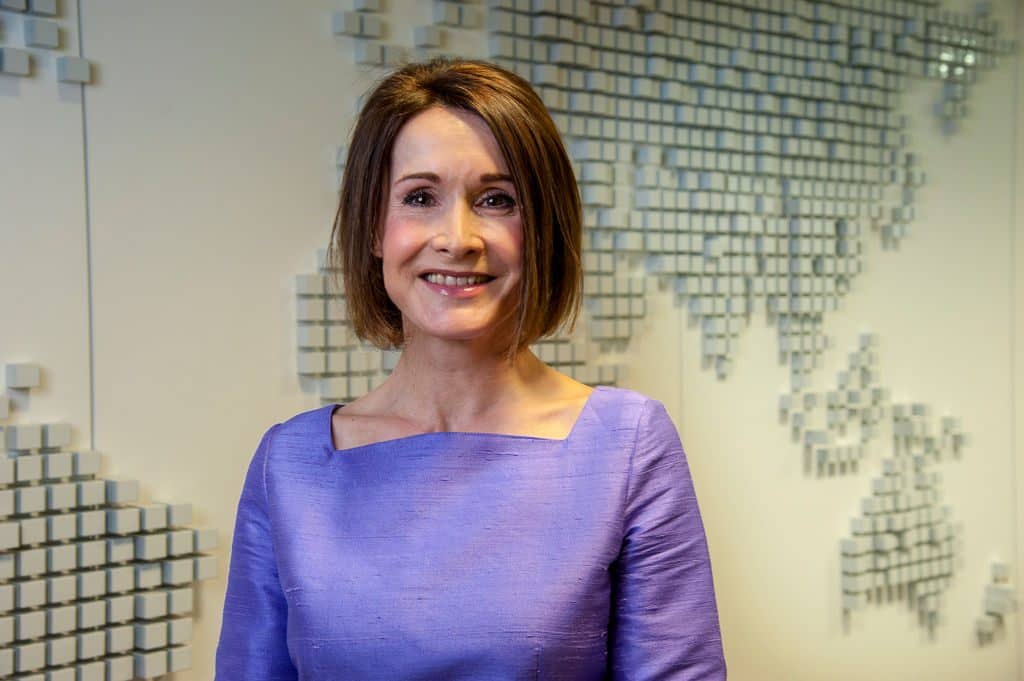
Sabine Hansen Peck: “I have the best job because I am looking after the one thing you can’t copy.”
Not that the pendulum shift to Asia has taken this veteran in human resource by surprise. It’s been building up a while already, she said, “but the pendulum never swings very abruptly, things shifted some time ago but it takes time for the full magnitude of the shift to be realised. Government infrastructure and policies have provided ground for this to happen and now we’re seeing the innovation, the entrepreneurs, the can-do attitude, the positive mindset – all happening in Asia.”
This is why she is making it her mission to allocate its resources, especially in people and culture, to support the future that’s unfolding in the region.
“I always say I have the best job in the company because I am looking after the one thing you can’t copy – people and culture. It’s the only competitive advantage you have, everything else can be copied. We must make sure we have the right talent, right culture, so we can continue to grow.”
With 15,000 employees globally spread across 195 countries, Amadeus directly employs 1,700 in Asia. Including partners, though, it has a workforce of more than 4,200 in the region, spread across 15 offices and 39 countries. Between 2012 and 2016, it doubled the workforce in APAC and Hansen Peck said that while worldwide headcount has grown by 11% on average, APAC’s has risen by 21%.
Having been in HR for 25 years and lived in six countries, Hansen Peck, who came into travel and tech, from a background in financial services and private equity (she came to Amadeus from Citigroup), said the whole universe of human resource management has changed – from new tools of recruitment and engagement, to changing expectations and different generational needs.
As such, traditional organisations such as Amadeus have to adapt to compete for talent, especially in the tech area against global tech giants which have stronger consumer brand recognition. “We are a B2B company so many people have not heard of us, but when they hear our story, they like us and we are able to retain them,” she said.
Managing cultural and generational diversity
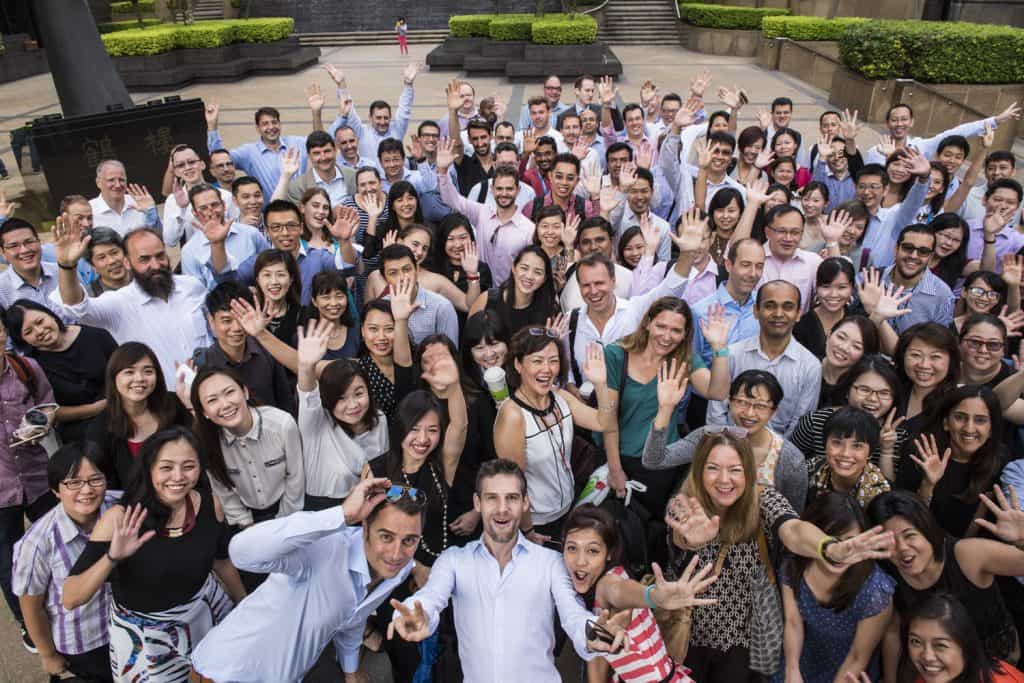
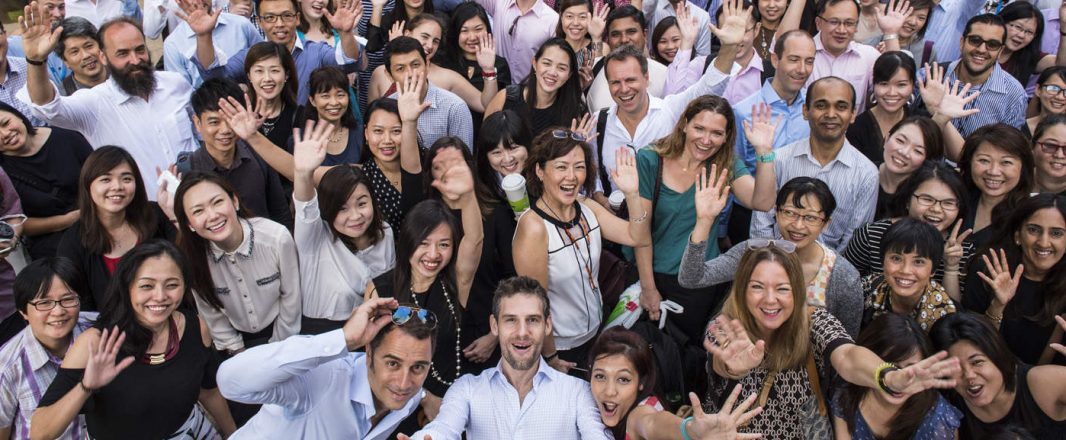
What she’s most excited about is the growing diversity of the Amadeus family. Its workforce comprises 132 nationalities, speaking over 62 different languages. In its Madrid headquarters, where she is based, there are 60 different nationalities working together. “That open-ness helps us to evolve.”
Being an established travel company – it was founded in 1987 – means it also has five different generations in one workplace. In a recent Youtube video, Hansen Peck broke down the workforce at 12% baby boomers, 35% Generation X and 52% Generation Y.
“While it can be a challenge managing different generations, ultimately it is a benefit. If you can combine wisdom and seniority with energy and enthusiasm, it’s a powerful mix.”
The millennial generation, she said, was shaking things up. “They are always looking for the next assignment, not afraid of hierarchy, they are better connected, they want constant feedback and they like gamification.”
To cater to a generation that lives in the now and want instant, open feedback, Amadeus partnered with Ijsfontein, a company specialised in gamification, to developed the Amadeus Crew Game whose goals is to help avoid misunderstandings due to cultural differences among the different nationalities.
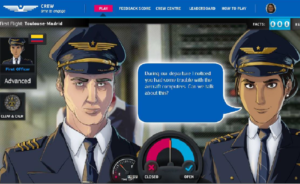
The Amadeus Crew Game aimed at encouraging open feedback
In the CREW game, Amadeus employees learn and practise the CALM & CLEAR feedback model which sets up clear and specific guidelines on how to manage conflicting conversations in a constructive way. The game – offered as a non-mandatory exercise to all employees worldwide – is a role-playing game where employees act as different characters as they manage challenging conversations.
“We wanted the stigma of giving feedback to go away. It addresses the dilemma of ‘how do I provide feedback without destroying the relationship?’. Without advertising it, we had 6,000 people playing it when it was launched, and there continues to be good engagement. We had super positive adoption without pushing for it, people see it as valuable support especially in the annual performance process.”
“A quota has negative connotations, it could diminish a woman’s contribution”
She is proud of what Amadeus has achieved in terms of gender diversity. There’s 30% women at the executive committee level. Her goal is 50%. Currently there are no Asians at that level. “It will not remain that way,” said Hansen Peck.
In APAC, the workforce is 43% women, 57% men, representing 30 nationalities with an average age of 36 years. “Since I started, the number of women in senior positions has grown five times. The journey is not over.”
But why does it have to take a woman to push gender diversity? Why can’t it happen anyway, I asked Hansen Peck. “You need critical mass for things to happen, you need sponsors for certain projects. If you want an outcome, you need to plan to make room for it.”
Asked if she believed in having a quota, she said, “I believe in providing equal opportunities, and people reaching goals based on their merit. A quota has negative connotations, it could diminish a woman’s contribution. You have to review processes to achieve critical mass which then creates a momentum. For example, we reviewed our salary processes to ensure there’s no difference in renumeration for men and women.”

Pablo Alonso, running APAC: Same best practices apply when it comes to promoting gender diversity.
Pablo Alonso, human resources director for Amadeus APAC, observed that gender diversity was a fragmented story in the region. “In the Philippines, it seems to be quite an equal society – we have 50% women in engineering and three quarters of our senior leadership are women. It seems to be similar in Malaysia and Hong Kong.”
But while markets may be different, Alonso said the same best practices applied across the globe. “The key is for us to keep asking, have you made sure you are applying the right approach, are we overlooking someone who hasn’t raised their hand?”
Hansen Peck said diversity makes good business and human sense. “Research shows that it starts at the 15% level. When you have enough women, you will see 15% growth on the bottomline.”
I quipped perhaps that’s why Amadeus has performed so well in its last financial report and she of course agreed. While she was in Singapore, she spoke at a women’s networking event and advised attendees to “make more mistakes and make them while you are young, it’s more forgiving”.
“We have to make sure we allow rebels to survive”
She said workplaces had become such dynamic environments that “you need to break the rules”. She calls it the VUCA world – volatile, uncertain, complex and ambiguous.
Just as how it’s hiring has changed – it no longer waits for CVs, it uses social media, it organises hackathons in universities – what it looks for has also changed. “We want people who are constant learners. You have to be a learning organisation otherwise you’re not going to survive. Look at Amazon, it’s so adaptive in its business model, it is constantly learning, that’s why it’s so successful.”
Asked if rebels can survive in a traditional organisation like Amadeus, she said, “We have to make sure we allow them to survive.”
This is where challenges of integration have to be handled well. In the past 36 months, Amadeus has integrated nine companies – the two biggest of which were Navitaire and Newmarket International which has become Amadeus Hospitality. Both have gone smoothly and the key lesson learnt is “you need a coordinated approach between all the core functions of the businesses”.
When considering acquisitions, Hansen Peck said culture is a key factor. “If the culture doesn’t fit, don’t do it.”
Hansen Peck sees AI and machine learning as a “fascinating and intriguing” challenge as to how it will affect jobs. “Some jobs do lend themselves to AI, like call centres. However another dimension will be added and it will create new jobs. We should not be governed by our fears, but by opportunities.
“In a complex world, which is getting confusing for consumers, the consultative part will be adding benefit to consumers.”
Her best hire was to take a bet on someone who didn’t have the experience but had a lot of potential. “I took a big risk and it worked out.” Her worst hire came from not listening to her gut instinct. “That’s the sum of our experience, we should listen to it.”
The worst part of her job is letting people go. “Any HR person will tell you that. Every single one you have to do, you look at the person as a human being, not as an employee. It never gets easier, not for me.”
And even though Hansen Peck said her passion is people, interestingly she said that if she weren’t doing what she was doing now, she’d be a veterinarian in Africa. And staying true to what she said about constantly learning, she’s taking her first flying lesson in Germany.
“Maybe I will become a flying vet and bush pilot in Africa,” she laughed. Given the hour we spent together, I have no doubt that if she wanted to, this woman would make it happen.
Note: Pablo Alonso will be speaking at the Tern, Travel Careers event on August 26 at Novotel Clarke Quay, Singapore.