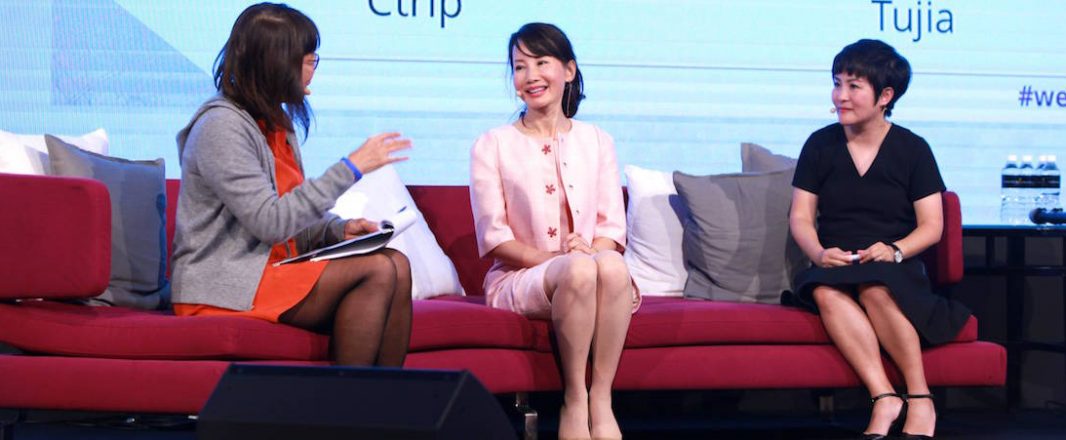
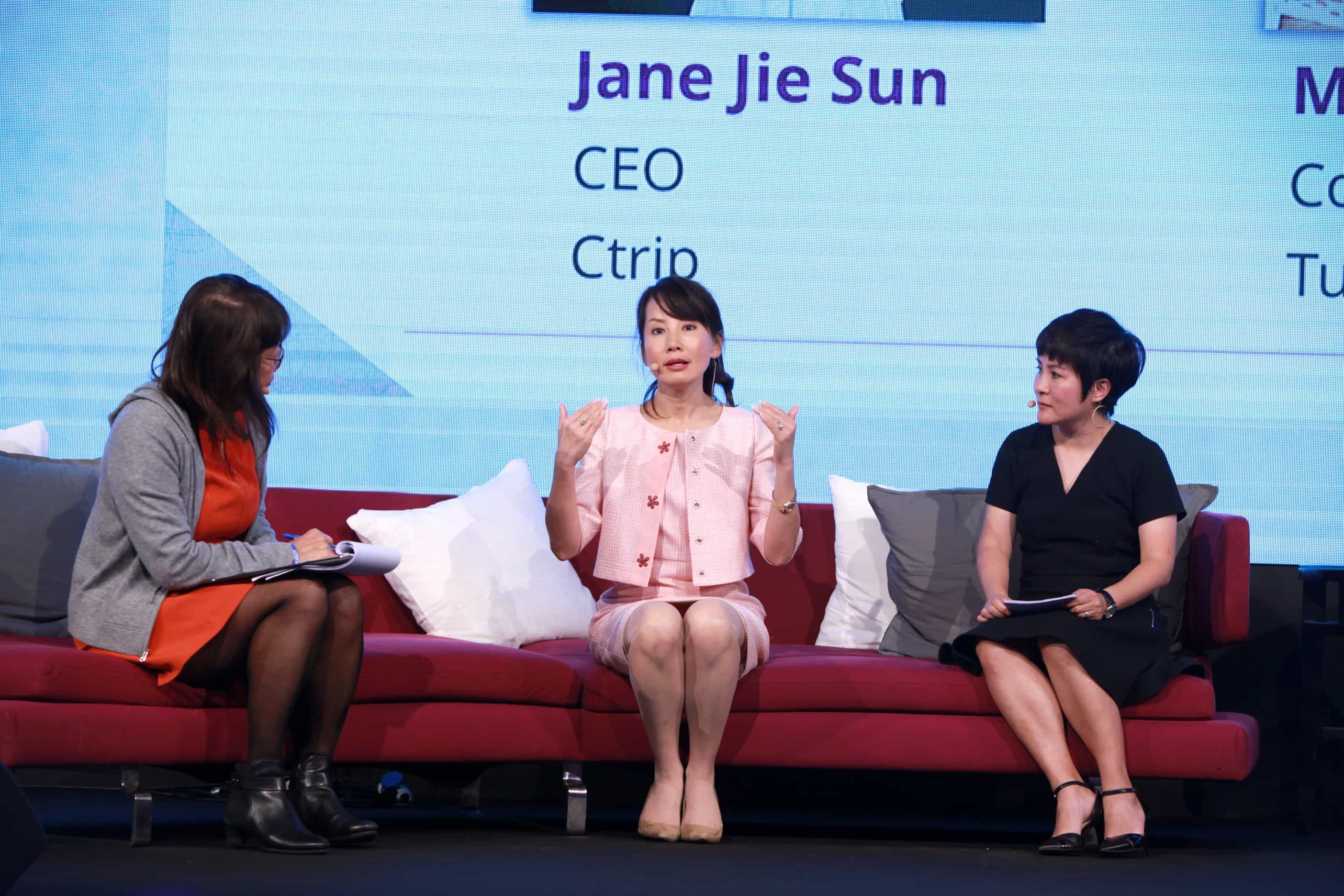
The first day of WIT 2017 ended on a high during an intimate chat with Jane Jie Sun – CEO of Ctrip; arguably one of the most intriguing businesses in the travel landscape.
Sun gave a very open and honest account of her poor family background and how an once-in-a-lifetime opportunity to study abroad led her to become one of the most influential figures in travel today. Even more, how her mother’s attitudes to women as equally powerful forces in society helps shape a culture of gender equity in Ctrip.
When asked whether she felt gender quotas in the workplace were necessary, Sun said that ideally “in theory, it should be merit based, but because of the ‘traditional mind’, sometimes quotas will reverse the trends faster.”
Her attitudes to women in positions of power and influence, and perspective on gender equity are attributed largely to Sun’s family’s history under China’s communist government.
“My mother was the first generation after the communist party takeover… and Mao made women quite equal. My mother was taught women hold up half of the sky. In my mind, women should work. Even after they get married or have babies. When I went to the States, I was very surprised that not every woman works. I thought the USA was so advanced.”
Sun said she felt a huge burden of responsibility as the only female CEO in the internet space, to position other women in strong leadership roles. “I want our young employees to see these role models to understand that if they work hard, they can thrive too.”
Ctrip also took strides to combat and overturn China’s infamous “one child policy”.
“When China had this [policy]… and the government would penalise our employees for having a second child, we would authorise a loan for our employees to pay off that penalty.”
The company also took it one step further, by offering strong support for growing families through financial contributions and giving them the tools they needed to keep working effectively.
“For Ctrip, when a baby is born, we give then 800 yuan as a gift. When they go to school, we give them 3000 yuan as an education fee…” If a parent chooses to work from home, the company provides hardware and software they require to be productive. The company also built an onsite nursery to enable employees to bring their children to work.
“I want to work very closely with our females to establish leadership that co-operates and takes corporate responsibility.”
This leadership style extends beyond women and into the next workforce generation, as Sun continues to enforce a philosophy and culture of innovation at Ctrip.
She described the Ctrip’s “Baby Tiger Programme” which encourages employees to put forth their business ideas to upper management and test them out, using company resources. “We encourage our young employees to dream. We give them funding… it is our incubation system.”
“There are so many wonderful, talented kids much smarter than I am… [China] was so far behind the rest of the world and when Deng Xiaoping opened the door, we realised there are so many things we can learn.”
“You see this eagerness for Chinese kids to learn. On the reverse side… the eagerness to learn about China compared to Chinese students learning about the world is still a little bit flat.”