
In the news: Tokyo Station gets a chatbot helper; Ctrip and Royal Caribbean Cruises to end JV; Klook boosts its executive team to help with global expansion
ARTIFICIAL INTELLIGENCE: Tokyo Station now has an AI concierge to help travellers
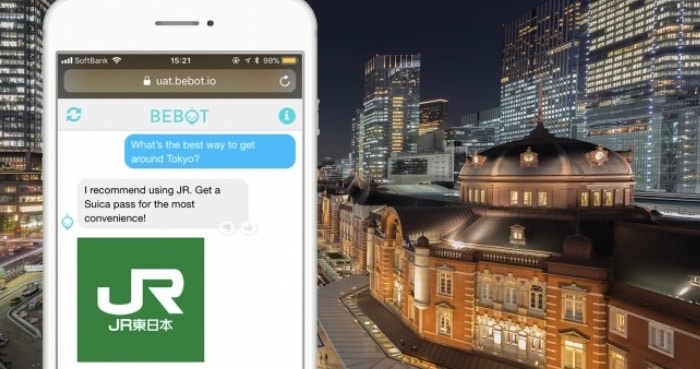
Bebot is your AI guide based in Tokyo Station.
Tokyo Station, the train hub of Japan’s capital and home to the world famous Shinkanshen bullet trains, is one of the busiest railway station in the country and many tourists may need help to navigate it. Now they may not fear being lost in transit as Bebot, the AI chatbot concierge, has started working there as a ‘guide’.
Bebot, built by Tokyo-based Bespoke Inc., acts as a personal concierge for travellers. It was launched in April last year, and is already providing services in Narita and Haneda international airports and hotels globally.
The AI service in Tokyo Station is made possible in a collaboration between Bespoke Inc and Tokyo Station City.
English- and Chinese-speaking users can utilise Bebot when transferring from airports to their hotels by train, or if they just want to explore the extensive Tokyo Station transport and shopping complex. They can access Bebot by scanning a QR code printed on posters and flyers throughout the station, and use it on the trains and station platforms as well as at the shops.
Visitors holding Japan Rail Pass vouchers can ask the AI concierge to help find the exchange centre to receive their pass.
Bespoke Inc said Bebot also acts as a guide to the city’s landmarks and sightseeing spots and local restaurants.
A GPS redemption system allows visitors three hours’ usage of Bebot after the initial access, and they can redeem unlimited access anytime they return to Tokyo Station.
Bespoke Inc. developed Bebot’s AI technology using both human chat services and AI. Users can ask specific questions related to travel and receive tips, directions and reviews without leaving the chat screen. Another of its product is LEVART travel community with users from over 100 countries.
CRUISES: Ctrip to end SkySea JV with Royal Caribbean Cruises
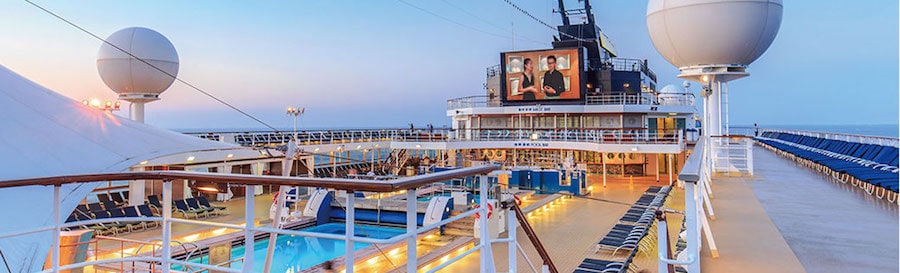
TUI’s Marella Cruises will purchase Golden Era.
China’s largest OTA, Ctrip.com International, and Royal Caribbean Cruises Ltd. (RCL) are ending their China joint venture, SkySea Cruise Line (SkySea), in the autumn of 2018.
Ctrip said TUI AG’s Marella Cruises, formerly Thomson Cruises, has agreed to purchase the cruise line’s sole ship, Golden Era, with delivery expected in December 2018. Ctrip and RCL currently each own a minority of the Shanghai-based SkySea, with the balance owned by SkySea management and a private equity fund.
SkySea, the first smart contemporary cruise line specifically developed for the Chinese market, has been operating Golden Era since May 2015.
SkySea will continue operations with the final voyage to be confirmed in the coming weeks. By the time of its final voyage, it will have operated close to 300 cruises and carried nearly 500,000 guests in just over three years.
Ctrip said the cruise business, which generated over 70% revenue growth year-over-year in 2017, would continue to be an essential part its one-stop platform. It would continue to work closely with all the cruise lines including Royal Caribbean.
RCL, through its Royal Caribbean International brand, will continue to serve the Chinese market with the largest fleet deployment in the region and working in collaboration with Ctrip.
The cruise market in China is still in early stages but holds big potential. In 2017 there were less than three million cruise passengers in China, compared to the over 10 million passengers for the US market.
PEOPLE: Klook beefs up management team for global expansion

Liu (left) and Ngai to help in Klook’s global expansion. (Image credit: Klook)
Hong Kong-based tours and activities booking platform Klook has appointed two key executives to help in its expansion worldwide.
Anita Ngai is the company’s new chief revenue officer. She will focus on scaling up marketing channels, furthering partnerships and strengthening relationship with trade, tech collaborator and consumers in Asia Pacific, as well as in the Americas and Europe.
Prior to joining Klook Ngai was the general manager for the Asia Pacific business of Viator (a TripAdvisor company) and head of marketing Asia Pacific for Expedia’s Hotels.com. She has also worked for Link Asset Management, Asia’s leading REIT, and McKinsey & Company in New York and Greater China.
“It is an exciting time to be in the tours, activities, and in-destination service space. Its complex and fragmented supply creates a large opportunity for online platforms to differentiate themselves by serving the rising demand in a more comprehensive and personalized way than ever before,” said Ngai.
David Liu is the new chief product officer tasked with driving Klook’s product innovation and user experience. He joined Klook in 2016 as vice president of product and UX. He has helped developed solutions for the company including Klook’s Android Instant App and localise Klook platforms into eight languages. His previous working experience was with China’s Tencent and Yahoo.
Ngai and Liu join Klook’s CEO Ethan Lin, president and COO Eric Gnock Fah and chief technology officer Bernie Xiong on the leadership team.
“Our highly entrepreneurial and talented team is what made Klook into one of the pioneers for travel activities it is today,” said Lin.
“We are very proud to be able to add such well-seasoned executives into our management team. With that, and our recent funding rounds and accelerating user and supply acquisition, we are well-equipped to sustain Klook’s growth in the long run and pave our way to make Klook into one of the first Asian-grown startups to enter the global stage.”
Since its founding in 2014 Klook has raised nearly US$97 million from numerous investors. It obtained seed funding of US$1.5 million from Weight Capital (June 2015), US$5 million in Series A from Maxtrix Partners (October 2015) and US$30 million in Series B from Sequoia Capital and Matrix Partners (March 2017).
In October last year Klook grabbed headlines when it completed a US$60 million Series C funding, the largest deal ever for an in-destination service booking platform, to finance its global expansion. The funding was from existing investors Sequoia Capital and Matrix Partners, with Goldman Sach as a new investor. The company currently has 500 employees in 15 cities offering over 35,000 travel activities and services.
• Featured image (Tokyo Station) credit: SeanPavonePhoto/iStock-GettyImages