In an industry driven by profits and KPIs, you could be forgiven for losing sight of what the world really looks like.
At WIT Seoul 2018, much of the discussion revolved around how travel businesses should be responding to international issues from geo-political tensions to the brittle state of the global economy. Yet often, it is easy to overlook how the companies we operate have a tangible impact on the world we inhabit.
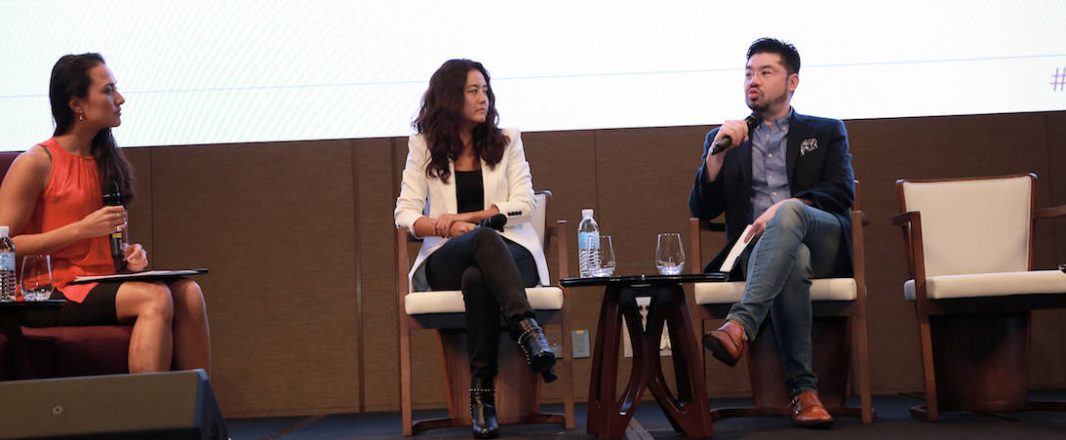
During the conference, Rajan Sakya (CEO, KGH Hotels Group, Nepal) reminded us about the kinds of impact we have in the travel industry and our collective duty to make sure that these impacts contribute positively, to trigger social change.
Sakya shared how KGH Hotels Group – a Nepal-based hotel chain made up of seven eco-friendly hotels – is designed to support social causes like female and youth empowerment, health, the environment and migrant labour support – without sacrificing profits but yet not totally focused on that either.
In particular, Sakya discussed how KGH Hotels works with Maiti Nepal – an organisation that rescues victims of human trafficking.
“It’s a very sad truth that every year about 9,000 Nepalese girls between the ages of 8 and 14 are sold at the border of Nepal and China. The organisation, Maiti Nepal, rescues these girls from the provinces and borders of India and houses [them].”
“Ten years ago, we started an initiative where we train these women and employ them at KGH hotels… so far we have trained and employed over 150 girls.”

The main ambition is to help rehabilitate the women back into society, arming them with employable skills that will help them return to and lead a normal life. On top of this, KGH has also designed an income generating and entrepreneurial project whereby the women can get jobs and be self-reliant.
Sakya essentially created a positive feedback loop where women are offered the tools, opportunities and freedom to choose the type of life they’d like to lead. In turn, KGH Hotels gains the benefit of being able to train and employ young workers, feeding back into the business in a positive way.
“These girls come in as entry level staff and we see the happiness in their eyes,” as they are empowered to take on jobs that also help them to break a cycle of poverty.
As significant of an effect as the programme may have, Sakya soberly reminded the audience that significant change could only come if all businesses are willing to take part.
However, it is not as simple as adding a ‘corporate social responsibility’ (CSR) dimension to the company. In fact, Sakya found CSR to be a problematic term because it positions a business’ efforts towards doing social good as being secondary to driving profit, when it should really be integral to the business model and an equal measure of corporate success.
“We are trying to set a good example… When I started this programme, I wanted more hotels to do the same thing” but sadly, too many viewed it as coming at the expense of profit. Though, this shouldn’t have to be the case.
“People think ‘once I make money, I will do x’… but I think from day one itself, companies should have some idea of how they plan to give back to society.”
One way to encourage this, Sakya says, is for OTAs to use their power and influence to raise the profile of those who contribute to a clear social good in the eyes of the consumer.
“I would really love to see an OTA give a certain badge or recognition to hotels that make these initiatives, so that tomorrow, more hotels will want to do it, so that they too can be recognised.”
It could be as simple as prioritising social, sustainable enterprises on search, identifying them with a ‘badge’ of recognition for their efforts, or even simply adding an additional search criterion to the list that already exists, like price and location, to help users in their search.
Sakya hopes this will ultimately have two significant effects. First, Sakya hopes that by showcasing social enterprises more actively, it will raise public awareness and make travellers more conscientious about making better, positive choices when travelling.
Second, he hopes it will incentivise companies to incorporate stronger social initiatives into their business models, in order to stay competitive and relevant.
“I think if you really want your company to be successful, it should always be tied up with social responsibility. The sustainability and success of the company will come down to more than just money.
“The reasons for you to continue with a company, and the reasons for its success are more significant if you have some kind of social responsibility tagged to it from day one.”