Some might argue that John Brown, the new CEO of Agoda, has a harder job today than Rob Rosenstein, the man whom he recently succeeded and who founded the Thailand-based hotel portal with Michael Kenny in 1998.
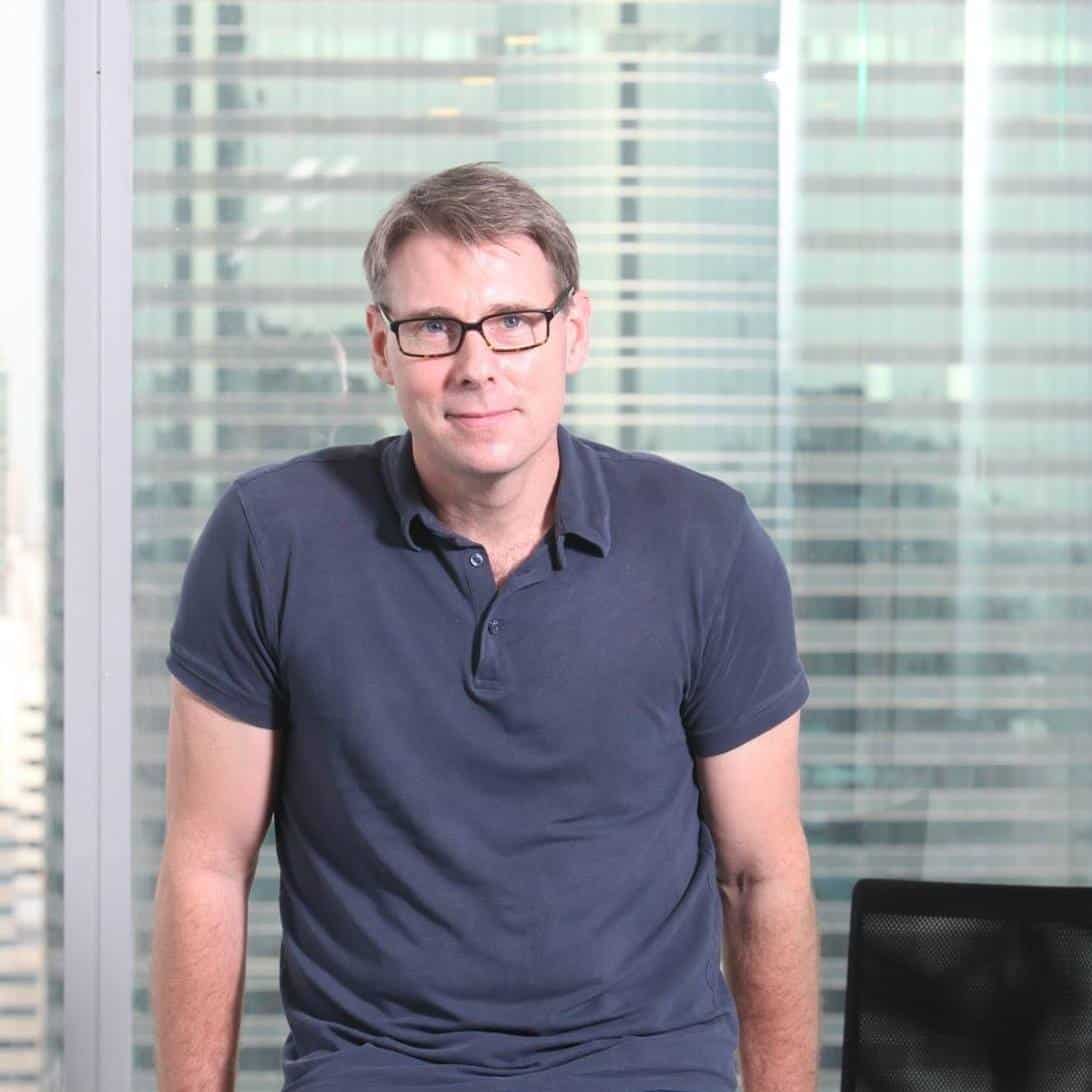
John Brown on the “super competitive” time: “Everybody is here, without exception.”
After all, back then, it was the early heady days of the Internet, there wasn’t a lot of competition – certainly not as intense and disruptive as it is today – and technology, okay, mobile hadn’t completely fragmented the customer journey, and you didn’t have words like machine learning, AI and blockchain to contend with.
Brown though completely dismisses this argument. “When they started, there were six to 10 competitors doing the same thing so there was competition. They were making no money and any hiccup meant a potentially life-threatening problem, business-wise.
“Founding a company is arguably harder, after all, they say 1 in 50 startups succeed.”
Having said that, he agrees it’s a “super competitive” time, with competition coming from all angles – from within the industry (Expedia, Ctrip, for example) and players like Facebook, Google and Amazon getting into the act.
Plus the fact that “every single player in the world now has their eye set on Asia. Everybody is here, without exception”.
While Agoda has diversified its business around the world, he said, it remains concentrated in Asia. “This does make it extraordinarily competitive. The good news is, we picked a great market early on.”
Brown, formerly with Boston Consulting Group, was working with the consultancy in Thailand when he was asked to work on a three-month project with Agoda. Clearly he liked it because he stayed on as chief product officer and later became chief operating officer.
“I liked the people, the culture. It was not particularly bureaucratic, fairly flat, people were smart, we looked at all the problems we wanted to solve and we solved them.”
Clearly though as the company has grown – it currently has 3,700 employees across 30 countries – that flat culture must have changed, I asked.
“Yes, we are much much bigger but the flatness is still there. We keep doors open, you don’t have to go through layer upon layer. We keep it informal still, you don’t have to call some big meeting to discuss things,” he said.

Yaron Zeidman: “Our emphasis is on how to operate fast because we are a fast growing company in a fast growing industry.”
“Yes, we want to meet John, we just open his door” chipped in CTO Yaron Zeidman, clearly Brown’s right hand man. “We’ve invested a lot in the last five years in leadership and training programmes and because we have so many staff spread out over so many countries, we do need training, policies and processes.
“But our emphasis is on how to operate fast because we are a fast growing company in a fast growing industry. We keep the culture balanced between top up and bottom down. People at the bottom know a lot about things at the bottom.”
Asked if it was a challenge to maintain a startup culture in a huge organization, Brown said, “People are not bashful about bringing in their ideas. One way to run a fast growing company is that we don’t have things that are 20 years or two years, we celebrate things are done in 2 weeks.”
In terms of internal communications, the company uses a variety of tools from Slack, Workplace, Whatsapp and WeChat. “We put in processes to serve the people, not people serve the process,” said Zeidman. “Slack is an interesting way of communication, you can ask anonymous questions.”
Brown added, “We believe in quick, rapid, open communications. The Agoda way of doing things is, don’t be bashful, break this thing, rebuild it.”
Asked if cultural differences could pose a challenge towards this “don’t be bashful” or “break this thing” culture – perhaps Thais aren’t as forthright as Americans – Brown said, “The people that we have are pretty outspoken, the Agoda culture transcends national differences.”
To keep teams flat, fast and open, Zeidman said it deliberately mixes teams up at all levels on projects. “It’s a good method – for example, at the engineering level, we put together diverse teams. Having many cultures together is better than just having two cultures. So we have lots and lots of meetings, we mix it up, we hash it out and everyone sees things in the process of being made.”
Brown’s succession to CEO has been fairly smooth. “As COO, I spent a lot more time with Rob than I did with my family,” he laughed.
Asked the one thing he’s learnt from Rosenstein, Brown said, “Rob has an amazing eye for people. He understands what they will be good at, what they won’t be good at and he pushes them in the right direction. He knows what motivates people, he cares about people. I like this culture, I am still studying that.”
Beyond people, Brown is clearly intent on making sure Agoda leads in product and tech.
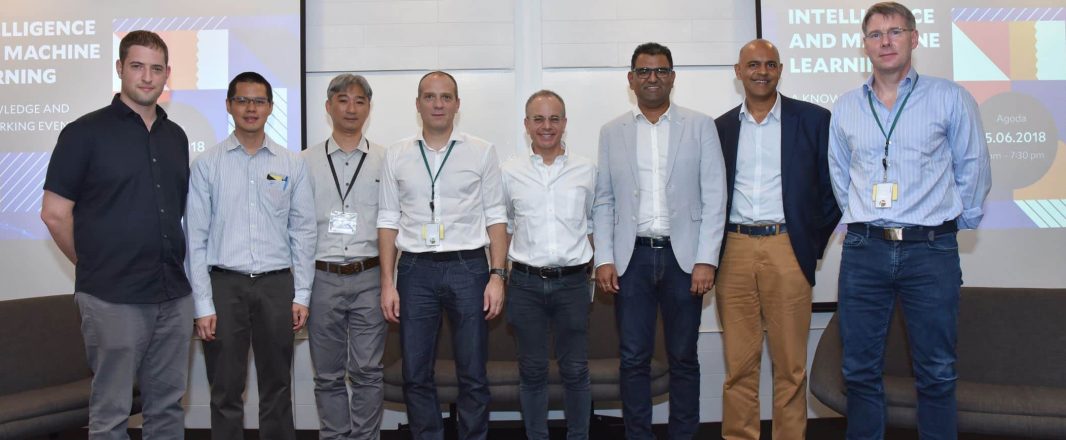
In Singapore to attend the Agoda Outside conference on Artificial Intelligence, which featured guest speakers from IBM Watson, Grab, AI Singapore and Visenze, he said in a world where “every social integration, every relationship” is being mapped out, AI was needed to make “meaning of everything”.
Zeidman added that six years ago, when he joined, there was no AI in Agoda. Today, it processes 30TB of data and employs 30 data scientists to “optimise marketing, user experience, best hotels, customer support”.
“It is hard to survive without AI now. In the past 20 years in engineering, you can ask, why does the platform behave like that? Now with deep learning and neural networks, you can’t explain that because computers take decisions that we can’t explain.”
Agoda, he said, takes a conservative approach to data and because it does not advertise on its platform, it doesn’t have to share third party data.
During the panel discussion, Idan Zalzberg, VP, Data Engineering, Agoda, who worked with a startup using machine learning to optimize marketing until he joined Agoda four years ago, said the first project was how to bid on Google. “That’s millions and millions of decisions and as we were doing that, we built the infrastructure and now we have 20 projects being tested, and with every change, we see the benefit. The key is how to make data science for everyone, as part of everything we do.”
Zalzberg said it is now moving towards “explainable AI”.
“For example, I may show you fewer options when you search for something but the goal is not to hide anything from you. As a consumer, you need to trust that I’m showing you what’s relevant to you. And the best way I can show this is by explaining why, hence explainable AI. As we continue to experiment in this space, we need to remember that it’s all about establishing a conversation between the user and the AI to create a much better experience overall.”
Featured photo: The men in AI – participants who took part in the Agoda Outside conference on artificial intelligence in Singapore included representatives from Grab, IBM Watson, AI Singapore and Visense.