
It’s opened my eyes to how big the market is getting, how much bigger the ships are getting and how, for the first time, instead of bringing their older ships to Asia, brands such as Royal Caribbean and Costa Crociere are bringing out their biggest and newest vessels to our part of the world.
You could call it a sea change (again, pardon the pun) for the industry.
RCCL is bringing in Voyager of the Seas (picture credit: Royal Caribbean) which is being hailed as a game-changer not only because of its size (capacity 3,.114 passengers) but also its facilities which includes a Royal Promenade, a marble floored street stretching just over 3/4 the length of the ship and featuring shops and light dining venues.
For the China market, this move is significant, said Dr Zinan Liu, managing director China and Asia Pacific of RCCL. It changes the perception among the Chinese that foreign companies only bring in old ships and base their best ships in Europe or the US, he said at a panel.
Already, 50% of RCCL’s customers now come from outside the US and even though Asia is only a small percentage, the company sees it growing and is investing in the region.
Costa Crociere, the Italian brand under Carnival, is expanding capacity in Asia by 40% in 2012 and will bring out the 2,394-passengerCosta Victoria in May. About 70% of their business comes from Europe but again the company is taking bets on growing its share in Asia.
Bad times at home and a year of disruption in the European cruise market due to the “Arab Spring” is obviously forcing these brands to look to the region for new customers and new itineraries.
This takes investment and commitment, said Costa’s president Gianni Onorato, by which he means spending money and not making any yet. The company opened two schools in China in train crew members and in 2012, he said, and it is committing two of its biggest ships ever to the region.
Only two cruise lines are making the commitment, he said in a panel. Why? “Because it is very expensive,” he said.
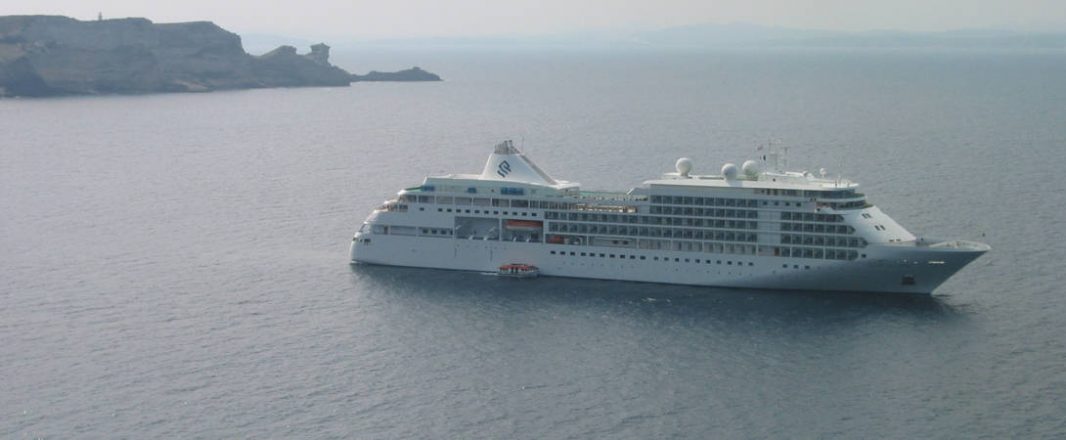
As a journalist, I’ve never really paid too much attention to the sector and as a traveller, I’ve never been much of a cruising fan – having only been on three cruises in my life, first on Superstar Virgo, then on the Minerva, followed by Silver Sea Cruises.
You could say, I am a typical cruiser in Asia – moving up the value chain with each trip and going further and longer.
This is what these cruise lines are betting on – changing the perception that cruising is only for the “newly weds, nearly deads and over feds”, wooing first timers and then getting them to repeat and cruising further and longer.
The industry seems inordinately proud that “once you’ve cruised, you’re hooked” with one speaker comparing it to a drug. I am not convinced – but most cruise operators boast of really high repeat factors. Seabourn says it’s as high as 40-50% repeat.
But there’s a lot of work to be done if they are to grow the Asian market not just as a destination but also as a source of new customers.
Here’s what I observed.
1. The industry is largely supply-led – big companies with big ships call the shots. And so there’s not a lot of competition and what that means is differentiation and innovation is slow to happen. There are specialist cruise operators – one company Orion Expeditions of Australia is a great example of a niche player, operating boutique vessels that take its guests where big ships can’t. These are the operators that will carve out new itineraries in Asia and I look forward to their bigger and deeper plays in our region.
2. The industry is hampered by government regulations which makes it impossible for cruisers to have a seamless experience as they do in Europe or the US. A trip where you need multiple visas and constantly have to have your passports checked at every port of call can be tiresome.
3. For an industry that has high repeat factors and where the customer is captive for days on end, it’s been slow to use the web and social and digital channels to build direct customer relationships and so is heavily reliant on trade distribution – and travel agents in Asia are not advanced in cruising knowledge because it is a more complicated product to sell. This state of affairs led Costa’s Onorato to make a plea for travel agents to make a commitment to selling cruises. Basically, he said, we’ve put in the money, you must do your part as well and I definitely detected a note of impatience in his tone.
4. The very same “complexity of sale” is what cruise operators say is the reason for the slow adoption of online direct sales. That, and also, the high ticket prices of cruises. Seabourn’s Rick Meadows said with an average transaction of US$20,000 each, “people are not happy to transact via the web”, yet the success ecruising.com has had in Australia and, to a certain extent, its Hong Kong office which it opened three years ago, would belie that notion. (More on distribution matters in the next post)
5. As a destination, there’s also a perception that the region is “a niche vacation option with limited ports of call, focused on gaming,” said RCCL’s Bayley.
6. As a source market, there also seems to be the belief that what Asian cruisers want is “Las Vegas on water”. Stu Lloyd, senior director, marketing and membership services, at PATA , said this during a panel, a comment which a few industry observers from Asia disagreed with. Star Cruises’ Michael Goh said the success his company has had with new forms of cruises, other than gaming, is proof that Asians want more than “eating, shopping, gaming and karaoke”.
Every hurdle though represents opportunity and my feeling, after the end of the three days spent at Cruise Shipping Asia, is the opportunities are immense in this new segment, and particularly in the online space which is ripe for disruption by some smart player.
I reckon it’s only a matter of time before we see waves being made. (Pardon the pun again)