Airlines are planning to use business intelligence solutions to manage flight disruptions more effectively and efficiently, according to the 2014 Airline IT Trends Survey, co-sponsored by SITA and Airline Business.
The survey, launched at the recent SITA’s Air Transport IT Summit in Brussels, reports that 90% of airlines intend to use these new initiatives by 2017 to manage flight disruptions more effectively and efficiently. About 87% plan to use self-service technologies to improve passenger services during periods of disruption.
Flight disruptions, or irregular operations (IROPs), affect airlines, passengers and the entire economic eco-system surrounding the industry. With the majority of flight delays caused by unavoidable weather, such as extreme rain or snow storms, airlines continually strive to find the best way to manage disruption.

Frances Violante / Image credit: SITA
Francesco Violante, CEO of SITA, said in the past decade airlines have achieved great success using technology to improve the passenger experience, and this year’s survey showed a new focus in the area of disruption management.
“Airlines are investing in business intelligence, self-service for passengers during disruption, and of course the expansion of mobile services. The aim is that when incidents happen the industry will be better prepared to minimize disruption. The fact that airlines are focusing on this very difficult area is a healthy indicator of the desire to deliver a better passenger experience while improving airline efficiencies,” he added.
The survey examined four main areas of disruption management: communications, passenger recovery or re-bookings, staff awareness and prevention. Airlines across the world plan to invest in each of these areas.
Findings from the report:
• The initial focus is on real-time communication to passengers and between stakeholders. Informing passengers of disruptions in real-time via mobile is now offered by just over half of the airlines surveyed, and 92% plan to do so by 2017. In addition, more than one third of airlines currently use social media to keep passengers informed, and 80% plan to do so by 2017.
• Airlines are using IT to provide more efficient recovery from disruption to improve the passenger experience, with self-service re-booking as a key area of investment. Few airlines have this in place at the moment, but they show strong ambitions. Currently, just 14% of airlines let passengers use kiosks to manage their flight changes caused by disruption, but this is set to rocket to 63% by 2017. By then, 73% also plan to offer this service on mobiles, a rise from 11% today.
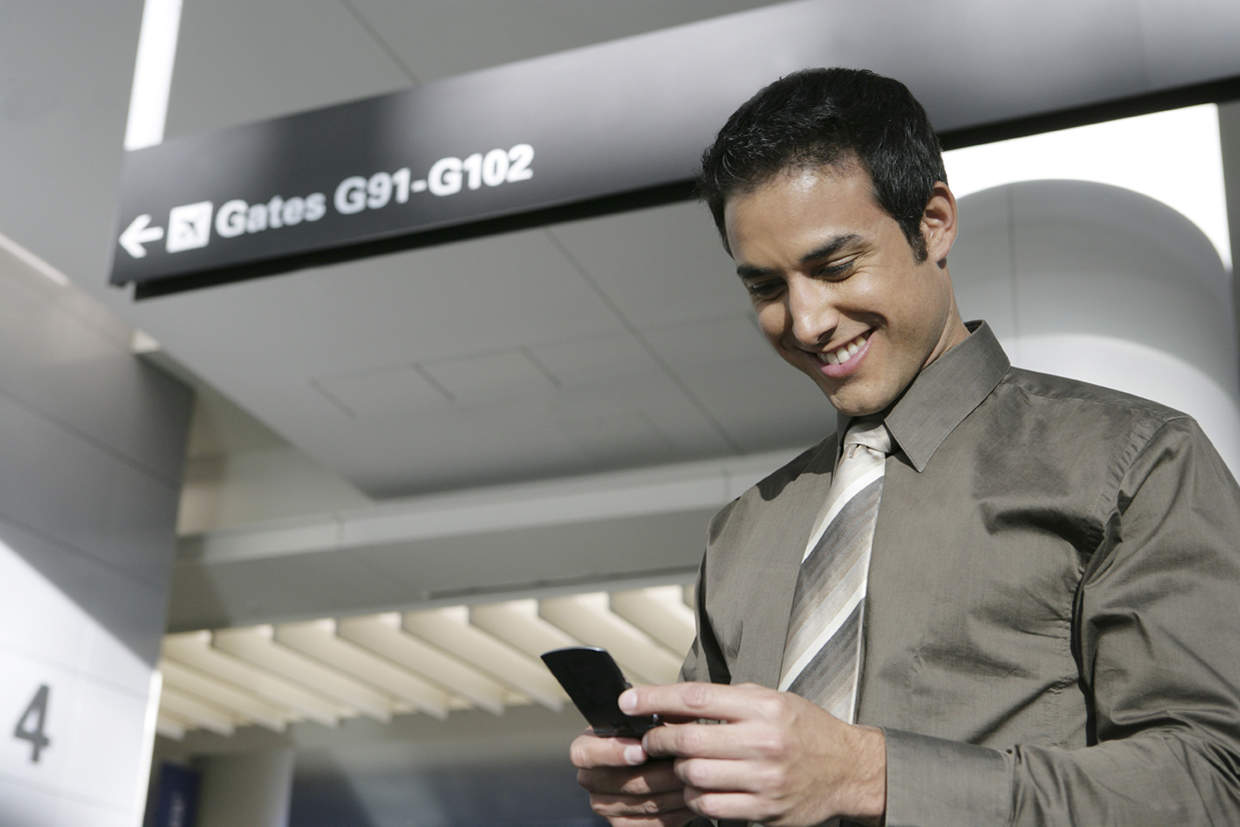
Airline passengers are increasingly going mobile / Image credit: SITA
• About 75% of airlines expect to increase their spending on new IT initiatives this year. Major new investments are aimed at boosting self-service for passengers, as well as leveraging the mobile devices they carry. These airlines are looking to get ahead of the competition by using technology to improve efficiency, operations and passenger services.
• In the area of prevention, 90% of airlines plan to have business interlligence initiatives in place by 2017 to help manage disruptions, with 15% having integrated systems to predict potential disruptions and impact before they even happen.
The Airline IT Trends Survey polls senior IT personnel working at the top 200 passenger carriers. This year’s respondents together carry more than 50% of the world passenger traffic, include 13% classified as low cost carriers, and 29% were airlines carrying over 20 million passengers.
• Photos courtesy of SITA