
With Covid-19 continuing to disrupt all aspects of life – professionally and personally, Anthony Thompson, Regional Managing Director, Asia; Executive Board Director of recruitment firm, PageGroup described the crisis as “one big battle being played out at different times and scale in different countries”.
In the latest WiT Virtual, he spoke of how our global approach to work-life balance will shift as we approach a new normal, how kindness is fundamental, the importance of mental health support for employees and businesses, and the recognition of effective female leadership.
Despite high unemployment worldwide and a challenging economy, Thompson was cautiously optimistic that hiring and recruitment would quickly get back on its feet once businesses started churning again.
“When we moved into this pandemic, there was very much a war for talent… there will be another war for talent on the way out. Companies will want to hire across all sectors… we’ve seen it in all past crisis, it’s just a matter of when,” said Thompson.
Working from home, he said, would not necessarily become the default, but it will help legitimise remote work. “[We’ll see] a much higher level of confidence in taking a more blended approach to remote/office work. I don’t think too many will revolutionise how they work but there will be change… it will end up being a balance.
“We’ll continue to see the same roles as we’ve seen before… [and there will be] higher confidence in remote work, so roles associated with facilitating technology for that to work, will grow.”
The kindness revolution is in your business’ interest

However, toggling between the office and home is not the most fundamental change businesses must adapt to. Business, Thompson said, is in need of a “kindness revolution”. He criticised the perception of kindness in the workplace as being “old fashioned” or was no longer an important quality to have as a leader or within teams.
“Being kind doesn’t mean being soft, you still have to make difficult decisions… you can weigh up various alternative solutions and still choose the one that is most human and kind… if you can create [a working] environment that is largely kind and human in the way it operates, you’re more likely to attract and retain good people… it doesn’t cost anything,” said Thompson.
Unfortunately, the economic and commercial impact of Covid-19 has meant leaders are burdened with the brutal task of cutting wages and laying off staff in an effort to keep businesses alive. “Hard decisions have to be made that don’t fall under the umbrella of kindness… but the other side is how are people feeling when they are working within the organisation?”
Under current circumstances, caring for employees’ mental health is a crucial part of keeping a business ticking over. “If you want to try and retain the shape of an organisation with the view that things are going to get better… it’s an essential commercial characteristic.”
Thompson used PageGroup’s “employee assistance programme” as an example of the support employees can access at any time. He also emphasised the simplicity of sincerely asking ‘how are you?’ to get a good gauge of how staff are personally coping.
“You want to be more empathetic as a leader, to understand how other people are taking the situation.”
He commended Singapore Prime Minister Lee Hsien Loong for his ability to relay a level of comfort and reassurance to the nation, that helps people take real notice of what he is saying.
Women of the workforce
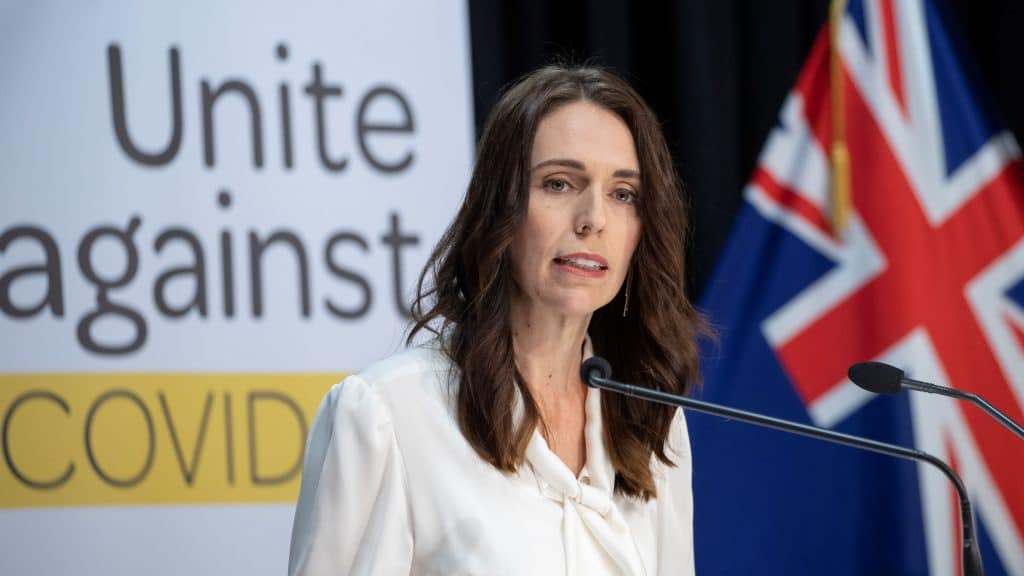
Thompson also acknowledged how many female world leaders are currently being praised for their approaches in handling the pandemic, most notably New Zealand Prime Minister Jacinda Ardern and German Chancellor Angela Merkel.
“I don’t think you can generalise about genders but looking at New Zealand and Germany, both [leaders] are very focused on the problem at hand and coming up with a solution in a bipartisan way… others are using the situation as an opportunity for grandstanding and winning political points.”
Translating this effective leadership into the workplace, Thompson stated fostering diversity and inclusion was naturally a goal of many organisations before the crisis. He lamented that while the percentage of female directors is beginning to rise, there is still a lack of women in managing director roles. “That’s to our detriment.”
Drawing observations from how people are adapting to working from home, Thompson said, “one thing to come out of this experience as a learning is that… working out how to allow working mothers to have a balance that succeeds has got to be a goal… because we are missing out on some tremendous leadership by not letting them flourish.”
Lead image: Getty Images