This whole remote work thing that’s still going on in most parts of the world is producing lots of interesting outcomes, at least in places where remote work is an option. As Joseph Tsai, executive vice chairman of Alibaba Group, observed at the Singapore Fintech Festival recently, “remote work is an elite white collar concept. There’s a big part of the economy who can’t work from home.”
Having said that, he is one of those executives who enjoy working from home and, perish the thought, getting so used to it that he’s wondering why he travelled so much before. “It’s a big convenience. I just realised I was wasting a lot of time on the road. Being in one place, with video calls, makes you closer to the people you work with.”
One strike down for corporate travel – there will be a portion of business trips that will not come back.
KP Ho, executive chairman of Banyan Tree Holdings, says he’s attended more events in the past three months than in the last 10 years, and is enjoying absorbing ideas while seated at home. Plus, I am guessing, he doesn’t have to deal with pesky people who want to shake his hand, not that that’s allowed these days.
One strike up for events – more people have attended more events in the past months than at any point in history, and it’s made some sceptics into believers.
Events, when well-run and well-thought-out, can offer valuable learning. Virtual events have put the focus squarely on content and I, for one, will be happy if this period rings the death knell for sales pitches at conferences.
Subramanya Sharma, chief strategy officer of Cleartrip, told me remote work is working out well for the OTA that covers Middle East and India, and has had no impact on productivity. “The way we work has changed. We used to block a time and place to meet. Now we focus on writing out documents, circulating them before the meeting and this has increased clarity of meetings and the quality of discussions is higher.”
One strike up for planning and productivity. In the virtual world we have learnt that preparing and planning is even more important. No one wants to be looking at a screen where everyone is humming and hawing because there is no clear agenda.
I find this to be true of virtual events as well – the planning and preparation is way more intense. In a physical event, your audience can be distracted by chandeliers, table settings, dancing lights, smoke and mirrors. In a virtual event, there’s only the screen and you.
As for creativity, some executives have told me it’s harder to collaborate around innovation in remote work conditions but Cleartrip’s Sharma disagrees. “If you have always had a culture of innovation and problem identification, it doesn’t make much difference.”
Yet, I have spoken to other chief executives of online travel companies who want their teams to come back to the office and many are reluctant because they have gotten too comfortable with remote work.
“We might have to find a way to force them back to the office,” said one OTA chief who goes into the office a couple of days a week to set an example he hopes others will follow. “Productivity is varied. There are some individuals who are naturally motivated, and there are some who work better in an office environment.”
Ross Veitch, CEO of Wego, concedes it may not be the fashionable position to take among tech CEOs of late but “I completely agree with all the comments Barry Diller made when asked about Expedia’s attitude to WFH in this recent Bloomberg interview”. (Basically, Diller said work will go back to the way it was.)
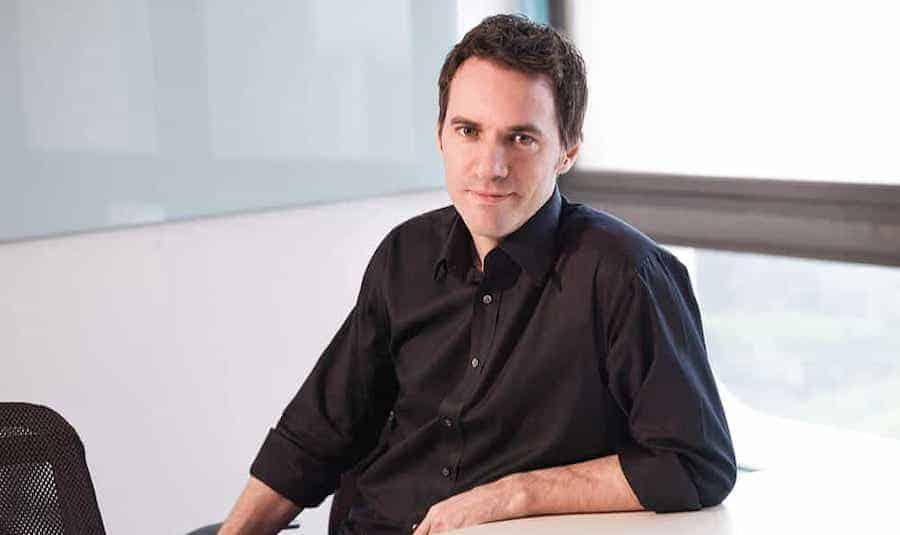
Said Veitch, “Wego went 100% WFH for a few months like the rest of the world in order to keep staff safe and to comply with lockdown of WFH mandates across all of our offices but we now have everybody back in the office wherever it’s safe and legal to do so.
“I think it’s quite possible for a company to operate 100% remotely but for this to be really effective I think you want to design the organisation from scratch with this in mind rather than trying to retrofit this style of operation onto an existing organisation.”
As for whether staff were willing to return to office, he said, “Some were dying to get back into the office and others got very comfortable at home and would probably have been happy to stay there. We are all creatures of habit and a few months of a new daily routine is enough for it to stick for most people.”
And he rattles off a list of things that work better in an office environment.
- Getting everybody on the same page is so much easier face to face.
- Resolving misunderstandings
- Debating complicated or controversial topics is also much easier in the same room and around the same white-board
- Communicating effectively when not everybody has the same first language in common
- Brainstorming
- Serendipitous conversations
- Spontaneous and ad-hoc discussions (vs pre-scheduled)
- Keeping on-task people who are easily distracted
- Office is designed for work productivity in contrast to the home environment for most of our staff
Several strikes up for working from the office.
Meanwhile, it’s interesting to see hotel companies redeploying their unused assets to meet current needs. Accor introduced its Hotel Office concept to offer a “premium remote working experience”, by renting out its rooms as day offices.

The Ascott Limited took it a step further – this week, it launched its ‘Work in Residence’ and “Space-as-a-Service” initiatives. The latter means you can rent its apartments and spaces to host cloud kitchens and coffee kiosks, organize live streaming or fitness activities, or even as parcel collection hubs for online orders – good use of distressed inventory.
One strike up for adaptation.
All these trends – remote work, virtual events, changed behaviour – have deep repercussions for societies and economies at large.
The disappearance of offices would mean hollowing out of the social ecosystem that supports them – restaurants, cafes, gyms, salad bars … the cutting back of business travel and physical events will impact the entire travel value chain and related services … the digitization of jobs and remote work would mean that “those in other countries can do Singaporeans’ jobs from their homes”, said Singapore’s Minister of Trade and Industry, Chan Chun Sing, in this report.
In his message, delivered post-National Day, when Singapore celebrated its 55th birthday, he said four things had changed irrevocably in the world – the geopolitical environment, global companies re-organising their production and supply chains, change in jobs and remote work, and the shrinking economic pie.
The painful truth in his message was that Singapore will not return to a pre-Covid world, that it must chart a new path and that it cannot wait for Covid-19 to blow over. “If we wait it out, we will likely be in worse shape than we are now,” he said.
One strike up for facing reality.
It’s a reality governments must accept. We are all adapting as much and as fast as we can to the circumstances but the reality is, if governments wait for Covid-19 to blow over completely before they open borders, there may not be much of anything left to defend, let alone work, remote or otherwise.
• Featured image credit: elenabs/Getty Images