
THE Singapore Tourism Accelerator programme, along with other initiatives that support the industry in digital transformation, is starting to look more and more on point and timely as the post-pandemic travel reality will clearly be more high tech and low touch.
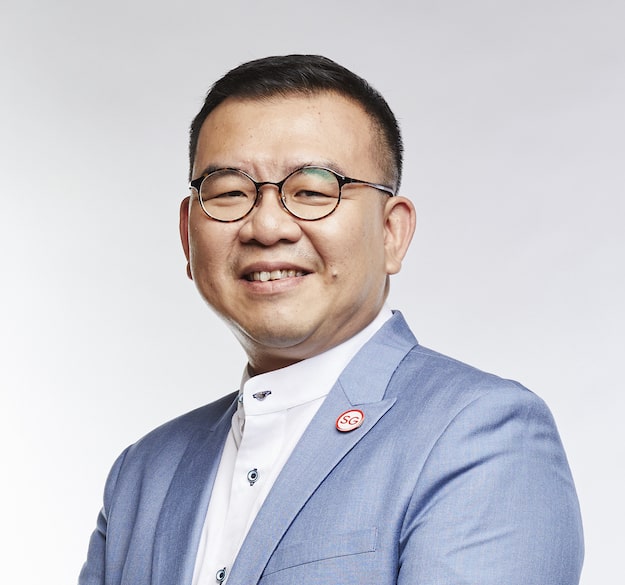 “The current pandemic has underlined the importance of digital transformation for the industry and the urgency of doing so. We expect consumer behaviour and travel norms to change for good,” said Poh Chi Chuan, acting chief technology officer (pictured left), Singapore Tourism Board, which is behind the programme.
“Given that many of them are now used to shopping online, tourism businesses need to do more to thrive in a post-pandemic environment. They need to make sure their business and products are easily discovered online, they need to inspire consumers with immersive and high-fidelity content, and they have to create a seamless transactional experience. As such, businesses must adopt a customer-centric mindset. They will also need the right organisational structure, data and tools to engage and serve their visitors, before, during and after their stay in Singapore,” he added.
Poh was speaking to WiT on the back of the introduction of its third cohort from the Singapore Tourism Accelerator Programme which it introduced in 2019 to provide “support for companies to develop quality solutions and piloting them with our tourism industry players”.
Within the first year, STB has received more than 500 applications from more than 40 countries, including Australia, Czech Republic, India, Mexico, Singapore, Thailand, UK and USA. The total number of start-ups supported by the programme is now 26.
The third cohort, which was inducted in October, had a special focus on solutions that offered future-proofing of tourism businesses by preparing them for the new post-pandemic reality, Poon said. These include contactless solutions, crowd management technology, sanitisation and hygiene innovations, solutions for virtual MICE events, robotics and automation, and augmented reality and virtual reality applications.
One of the startups from the second cohort is Wheel the World whose mission is to “make the world accessible by empowering people with disabilities to explore the world without limits”.
According to the team at Wheel the World, the disabled today are underserved by the travel community. People with disabilities scored searching and booking of accessible travel 5.9 (out of 10); for availability of relevant accessible content on websites, it scored 6.08. More than 500 million people choose not to travel due to lack of accessibility information.
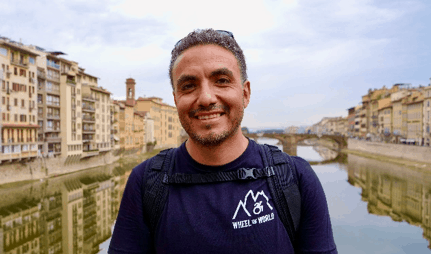 “I believe you can create a stronger impact for tourism professionals by giving them knowledge about accessibility, disabilities and other relevant topics that will enable better services for travelers with disabilities, and that is why we started the Wheel the World Academy (an e-learning platform that aims to train 80 tourism professionals in different topics around mobility disabilities and accessibility). Changing infrastructure can be very expensive if you want to take it from 0 to 100, but in many cases, it is actually a combination of creativity and understanding in order to make a place more accessible,” said Arturo Gaona (pictured left), head of partnerships and part of the founder team, Wheel the World.
Gaona said being part of the programme allowed them to test its Accessibility Mapping System with real industry partners in a variety of travel products.
“Our participation in the STA helped us to accelerate the activation of specific tools and methodologies that will help us to scale up in the next 18 months,” said Gaona.
He said one of the unique benefits of STA was the offer to “test a pilot and access a grant at the same time”, creating what he said was a “perfect environment to try new things while generating new networks and potentially new customers”.
“2020 has been a difficult year not only for Singapore, but globally. What I found very powerful from STB is that despite the current situation, it continuously pushed for innovation through programmes like the Singapore Tourism Accelerator with travel startups from all around the world. I believe that this communicates a strong message that Singapore is an international hub for innovation and digital transformation in the travel and tourism industry,” said Gaona.
Another startup in that second cohort hails from the Czech Republic. SmartGuide has digitized the travel guide book and then some. Its tag “Travel in style without exhausting planning and bulky books” invites users to “walk, listen and explore” a country in a novel way.
“SmartGuide went into the STA programme hoping to learn and adjust our 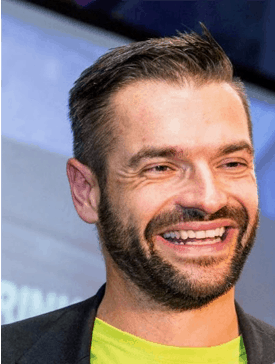 product to the Asian culture for new partner types and growth in Southeast Asia. Securing a spot in the Singapore Tourism Accelerator helped us break into the fast-growing Asian market by allowing us to understand the current state and goals of advanced industry partners,” said Václav Jurčíček, (pictured) chief business development officer and co-founder, SmartGuide.
SmartGuide “immerses travellers with fun facts, geo-located storytelling, and augmented reality (AR) navigation for Singapore’s hidden gems in the Orchard Road, Little India and Balestier districts”.
“STA enabled us to realise two things. First, how an off-the-shelf multimedia travel guide platform can help a large array of partners prepare for a #SmartRestart by providing flexibility and cost-cutting measures, or preventing loss of revenues by increasing revenue per existing visitor with a new stream implementable within a few weeks,” he said.
“Second, we learned that only the world’s biggest attractions can manage to run their own applications profitably; the vast majority cannot afford to do so within their budgets. That is why our mission is to enable even the smallest attractions and destinations to provide a top visitor experience at a fraction of the cost,” he added.
SmartGuide, like Wheel the World, has also been part of other accelerator programmes, placing them well to offer advice to startups looking to do the same.
Listen, learn, and adjust your product fast to the new market’s needs and trends; be as proactive as possible so to be prepared to leverage the great mentors that STA will introduce; and understand industry partners’ pains and gains, offered Jurčíček.
“While STB had invested early in digital economy transformation with our tourism partners, the pandemic situation has accelerated these efforts in encouraging businesses to find innovative solutions to current challenges,” said Poh.
Further along and in addition, STB will also introduce the ThreeHouse at STB in 2021, a co-innovation space for the tourism sector where tourism businesses can collaborate, workshop and test new ideas and solutions, with guidance from STB and other industry experts.
For the full list of companies in each cohort, click here.