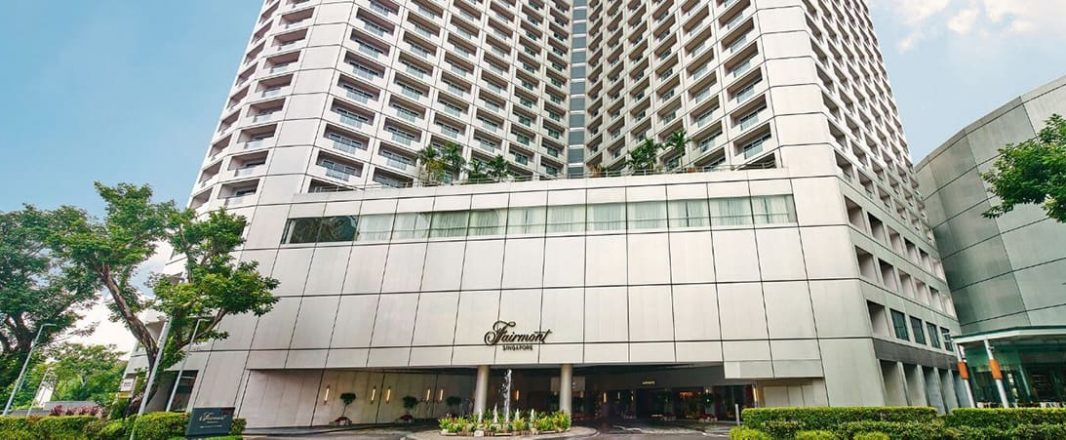
From e-commerce vending to farming and hybrid studio, the things Fairmont and Swissotel The Stamford did to keep going through a pandemic
THE story of how Fairmont Singapore and Swissôtel The Stamford (combined 2,030 rooms) with the Raffles City Convention Centre (70,000 square feet of event space) made it through 16 months (and counting) of zero to minimal corporate travel and MICE business is one of creativity and resilience.
Throw into the pot, the fact that it is located on a small island with less than six million people, with a very limited domestic market, and you get an idea of the odds it was up against.
Before Covid (BC) the two hotels with its convention facility were one of the most prominent addresses when it came to corporate travel and prestigious MICE events.
During Covid (DC) it became a dedicated quarantine facility for Stay-Home Notice (SHN) guests, a tech solutions vendor, three e-commerce shops, a farmer and oh, did we mention, one of the city state’s biggest vaccination centres?

“We have to do what we can to earn money at this time,” said Marcus Hanna, general manager, during the WiT Travel Roadshow, Episode 2, which was broadcast live from the new broadcast studio at the Fairmont, converted from a VIP Lounge room.
He is most grateful of course for the bread-and-butter SHN business, which has sustained his hotels through their darkest hour. “We’ve been very fortunate to have this business through the Singapore government, and that has really been a saviour for us over the last 14 months,” he said, adding that it is a very different way of operating a hotel where the guests are stuck in their rooms for 14 days and there is absolutely no contact other than over the phone.
Hosting physical events in a pandemic
To meet the needs of the MICE market in a world where meeting physically is still a no-go despite the lifting of some restrictions in Singapore, The Fairmont established a hybrid studio, set up in partnership with event production and audio visual company Encore.
It was a partnership sealed BC but truly came into its own earlier this year when events started returning to Singapore and the Fairmont needed a dedicated in-house AV company to be responsible for production while it provided the venue.

The Fairmont has since hosted a few major events – the ONE Esports Dota 2 Singapore Major (March 27-April 4), one of the largest esports events in the world, and the HSBC Women’s World Championship at the Sentosa Golf Club (April 29 – May 2)
“There are a lot of challenges in hosting the events. For the Esports Dota 2, we had to create a bubble for 250 people from their rooms to the ballroom and back. This puts a lot of pressure on the team, but you know in these times we’ll take what business we can get, and we ran it successfully.
“We also had to create another bubble for the players participating in the HSBC golf world championship, as well as for their caddies and the entourage. I’m very fortunate to have a wonderful team to work with who understand what is required despite the challenges and get the job done, and done well.”
Going the tech way
His properties are also breaking the norm when it comes to adopting technology. During the Circuit Breaker, which started in April 2020, the IT team developed a contactless solution for check-in and check-out, as well as for payments, for use in their hotels.
These tech solutions have also created another revenue stream as they are being sold to other hotels. He said the traction for these solutions have been “fantastic”, and it is about to roll out the solutions to four other hotels in Singapore, and later to Europe. Some hotels in Australia and Dubai have also expressed interest in using the solutions.
“The traction has been really good and for the simple reason that it’s an online platform and is not an app. We find many people don’t want to have to download another app. This is a pure online platform, which is very easy to use.”
The hotels also boast an in-room solution that allows guests to order services, as well as a MICE portal for meeting planners.
Creating staycations, e-commerce businesses and ramping up the farm
The Fairmont also rode on the staycations campaign rolled out by the Singapore Tourism Board, as part of the SingapoRediscovers Vouchers scheme. The programme, due to expire in June, has been extended to December, an indication that borders in Singapore are not going to be opening up any time soon.
The Fairmont got creative. It created “Mumcations because we knew mums are at home especially over circuit breaker with the family from home plus school schooling at home. This has proved to be a huge success,” said Hanna. It also offers “glamcation”, “pawcation” and “sustainable vacation” packages.
“We’ve only got the local market to market so we have to get creative,” he said.
The hotels have also started several e-commerce businesses. There is Gift Central, a gift voucher site where guests can buy gift vouchers for a friend or family member. “In the six months that we launched the online platform we’ve sold seven times more gift vouchers than what we sell in a whole year previously.”
The A to Z market shop sells used IT equipment, kitchen equipment and hotel furniture, “which normally we would pay someone to come and pick this up and take it away. Now we’re selling that all around the world,” said Hanna.
The third e-commerce business is a supermart, to open in a month, which offers fresh produce and groceries. “This is an extension of the aquaponics farm we built BC (Before Covid), and what a valuable resource it has proven to be during the pandemic when the hotels had to keep a tight lid on costs,” said Hanna.

“The farm supplies 100% of the tilapia fish, 84% of the salad leaves and 70% of the ‘pak choy’ for our complex. Then there are edible flowers that cost around S$38 a pound, but we grow them in our farm. And the beauty of the farm is the produce is so much tastier. So we’re giving our guests a much enhanced product for them to enjoy, and we can do farm-to-table in 20 minutes.”
There are plans to expand the farm as there are areas around the hotel and the complex to do that. “Obviously we’re a little bit cash strained at the moment but as things open up again and when we get back at it, we’ll certainly want to expand on it,” said Hanna.
The farm is also “mentally good” for the staff as they can get out of the kitchen and be around nature when they help with the harvest. “I too enjoy going to the farm every now and then,” he said.
As for the biggest challenge of being a hotelier through Covid, he said, “There have been numerous challenges but each challenge that comes up creates an opportunity as well.
“The first challenge was when we saw the business dropping off significantly in February to March last year and we had to furlough 1,500 colleagues. We partnered with the union and we outsourced 300 to different businesses and that logistically was a huge task.
“The biggest challenge is always to try and just to keep the team together, keep them motivated, make them to understand that we will get through this, that there is a light at the end of the tunnel. We just don’t know where that is but we will find it. I am very proud of the team, they have not complained about looking after the Stay-Home Notice guests, and they’ve done a great job doing that.”