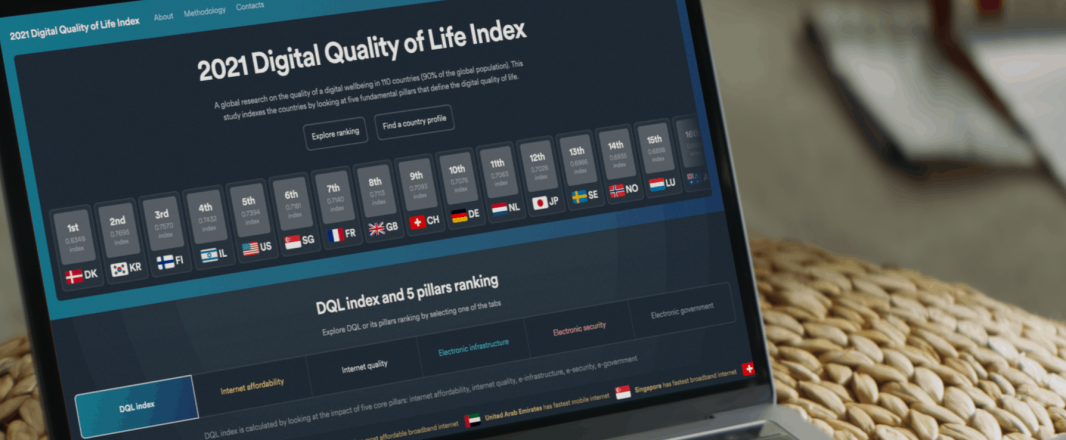
SOUTH Korea came in second and Singapore sixth in the third annual edition of the Digital Quality of Life Index (DQL), which ranks 110 countries.
Covering 90% of the global population, the DQL study is conducted by the cybersecurity company Surfshark and evaluates countries based on a set of five fundamental digital wellbeing pillars.

In an all-around picture, six out of 10 countries holding the highest scores are located in Europe, following last year’s trend. Denmark ranks 1st in DQL for the second year in a row and is closely followed by South Korea. Finland ranks 3rd, while Israel and the US round out the top five of 110 nations that were evaluated. The bottom five countries are Ethiopia, Cambodia, Cameroon, Guatemala, and Angola.
Regionally, the US stands out as a country with the highest digital quality of life in the Americas, while South Korea takes the leading position in Asia. Among countries in Africa, people in South Africa enjoy the highest quality of their digital lives whereas Australia leads in Oceania, outperforming New Zealand in various digital areas.
The study found that Singapore has one of the best e-governments globally. The country ranks 5th worldwide, surpassed only by the US, South Korea, the UK, and Finland. Singapore’s internet quality is also around 30% better than the global average. Singapore has the fastest broadband internet (230.22 Mbps) and very high stability for the second year in a row.
However, the country comes only 17th in mobile speed. South Korea, on the other hand, ranks 2nd in mobile speeds and 6th in broadband internet speeds. It is also a country with the highest growth rates in the internet quality pillar and will likely surpass Singapore next year or in the near future.
“Digital opportunities have proved to be more important than ever during the COVID-19 crisis, stressing the importance for every country to ensure fully remote operational capacities for their economies,” explains Vytautas Kaziukonis, CEO of Surfshark. “That is why, for the third year in a row, we continue the Digital Quality of Life research, which provides a robust global outlook into how countries excel digitally. The index sets the basis for meaningful discussions about how digital advancement impacts a country’s prosperity and where improvements can be made.”
Other significant findings of the report include:
- Broadband is globally less affordable this year. Comparing countries included in both DQL20 and DQL21, people have to work 11% more (25 min more) to afford broadband internet in 2021. However, people have to work 29% less (28 min less) to afford mobile internet this year.
- The world’s worst internet is the least affordable. People in some countries, such as Nigeria, Côte D’Ivoire and Mali require approximately a week’s worth of work to afford the internet.
- Investing in electronic infrastructure and electronic government contributes to people’s digital wellbeing the most.
The 2021 DQL research examined a total population of more than 6.9 billion people in terms of five core pillars and 14 underpinning indicators that provide a comprehensive measure. The study is based on open-source information provided by the United Nations, the World Bank, Freedom House, the International Communications Union, and other sources.
The final 2021 Digital Quality of Life report and an interactive country comparison tool can be found here: https://www.surfshark.com/dql2021.
• Featured image credit: Surfshark