
THE travel community should take a more active role in overcoming the pandemic – not in the sense of eradicating it, but to figure out how we can more quickly normalise life and travel with it.
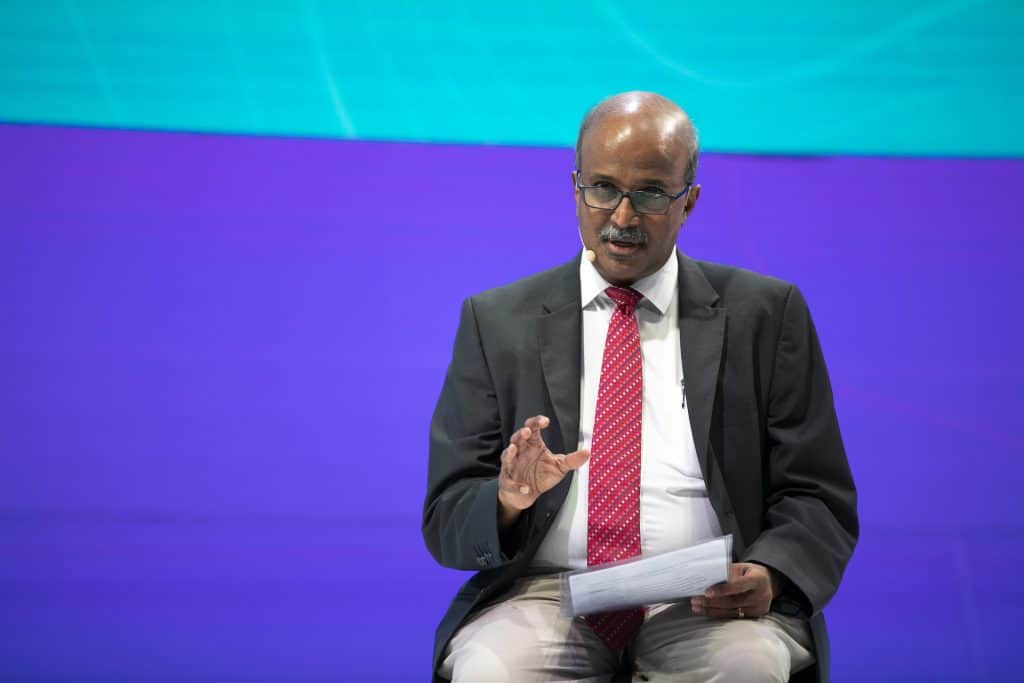
Professor Paul Tambyah, one of the key voices in the fight against Covid in Singapore as deputy director, Infectious Diseases Translational Research Programme; Professor, Department of Medicine, NUS Yong Loo Lin School of Medicine addressed questions and suggested actions for the travel crowd gathered for WiT Experience Singapore recently. Tambyah suggested a “change in approach”, agreeing the travel industry to date has been too passive in its response.
Tambyah would like to see the community rise up and take a more active position as did the automobile industry, led by General Motors, some 10 to 15 years ago. He pointed to a study “To Err is Human” put out by the National Academies of Sciences in the US in which medical errors were put in the spotlight as a major issue in health care.
“This study was not driven by doctors nor by patient groups. It was in fact driven by corporations led by General Motors. They realised a lot of their employees, to whom they were providing a lot of healthcare, were going in for routine surgeries and getting complications. These corporations thought if the healthcare industry was not willing to do something about it or were not aware of it, then they needed to drive it,” said Tambyah.
“This pandemic has battered the travel industry, and it is not going to be the last by any long stretch of the imagination. We need to anticipate what’s going to happen and do something like what the major corporations did 15 years ago to address medical errors. Commission groups of researchers; commission studies to see if what the real value of things like quarantine are. In Singapore now, we have about 3,000 locally transmitted cases and we’ve got less than 10 imported cases. Yet we still put in all these quarantine restrictions on travellers for all but eight or nine countries,” he added.
Tambyah highlighted the importance of collaboration between communities in travel and medicine to “develop a scientific calibrated approach to managing pandemics”.
“It is really important to make decisions based on good studies. Because otherwise, it’s based on anecdotes,” he pointed out.
As an example, he said the regulation against singing in indoor venues like churches here in Singapore was based on an experience that happened in Washington State in April. Then, a choir practice resulted in “a whole bunch of people getting infected”.
Tambyah said his team is currently conducting a study, that is entering its second phase, to measure the amount of virus emitted in the air while singing.
Asked what the infectious diseases fraternity has learnt so far from this pandemic, Tambyah pointed out testing of the virus – an area that has evolved quickly from having to be done in a reference lab at the start of the pandemic, then to a hospital lab and then at a family physician’s office and now possible at home.
He was also confident that airport testing will get simpler and quicker, likely to evolve into “ART kind of testing” that will give a result within 15 minutes.
But he warned that hopes that all these extra measures as soon as we feel we have a handle on this pandemic are likely ill-placed.
“Chances are these will remain for quite a while. But it’s going to become easier. You join the queue, scan the boarding pass, pick up a test and by the time you are at the x-ray machine, you’ll have the result,” said Tambyah.
But travel again we must.
Travel opens people’s eyes – it exposes you to a completely different way of life and a different way of doing things, said Tambyah, and that is huge advantage and a big help to deal with potentially the largest mental health crisis the world has ever seen.
His parting words to the travel community: first and foremost, get vaccinated. Second, speak up to educate people on the impact of these restrictions, especially in Asia, on travel. For example, dining restrictions in Singapore don’t affect just locals, but they impact visitors who want to come to Singapore to enjoy the world’s best cuisines.