How a luxury resort in Siem Reap pivoted to the local market, helped by celebrity-dom, rice fields and water buffaloes
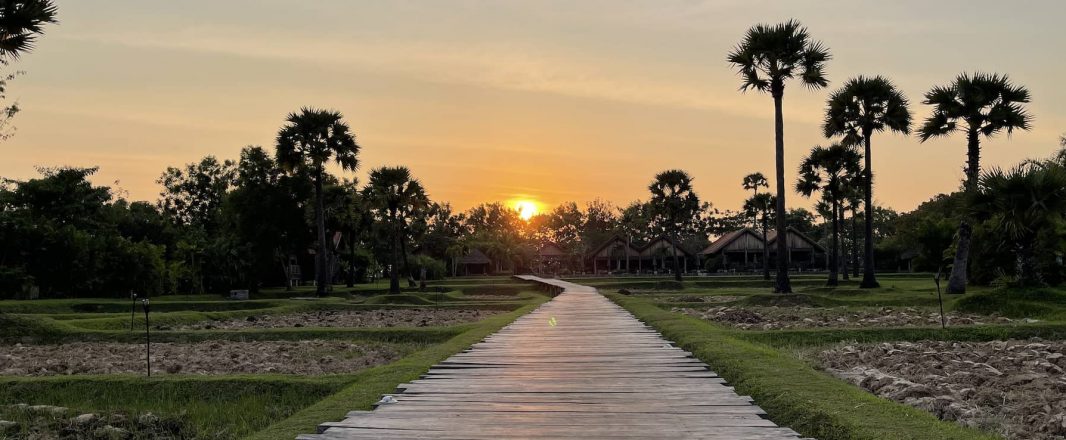
LIKE most resorts in South-east Asia, Phum Baitang (Green Village) in Siem Reap, Cambodia, had a record year in 2019 and was on track for another stellar performance the following year. “In January and February 2020, we were on track to beat records,” said Giulio D’Alberto, general manager, with a whiff of nostalgia, as we chatted over espresso, looking over rice fields and a wallowing water buffalo in the distance.
By the end of March, the resort, which is part of Zannier Hotels, had closed its doors, and decided to keep a skeletal staff to maintain its 20 acres of gardens and rice fields, and security. Instead of going straight to layoffs, it asked the staff for a solution. “We told them what we needed – I gave the number at 50, we had 154 staff – and they proposed to share the workload and salaries among them. They knew they had to do anything and everything, and they did. They did 7.5 days work for 30% of salary. A few left to return to their village, saying they’d prefer to wait till business returned.”
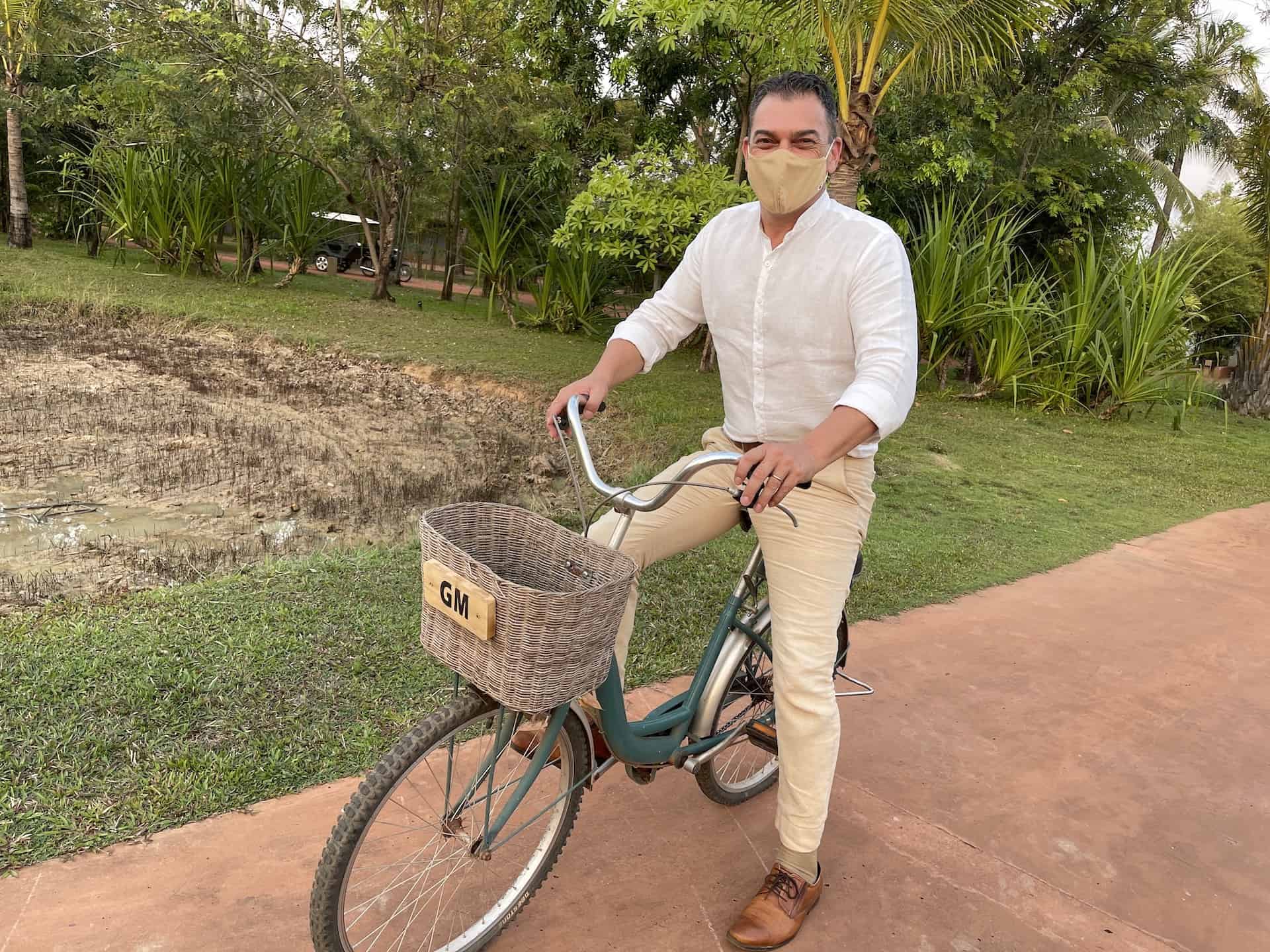
Giulio D’Alberto doing his rounds of the 20-acre resort grounds
By October 2020, the resort reopened for the water festival. “We reopened in two days because we had kept things going when we were closed,” said D’Alberto, who arrived in Siem Reap in 2019.
Reopening was the easy part. Adapting to an all-local market was tougher. Before Covid, its business was all international – 35% US, 20% UK, 15% France, 15% Germany; Khmer guests were less than one percent.
This was a resort made famous by Hollywood celebrity Angelina Jolie. She put it on the map in 2015 when she stayed as its first guest and indeed, had just checked out the day before I arrived. “The first thing she said, I am home.”
And just as a celebrity helped put Phum Baitang on the map internationally, it took a local celebrity to do the same with the local market. Aok Sokunkanha, a Khmer singer and actress with 1.4 million followers on Instagram and 3.5 million on Facebook, discovered the resort, stayed and posted on both social platforms and interest exploded.
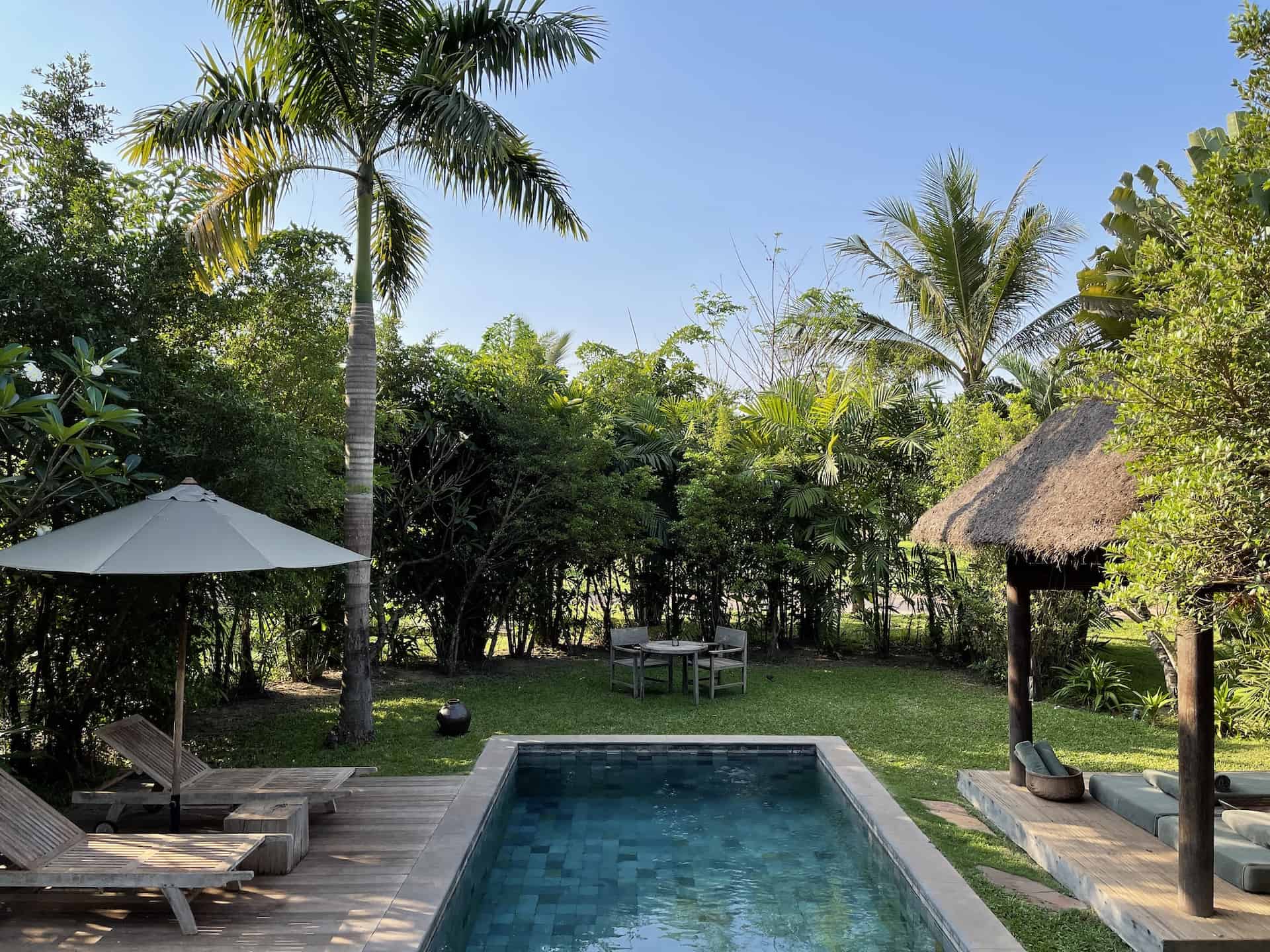
A pool villa at Phum Baitang
“Facebook is what works in the Khmer market and we quickly set up a booking engine on Messenger,” said D’Alberto. “Till today, we get loads of locals booking on Messenger.”
And while rates for the local market were lower – at US$150 inclusive of taxes and breakfast from Mondays to Thursdays and $250 on weekends (the usual rate is $695 which it is charging now for the international market as it slowly recovers) – there was no distribution cost and besides, it was a new business stream which provided cash flow, and has helped sustained the 45-private villa resort till today.
“All the business from overseas tour operators disappeared and that was a big chunk of our business. We learnt a new way of doing business. It helped decrease our loss. We were losing money until October 2021 when we went into positive cash flow, and managed to sell our last rooms for $600.”
It also had to learn to cater to the different needs of Khmer customers. Some do not understand why Phum Baitang is so famous and expensive “when it looks like my village”, laughed D’Alberto.
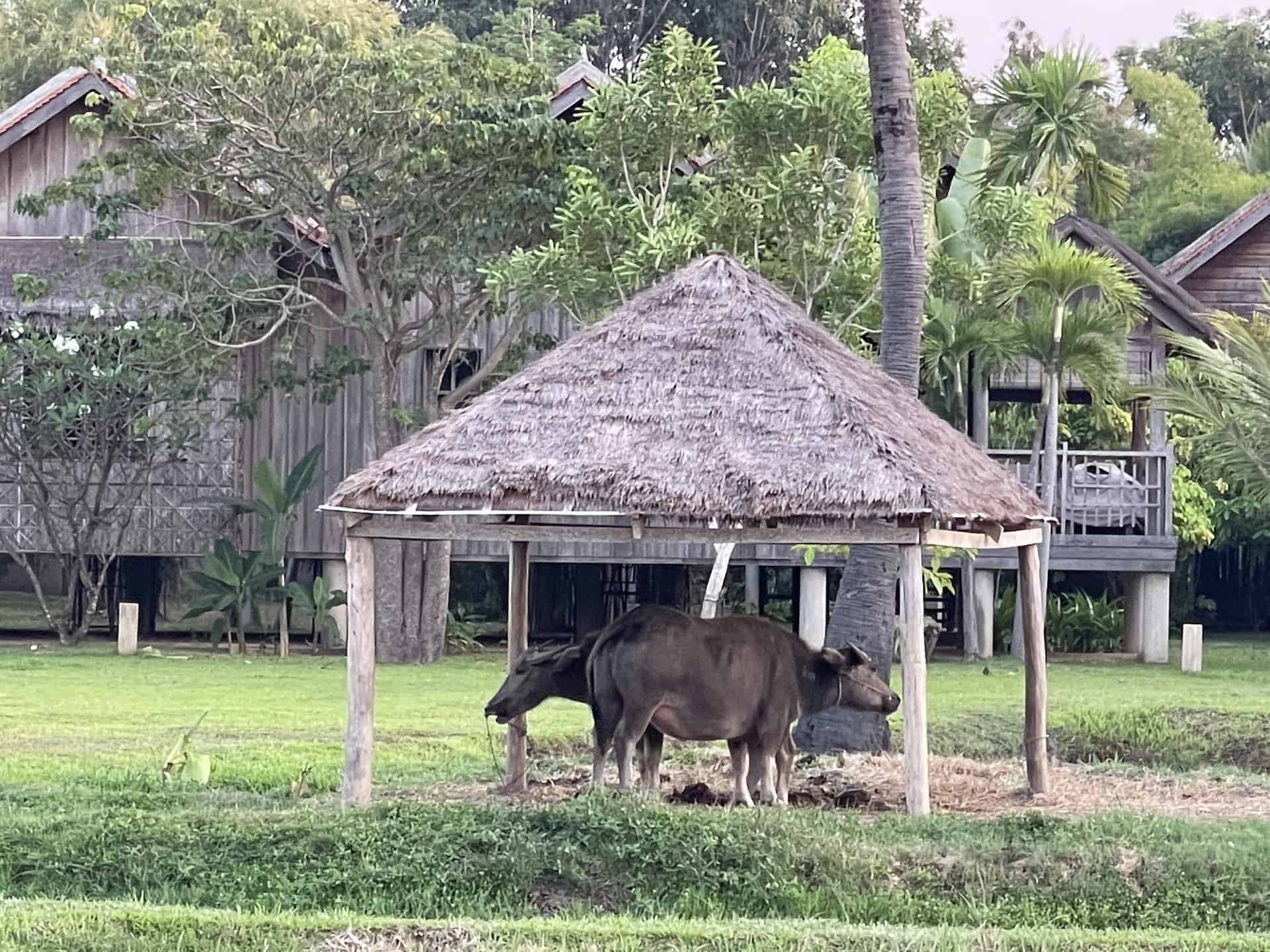
Water buffaloes, super props for wedding photos.
Nevertheless, the resort is popular with wedding photos and the water buffaloes have proven to be highly popular props. “Can we have the buffalo here? Can we have the buffalo there?” are some of the common requests.
Locals also do not dine in as much as foreigners, preferring to dine outside, and so the hotel alternates between restaurants and keeps one open at anytime. The spa was also closed as was the sunset lounge. “Westerners like to watch sunsets for hours while sipping cocktails, Khmers take photos and they leave.”
Another characteristic with the local market is extremely late bookings. “They can book in the morning for the afternoon, so it’s harder to plan staffing for the day, but we had good collaboration with the staff – a lot of elasticity.”
The overall experience though was not compromised. “We didn’t cut any costs – I believe it doesn’t matter if you are catering to foreigners or Khmers, we want to deliver the experience we are known for.”
As Cambodia’s borders have reopened since last November, business is slowly trickling back, as are staff, some of whom are now at 50% of salary while 30% are back on full salary. “We are seeing longer stays. In 2019, it was three days, now it’s four to five days. By June, we expect a month of steady bookings, all things being equal.
“Cambodia has done a great job in vaccinations and one of the things about Cambodians is their sense of brotherhood and sisterhood. Everyone is called Bong or Ong, and they look after each other so during the pandemic, there was a lot of support for each other,” said D’Alberto, who’s worked in India, Maldives, Bali and China prior to this posting.
The staff churn has been around 25% which D’Alberto said was a good thing, as it gave the resort the opportunity to bring in new blood. It employs trainees from the three local hotel schools.
The biggest lesson it’s learnt? “It’s always very difficult to have a Plan B when the hotel is working well but the lack of attention to local and Asian markets is definitely something that should have been thought of before. So the next few years, we will pay more attention to Asia – Japan, South Korea, Singapore,” he said.
“The Singapore Airlines flights coming to Siem Reap have been a lifesaver, opening new markets for us. Social media is also a good channel to use in Asia, and we’ve learnt from our experience with the local market here. We don’t advertise in Khmer, but we are getting steady bookings because now we are known among Khmers.
“We won’t forget the fact that the local market has been supporting us so we will continue to offer special rates to locals and expatriates.”
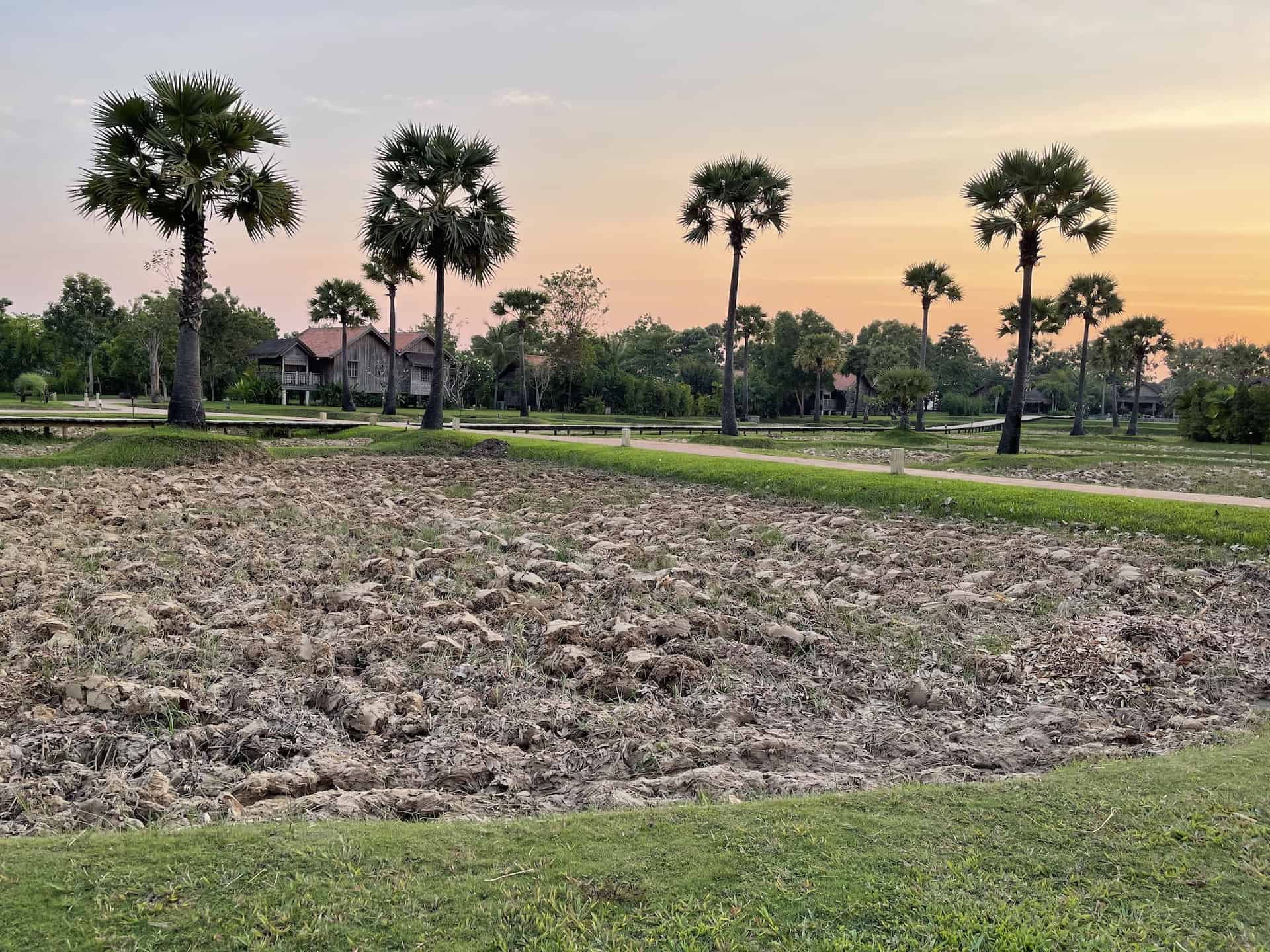
Its rice fields produce three tonnes of rice a year for the resort.
Before sustainability became the hot topic it was, Phum Baitang has always pursued a green approach, and has won several green hotel awards. Its plastic use is almost down to zero, said D’Alberto. It uses lemongrass and paper straws and separates its garbage. The rice fields produce three tonnes of rice a year for the resort. It has an organic vegetable patch for local herbs used in the kitchen and spa and wherever it can, it purchases from local businesses.
Pre-pandemic, it received 70% of bookings through DMCs and 15-20% from OTAs such as Booking and Expedia. “I don’t see this changing post-pandemic – there’s still a lot of organised tourism in Cambodia,” said D’Alberto.
What he hopes will change is Cambodia’s approach to tourism. “The government has said that Cambodia will move towards slow, sustainable tourism and that is great news. Living through the pandemic and seeing the destruction that happened – empty streets, no tourists, stores with lack of items, then the government started ripping out the streets and then by the beginning of November, after the reopening was announced, we saw hundreds of people working to finish the roadworks and by December 23, it was done and we had a new city.
“And Cambodia now has more to offer than Angkor. There have been investments in Kep, Kampot and the islands. Koh Rong has the cleanest seas I’ve ever seen in South-east Asia. Cambodia can be a standalone destination in its own right, and that’s good for everyone.”