
Hello, New World, Through The Eyes of Students
A group of hospitality and MICE students from the Singapore Institute of Technology had their minds opened to the possibilities of travel at WiT Singapore 2022. This is a summary of their reflections and learnings.
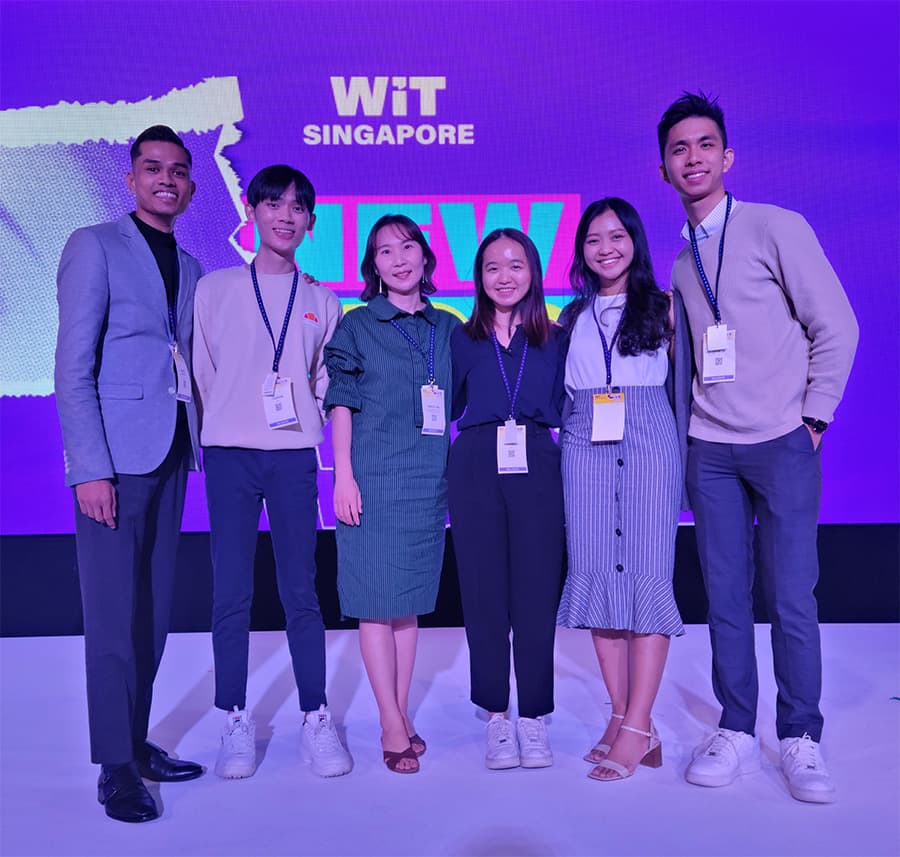
From left to right: K Dinessh Raaj, Cole Lim, Professor Eunice Yoo, Kellyn Ng, Ariel Tan, Leon Oh. Hospitality Business Programme within Business, Communication and Design Cluster at Singapore Institute of Technology
Hospitality is Love in Action, by Ariel Tan
“Is there room for love in the age of price, choice and convenience?” That was one of the questions posed at WiT Singapore 2022, and my answer is a definite yes, simply because we are in hospitality, and I could not have been more proud to be part of this dynamic industry.
The conference covered many themes, largely revolving around Web3.0, manpower crunch and sustainability. With the pandemic accelerating technology adoption in hospitality, many leaders shared their current work, direction and vision for the future of hospitality. It was exciting to hear and see how the industry is innovating to stay relevant and competitive.
However, even as the leaders boast of the next big tech, they emphasised that it was not so that tech could replace humans – but some jobs are better done by machines so that it frees humans up to perform a job only humans can do, and that is creating a sensual experience.
People do not just want to see; people want to experience and communicate. The latest technology makes it much easier and immersive to hear and see from the screen but this always induces a greater desire for the sensual experience – to feel.
This is why technology, to date, has not replaced love.
The panel on “New Models of Hospitality, powered by wellness and community” excited me because it offered a vision of “hospitality saving the world” by first serving the local community through education and alleviating poverty and then serving travellers. This is a dream rarely shared by many corporations but so vital to why we want to be in hospitality.
It may sound naive in the age of evolving technology, but we are all emotional beings. May I be the next generation dreamer who does, and the doer who dreams.
Talent, A Matter of Great Concern, by Kellyn Ng Hui Ning
The “Hello, New World” theme resonated with me, being a fresh Hospitality Business graduate from Singapore Institute of Technology and taking my first steps into the new world of hospitality. Other than connecting with new people and soaking in the convivial atmosphere of the opening and closing parties, a few lessons stuck with me.
Mentioned in multiple discussions, sustainability is gaining momentum from both the consumer and supply sides. During the panel, “Building A Better, Green World”, I was delighted to learn that various leading organisations such as Booking.com and Fairmont and Swissôtel The Stamford, are committed to sustainable practices.
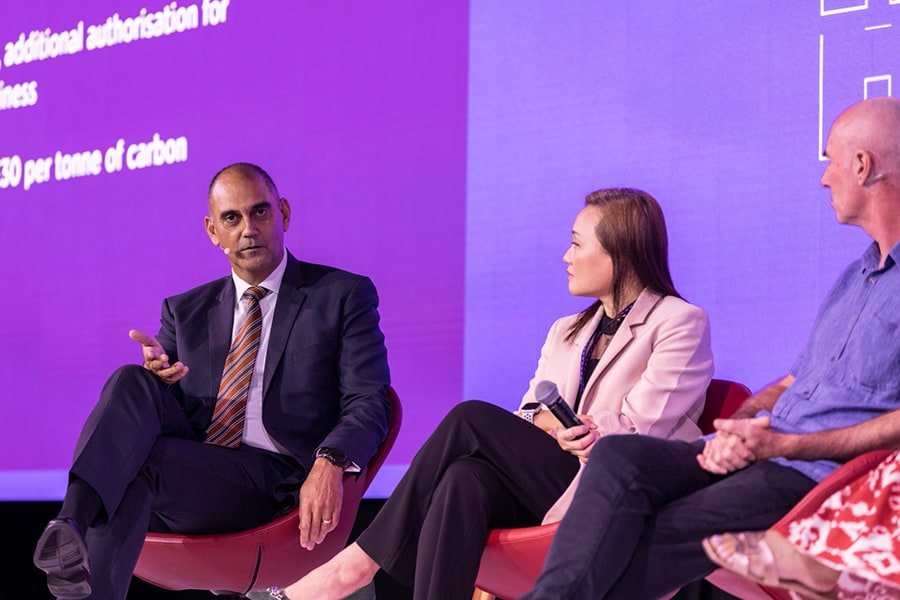
Marcus Hanna, Managing Director, Fairmont & Swissôtel The Stamford on how Fairmont and Swissôtel The Stamford grow and produce their own fish and vegetables at an aquaponics farm
For instance, Fairmont and Swissôtel The Stamford grow and produce their own fish and vegetables at an aquaponics farm, located on the hotel’s premises. The session also revealed how the hospitality industry has yet to have a clear definition and approach on sustainable travel.
Apart from sustainability, technologies with Artificial Intelligence and machine learning capabilities were observed to be on the rise within the hospitality industry. Instead of fearing this, a panellist suggested that we should learn to embrace and leverage tech. In order to do so, it is imperative for talent to constantly upskill themselves and practise lifelong learning.
However, the main concern was about the talent drought in the hospitality industry. This concern is close to my heart as after going through six years of tertiary education (polytechnic and university) in hospitality, I have witnessed many peers leaving the industry due to the low pay and long working hours.
Many of them shifted to more lucrative and stable sectors such as finance and technology. At the same time, I grew my passion for hospitality through my internship stints in a hotel and an events management company. It made me realise that hospitality is the business of social connection, and especially in a post-pandemic world, human connection, love, and compassion are most treasured.
This was further highlighted in WiT 2022 when it was mentioned that in the era of price, choice, and convenience, it is critical to have the aspect of love in mind. Therefore, as I aim to build a career in the hospitality industry, I hope to be an inspiration to the younger talent by spreading the love and excitement that the industry has to offer.
In conclusion, attending WiT 2022 was an eye-opening and enjoyable experience for me, and one day, I hope to attend the WiT conference again, not as someone in the audience, but as someone on stage.
The Journey Towards Sustainability and Personalisation, by K Dinessh Raaj
WiT Singapore 2022 was my first ever travel conference and it couldn’t have come at a better time for me as a hospitality student. I started my hospitality journey as a sales coordinator at JW Marriott, soon after concluding my National Service in 2018.
Entering university, while working through the pandemic, was not easy, so attending the conference was an absolute privilege and joy. There were lots of topics covered but two stood out because they also align with my personal values.
Sustainability
I liked how Puneet Mahindroo of COMO Hotels and Resorts said we should all be “Concerned Citizens”, and each must play our part. I am happy to see companies doing their part for sustainability and even pressuring other companies to follow.
From Booking.com’s “Travel Sustainable” badge to WiT Singapore 2022 being audited for its carbon footprint, it made attendees aware that we are all accountable and we can all take small steps in this direction.
Personalisation via Blockchain, Web 3 and the Metaverse
This was a very interesting and a relatively new topic for me. The industry is usually slow to adopt new technologies and concepts and to see this being discussed and the different use cases for it, was exciting, especially harnessing the power of data to create a personalised, end to end customer journey through their travels.
“Phy-Gital” was a concept raised – the idea of mixing both a physical and digital spaces to create a unique experience for a customer to help them plan their travels better and interact with activities. The case study of the recent Australian Open, when NFTs being sold to fans, was an interesting example.
Passion and Transform, by Chiam Jia Ying
Two words stood out for me as I listened to speakers at WiT Singapore 2022.
Passion
When I graduated in September 2020 from Singapore Institute of Technology with a Bachelor of Hospitality Business, my mind was filled with uncertainty, wondering which tourism-related company I would join, and which would be willing to welcome me. Holding a couple of part-time jobs in other fields however made me realise my passion ultimately is in tourism.
I feel the same passion in the speakers who spoke at the conference – they had great belief and purpose in what they were doing, as they transformed their organisations and envisioned the future of tourism. This, even more so, as during the pandemic, our industry was the most affected, yet was the most resilient. And while many exited the industry, they remained.
Transform
With digital penetration rate in South-east Asia estimated at around 75% and the online travel market expected to grow 15% year-on-year, reaching a GMV of US$78 billion by 2025, digital transformation is crucial.
Technology does come in handy during information search, purchase stage and part of the experience (self-check-in/ luggage drop, mobile key at hotel). But it is essential to retain human touch at the right touch points, to reinforce the reasons why we love travelling. The balance is how organisations can preserve the human connection in this increasingly digital era.
“Revenge travel” is surging and travellers are taking more time to enjoy a destination. Some organisations are allowing employees to work from anywhere, contributing to the increased length of stay.
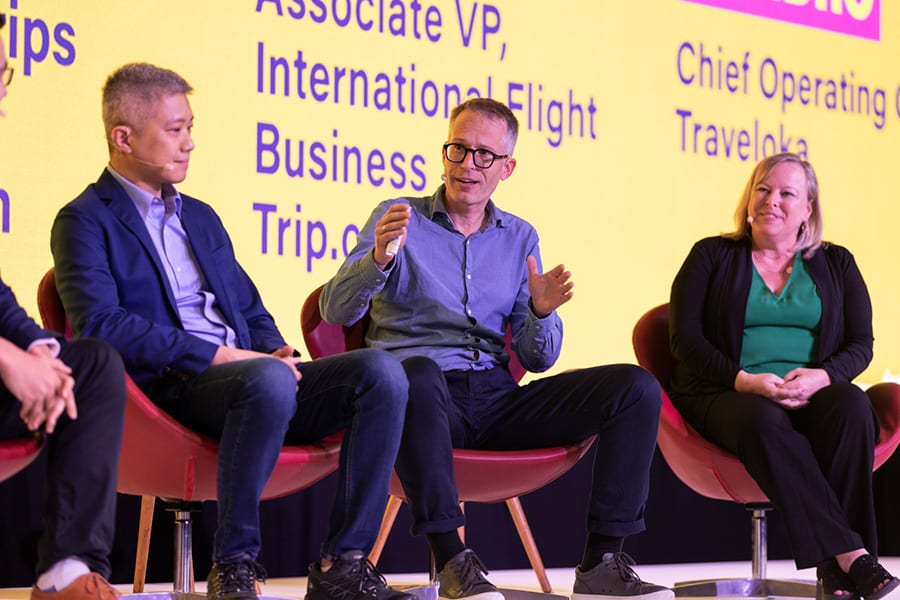
From left: Ooi Chee Teong, Associate VP, International Flight Business Trip.com. Matthias Schmid, Acting Senior Vice President, Trips Division Booking.com. Julie Kyse, Vice President, Global Air Partnerships, Expedia Group. Panel: The Big Four: Transforming For The New World
Yes, carbon emissions are being generated but travellers have a choice – some destinations are more sustainable than others. Choose accredited accommodation, recognised by a Travel Sustainable badge on Booking.com, or a destination Sentosa that is certified by Global Sustainable Tourism Council. There was an idea to provide travellers with rewards/ incentives when they use less water or waste less at a hotel.
Another key theme was wellness, with Singapore wanting to make wellness a core pillar of its attraction. However, since it is known more for its food, it will require joint efforts by government and private sector to change this perception. I believe the industry should start with domestic demand, so that we can become advocates.