Ascott bets big on coliving brand, eyes 150 by 2030
AT lyf one-north, Singapore, they try to do everything differently, down to the smallest detail. For example, Genevieve Khua, whose official title is country director – revenue management and area manager, lyf (Singapore), carries a name card that lists her pros and cons.
She lists her two pros as “aspiring aerialist” and “linguist” and the third box is “you tell me”. So I told her it is her passion and belief in the brand she’s working for, I mean, almost evangelistic.
To start the tour, she insists I walk through the “lyf portal”, and declares, “Welcome to your new lyf”. The first thing she shows me is the “back of the house” which is unlike any hotel back of the house I’ve seen. It basically looks like a very messy office or my living room, with clothes hanging on racks and lots of paper around.
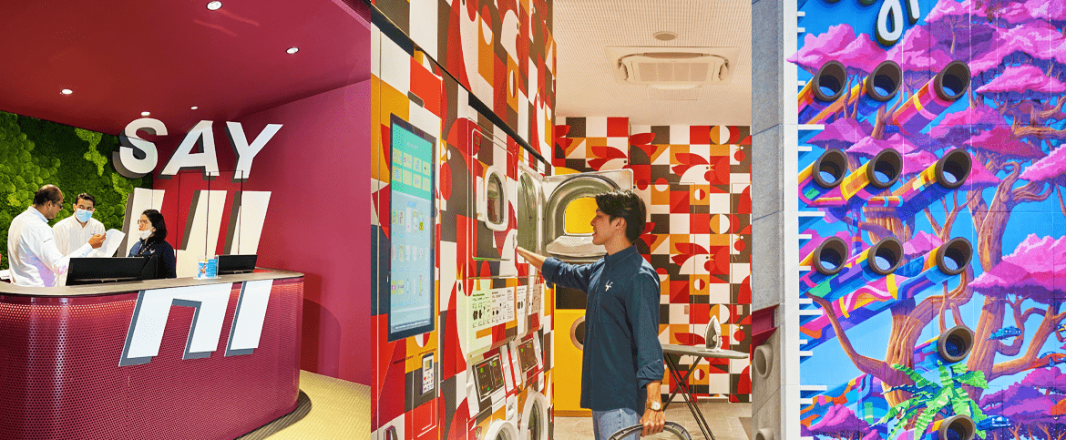
She also insists I take a photo of the front desk which is designed for Instagram – take it at the right angle and the split letters spell out “Say Hi”. Cute.
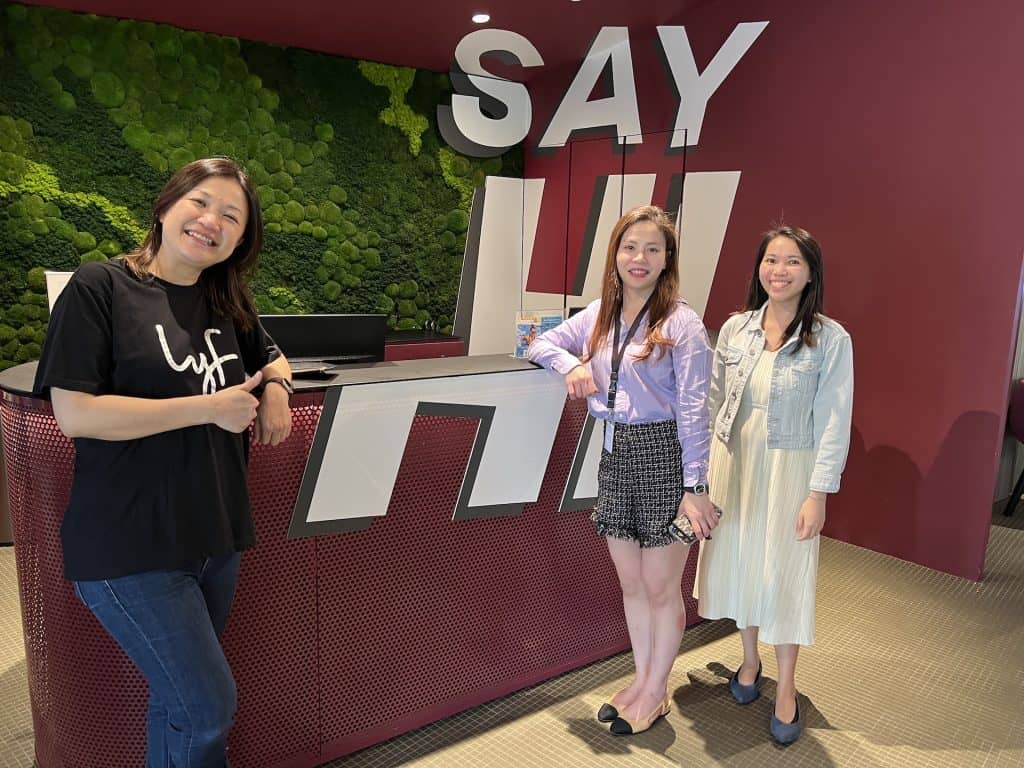
Say hi to, from left, Wong Kar Ling, Genevieve Khua and Lee Ji Cheng, my tour guides for the day.
lyf is the coliving brand that Ascott, CapitaLand Investment Limited’s wholly-owned lodging unit, is banking on to create the next generation product that is a hybrid of serviced residence and hotel “where you are free to create the life you want”.
lyf (pronounced life), after all, is the acronym – Singapore loves its acronyms – for “Live Your Freedom”. And if you think it ironic that a country that may not be perceived by most to embody freedom would be home to a brand that wants to own the word that Janis Joplin says “is just another word for nothing left to lose”, well, Wong Kar Ling, who is managing director, South-east Asia and head of strategy/strategic investments and global operations, has the rebuttal.
“Freedom is how you define it,” said Wong. “Genevieve is free to do what she likes and guests are free to do what they like within our four walls,” adding, “This is a brand for the next generation and it is good to let the younger kids take over.”
For Genevieve, who has a background in revenue management and who has worked with the company for seven years, including in Korea and China, it is a big leap forward – recently taking on the area manager’s role at the company’s fastest growing brand. I was told there are eight lyf properties now, with another 14 opening in places such as China, Australia, Japan, Bangkok, Kuala Lumpur, Paris and Austria.
The goal is to have 150 lyfs around the world by 2030.
“It’s very exciting,” said Genevieve, as we continue the tour. We stop at the laundromat which looks more like a neon-lit club than somewhere to do your dirty laundry. “We try to be different in everything we do,” said Genevieve, “and it goes back to looking at things from the guest perspective.”

The entrance to the laundromat, called Wash and Hang.
There’s no general manager, but lyf champions. There are no guest relations officers, but there are “lyf Guards”. You could be cynical and say those are just new catchy titles that mean the same old thing but Wong said there’s deliberation behind the re-thinking of job scopes and how to motivate talent, especially at a time when talent is hard to find.
“It’s an opportunity to rethink job scopes and roles and how we can combine them,” said Wong. And lyf is the ideal prototype on which to test concepts because it is still a pretty experimental and evolving brand. It is also a pretty profitable model. For the 324 rooms it has at lyf one-north, there are only 36 staff, a ratio of 0.1.
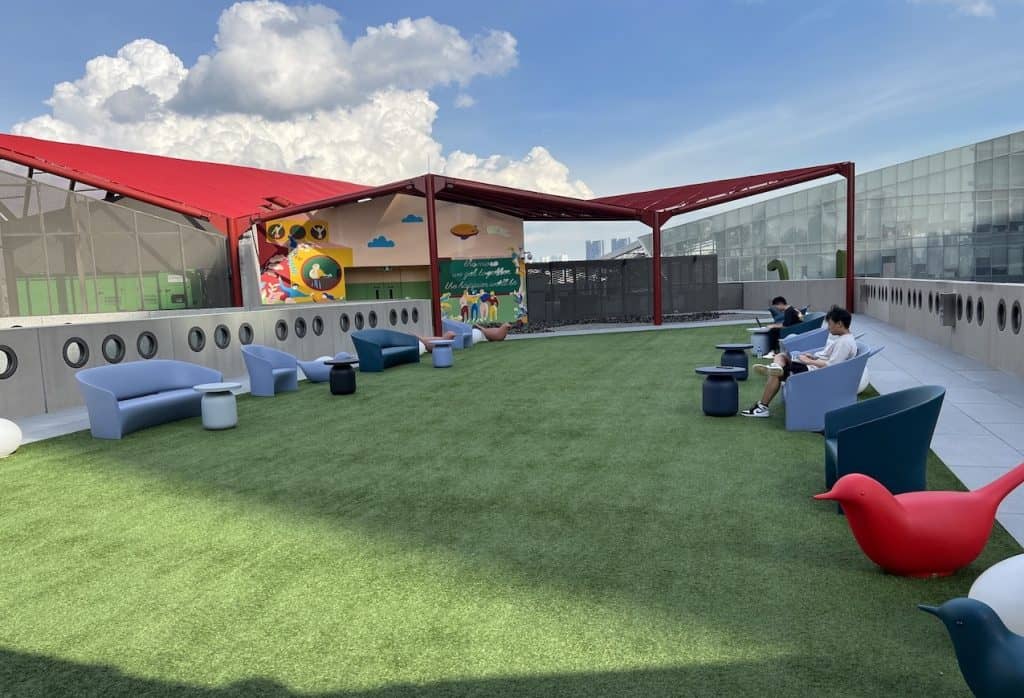
lyf one-north opened in November 2021 and within months, achieved occupancies of 85% and over. It is largely self-service. There’s a vending corner in the communal space where you can buy Starbucks coffee and snacks. There’s a social kitchen where guests can prepare their own meals. There’s the aforementioned laundromat, pantry and gym and communal spaces are spread out throughout the property – the rooftop space, for example, and an outdoor events space where the team is responsible for programming activities that tie the property to the neighbourhood and community it is in.
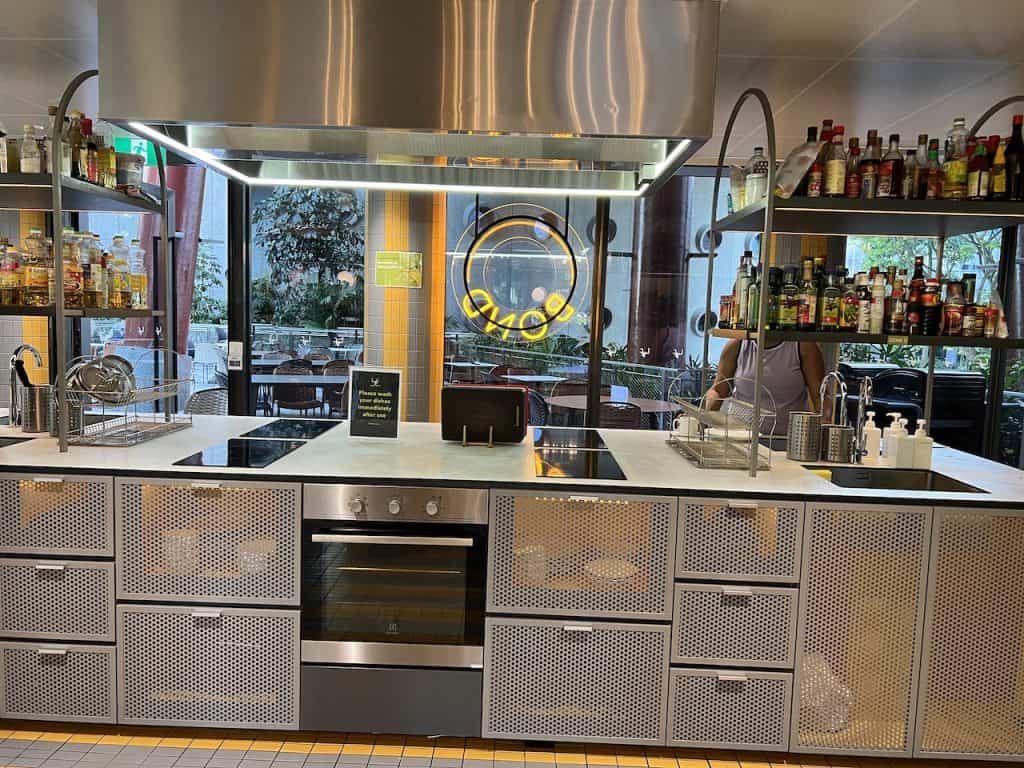
The social kitchen – “we can tell who’s staying by what’s cooking”.
lyf one-north, for example, is themed around nature and sustainability, located as it is away from downtown Singapore and surrounded by more open and green spaces. lyf Funan, located within Singapore’s IT mall, is themed “design and entertainment”.
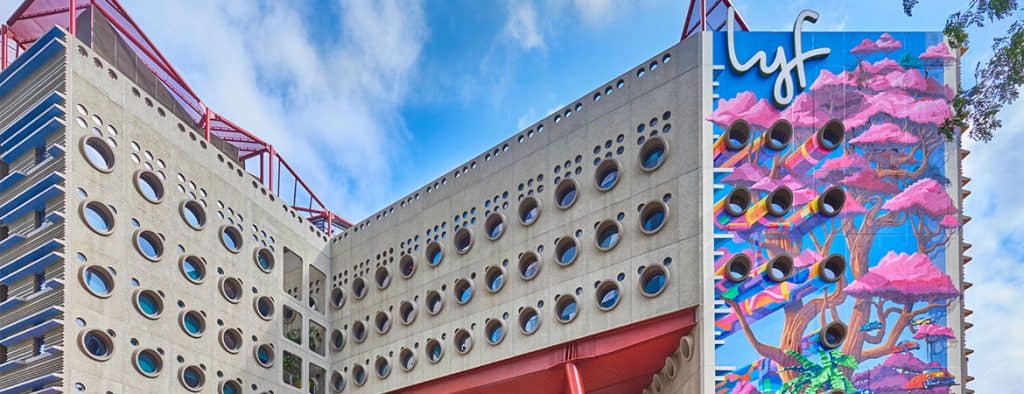
Art plays a big part in lyf as well – with one-north boasting a seven-storey mural (featured image) painted by artists residing in Singapore.
As a concept, lyf was born in 2016 and was tested with students of the Singapore Management University. Product and design prototypes were evolved, based on the students’ feedback, and lyf Funan was the first prototype.
While it was designed with millennials in mind, what it’s found – and perhaps thanks to the pandemic which changed how we think about work, life and play, and made working from anywhere mainstream – is that the brand cuts across generations.
From the tour of lyf one-north, I can sense it is definitely skewed towards a customer who doesn’t want to stay in a traditional hotel nor a traditional service residence. It’s for customers who want social, yet want privacy when they desire it. It’s for customers who want to do their own thing – cook, have food delivery – rather than have someone do it for them. It’s for customers who want to have a temporary “home away from home” but with a level of comfort, convenience and choice.
“We can tell who’s staying based on what’s cooking in the kitchen,” says Genevieve. Guests buy their own sauces and store them in the kitchen – reminds me of bars with whiskey bottles with names on them. “The longer stay guests cook more, of course,” she adds.
The minimum length of stay is six to nine nights, and stays can average from one to three months.
“We are a hybrid serviced residence and hotel,” said Wong. “This hybrid product is driven by a customer shift – people wanting to do things themselves and wanting more local experiences.”
Even Ascott’s pure serviced residence brand like Citadines is getting a bit of hybridisation. Citadines Raffles Place Singapore, opened last October, is the first Citadines in the city to offer curated lifestyle events and spaces to residents, including activ∞ (pronounced as ‘activate’) and For the Love of Coffee, with a social kitchen space in the lobby. It is also the first among Ascott’s properties in Singapore to deploy service robot ARIA (Ascott Robotic Intelligent Assistant) to perform a suite of tasks such as concierge services, leading guests to the rooms or facilities as well as refilling room supplies.
“There are new ways of envisioning the stay experience and people want to have options,” said Wong. “We also want to have options as hoteliers. In terms of hardware, we go for modular furniture and designs. And we look at spaces in a new way – how can we convert them, repurpose them? We don’t want dead spaces.”
lyf customers engage more with the Discover ASR app than other Ascott brands.
It’s also found that lyf customers engage with the Discover ASR app more on a daily basis than seen on other brands – the app acts as check-in, mobile key and communications on-site. More lyf customers book direct on the website, than other brands. And without doubt, they are the most active on social media – giving the brand a natural uplift without having to spend too much on paid media. To help customers create content, the property is filled with lots of Instagrammable opportunities.
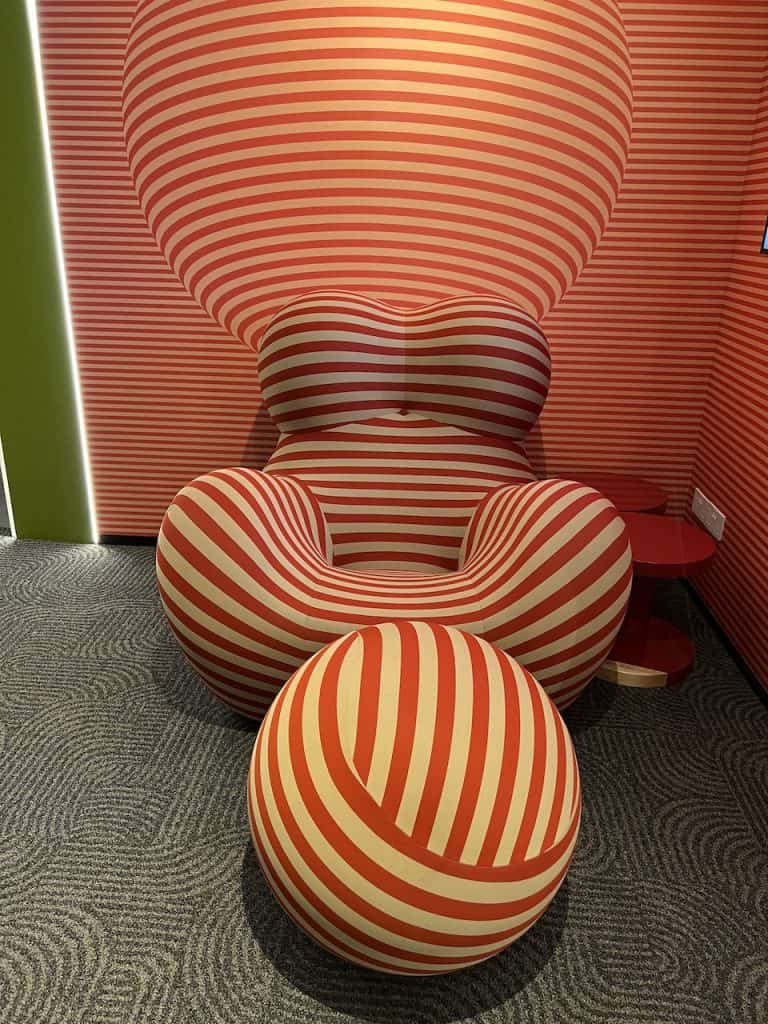
A corner made for Instagram.
You can therefore understand Wong’s enthusiasm for the brand. “It is our fastest growing brand, along with Citadines. It is the brand of the future. We are pushing the brand and getting a lot of enquiries.”
The model does put more pressure on the operating staff – a smaller team having to constantly think of ways to wow the guests, to think of every little detail that can make a difference to a guest stay. “There’s definitely more intense involvement on the operating side, and we learn and evolve as we go along, observing customer behaviour,” said Wong.
For example, with lyf Funan, the first prototype developed based on the feedback from SMU students, there were a “lot more adventurous rooms”. But it learnt that customers generally preferred the more straightforward rooms, with lofts a favourite.
“There was a lot of learning. It was designed for the millennials but once we started operating, different age groups appeared and so we learnt that age stratification was not as relevant. We have a pretty equal gender mix as well,” said Wong.
By the pool, we see a couple of post-Millennial Western guests sunbathing. “See,” said Genevieve gleefully, “it’s more about the lifestyle and mindset you are, than about your age. You fit in too.”
Did I tell you that her three cons are “Coffee is my husband and whisky’s my lover”, “GPS is the light to my tunnel” and “undercover comedian”.
Perhaps not so undercover after all.