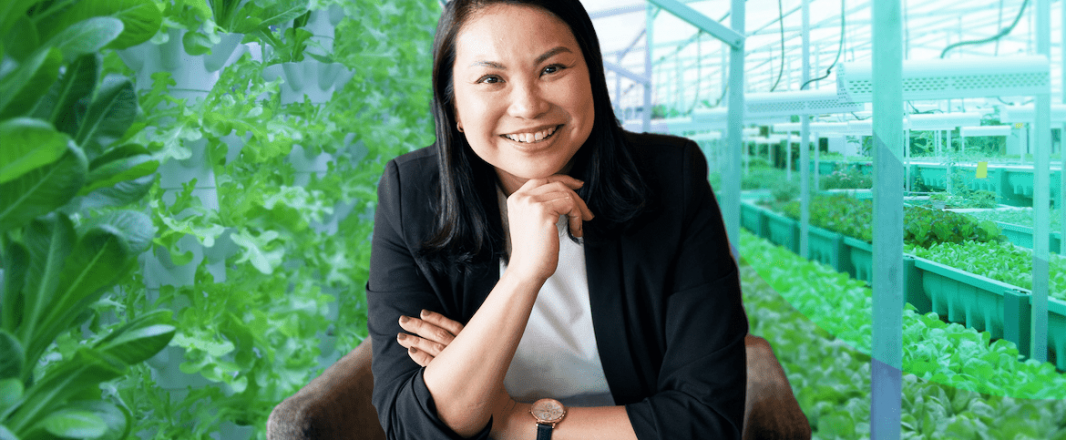
How one woman is making a difference in plastics, food waste and community outreach
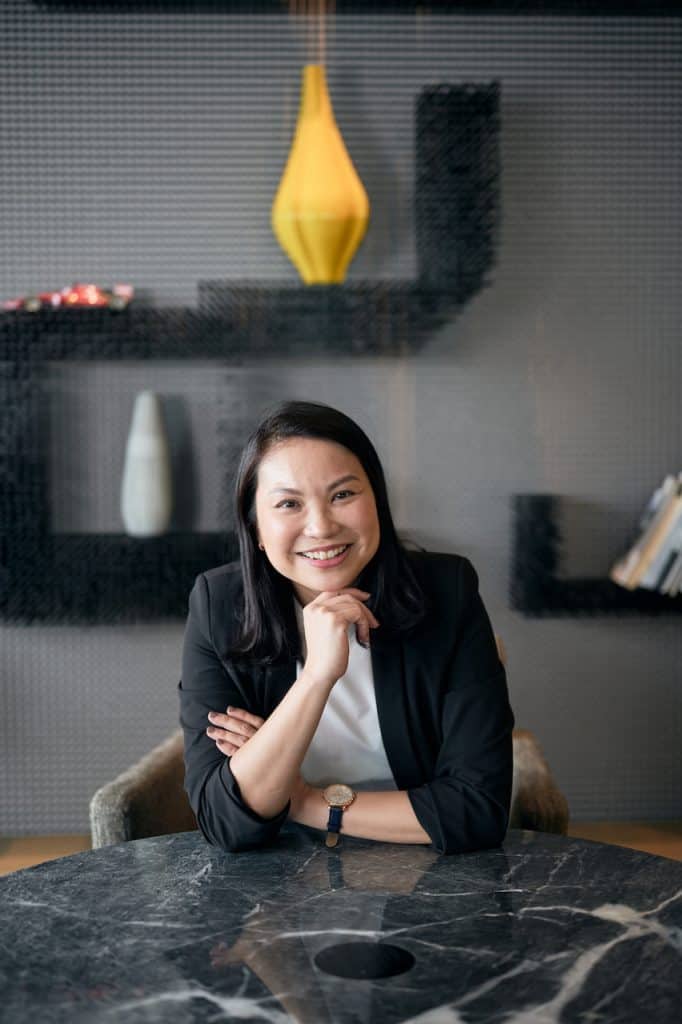
Jessie Lim: The top priority is certification and Lim’s team is working on GSTC (Global Sustainable Tourism Council) certification, as well as Green Globe and Green Key.
It’s probably the hottest and newest job title in the travel industry right now – that of chief or director of sustainability – with almost every major travel brand seeking expertise and chasing certification in the field. Jessie Lim however pre-empted it by asking for the job.
Working in conference services at one of Singapore’s largest conference venues, Raffles City Convention Centre, Lim could see the pressure the growing movement around sustainability would put on the hospitality and MICE business and in November 2020, she pitched to the management the idea of her taking on the role of director of sustainability of Fairmont and Swissotel The Stamford.
“This complex is huge, with the conference centre, and I could see an opportunity to align with Accor’s vision as well as Singapore’s vision. We could have a great impact if we looked at areas we could control,” the newly-appointed Senior Director of Conference Services & Sustainability said. “Besides, I’ve always been passionate about sustainability. I have three kids, and I care about the future generations.”
To arm herself for the role, Lim enrolled in a six-month “Advanced Certificate in Sustainability & Sustainable Businesses” at the Singapore Management University. “I am passionate but I did not have the technical background. I wanted a better understanding of ESG and to connect with the right networks. It was an opportunity for me to grow, to gain expertise in hotels sustainability and to make myself valuable to the organisation.”
Lim’s sustainability efforts cover three key areas – plastic, food waste and CSR (corporate social responsibility). The first task was to bring everyone together to align goals and set outcomes. “We brainstormed among the different business units and aligned ourselves to push forward the impact.”
Lim said it starts with small steps – on a personal level, what every team member can do to minimise their own carbon footprint – for example, bringing their own reusable cups; and then at the hotel level.
“We have now eliminated single use plastic in guest-facing operations, and installed filters in all rooms at the Fairmont. And we are installing filters for all 1,225 rooms at Swissotel now.”
At the convention centre, water carafes have replaced plastic bottles. “There is a need for upfront investments in the water filters and we had to educate guests as to why we are doing it, and they are fully supportive.”
Plastic takeaway containers as well as straws have also been removed.
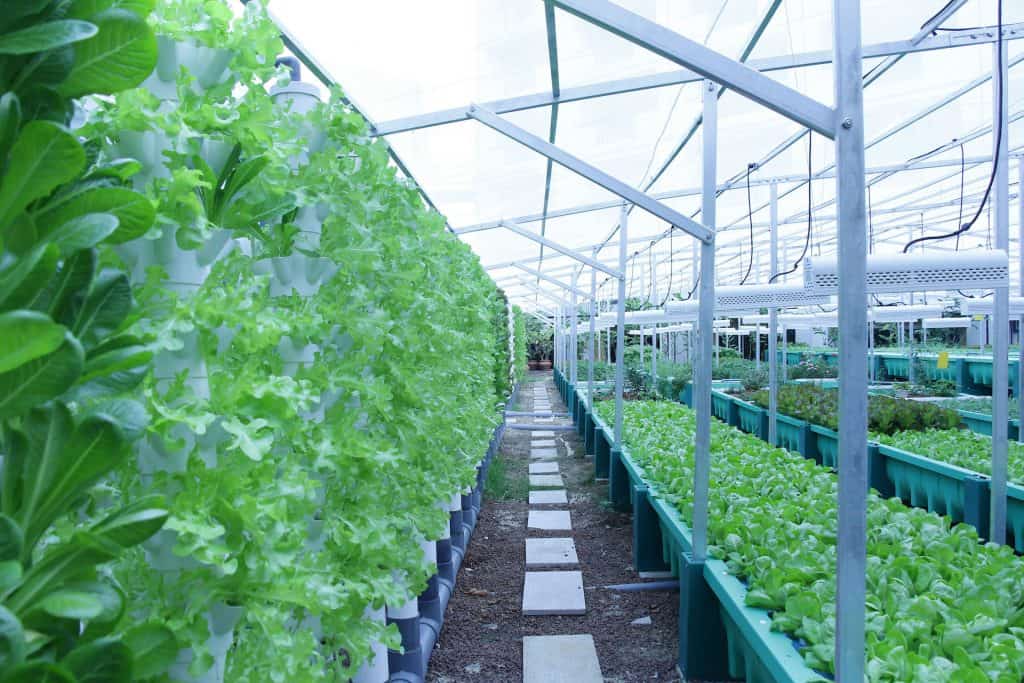
The hotels’ aquaponics farm, meeting 30% of food supply needs. In 2022, a total of 231,900kg of food waste was recycled.
Managing food waste with AI tools and treatsure
In the area of food sustainability, its aquaponics farm plays a role in supplying 30% of food supply to the hotels. “We also leverage that to spread awareness of food sustainability in our outreach programmes to schools, urban farms and social enterprises.”
Lim said that a total of 231,900kg of food waste was recycled in 2022, a five percent increase from 2019. Obviously, the key to reducing food waste is to solve it at the top of the funnel – how much to order and how much to prepare in the first place.
To that end, it works with Singapore-based Lumitics, a food waste solution that tracks food wastage, using AI tools.
Asked what has been the key lesson learnt from using Lumitics and what it had been able to track, control and save on, Chef Robert Stirrup, director of culinary operations, said, “With Lumitics, it’s not as straightforward to pinpoint one ingredient that we’ve saved from landfill. I’d say the key learning from using this technology has more to do with perspective.
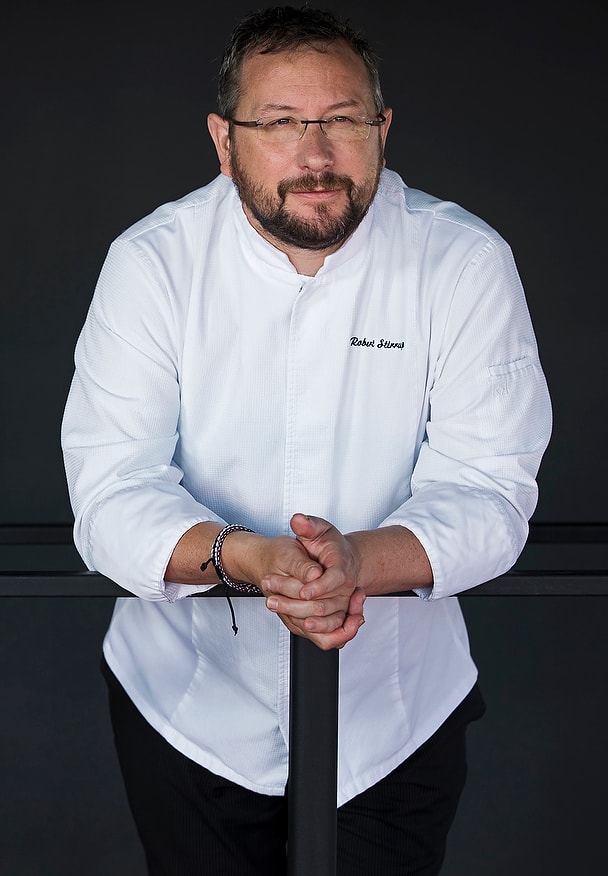
Chef Robert Stirrup: A small change can have a big impact on waste management.
“Sometimes – especially with buffet concepts – you think you need to upsize to meet people’s expectations when it comes to value for money. However, we’ve learnt that just a small change such as reducing an ingredient by 10g can have a huge impact on waste management.”
It also tackles food waste by working with a company called Treatsure, which is Singapore’s first mobile reservation platform connecting businesses and hotels with surplus food to consumers. treatsure collaborates with chains, such as Accor, Hyatt Hotels and the Singapore Marriott Tang Plaza Hotel to allow app users to pick out and collect a “buffet-in-a-box” of food that would otherwise be thrown out, for a tenth of the buffet price.
Lim said the treatsure partnership was working well, with “pretty positive uptake” from its buffets in the hotels.
“A common mantra that I have is that being sustainable should be attainable,” said Preston Wong, chief executive officer and co-founder of treatsure, in a media interview. Since it launched in 2017, treatsure, which says it has more than 30,000 users, has saved an estimated 30 tonnes of food from going to waste.
According to this report, a total of 817,000 tonnes of food waste was generated in Singapore in 2021, a 23% increase from the year prior.
Lim, who is also on the SAECOS (Singapore Association of Exhibition and Conference Organisers & Suppliers) sustainability committee, said events contribute a big portion of food waste and it was starting the tracking of events, not only in terms of food waste but also carbon footprint.
In the area of energy saving, the hotels implemented a Heat Transfer Station Implementation Project from 2016-2018, which has yielded a 40% savings.
It is planning to replace electronic control fans by 2023 to reduce electricity consumption as well as install door sensors that help to trigger an automatic air-conditioning cut-off when an opened balcony door is detected.
Lim sees energy now as the biggest opportunity to show management the power of energy efficiency and savings. With energy costs in Singapore rising three times, Singapore’s hoteliers (as well as households) are being hit by rising costs. “This is the biggest impact we can see right away,” said Lim.
Certification on the horizon
Overall though, the top priority is certification and Lim said it was working on GSTC (Global Sustainable Tourism Council) certification, as well as Green Globe and Green Key.
With Singapore having been certified to the GSTC Destination Criteria, as well as Sentosa, it is likely that this certification will become the gold standard for hoteliers in the city state.
“There’s a lot of external pressure now on hotels and venues,” said Lim. “Clients are now more aware, and asking us about our sustainability initiatives.”
In terms of CSR, it has on property 26 students from Delta, Metta, Rainbow and Guild International College – schools for special needs – since 2022. They are attached to the property for six months to a year, for vocational training at laundry department, the Aquaponics farm, housekeeping and F&B operations.
Lim said the biggest challenge in her role is “to convince people of the positive impact and getting people to come forward” and “to prioritise”.
“Of course, right after Covid, the urgency is business recovery and sustainability is expensive but more and more people are convinced now that this is the right and only way forward. By quantifying what we have done gives people focus and purpose.”
And by the way, Lim is wearing two hats – she’s still doing her regular job of conference services on top of her new sustainability role. To which she said, “Never be afraid to try something new.”