Elizabeth Hecker’s life changed in 2003 when she tasted a wine from the Priorat region of Catalonia, Spain, and the Californian native said it revealed a landscape in her head unlike anything she had seen before. She moved there, bought a 200-year-old house, restored it and for the next 15 years, laboured over her book “Ethos Priorat” which was published by Academie du Vin Library this year. Yeoh Siew Hoon catches up with Hecker, to learn more about the inspiration for her book and to get her recommendations as to what to do when you visit the Priorat next. You couldn’t ask for a better guide.
Q: What prompted you to move to Priorat, Catalonia in the first place?
I used to think wine was defining my life’s path. I now believe it was nature through wine.
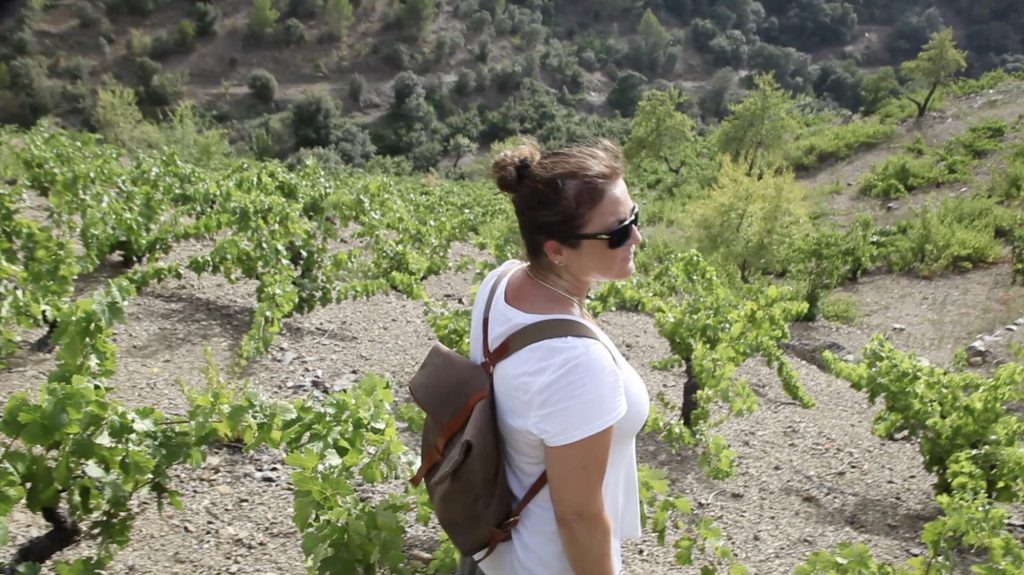
Elizabeth Hecker: “Wine is the voice of nature. A salad can taste fresh and delicious but it cannot tell you stories about its life.”
Q: You’ve been associated with the branding and storytelling for wine in California – what’s the key difference between wines from California and Priorat?
The US is a giant island. All 50 states are making wine now. Hollywood and sports stars are investing in it. There are wines that garner cult followings and are able to command high prices. Others have figured out how to make wine in large quantities and make a profit based on volume. Wine is treated as a commodity, a frivolous cocktail or an elitist beverage. In the Priorat wine is something much deeper. It is life. It represents heritage, provides purpose and food for the family table. And because of the challenges of the Priorat terrain, it is nearly impossible to make wine in large quantities. It is a matter of living with the land instead on it.
Q: What were the biggest challenges of settling into the Priorat region in the early years?
It was very important to me to find my place without boundaries. Working on the book for so many years, spending time in vineyards out in the middle of nowhere, people became familiar with my little grey Peugeot buzzing around the hillsides. If they found me in the middle of their vineyards taking an intimate zoom lens look at their vines they were not surprised. Though I do think that once I finished the book they understood me more.
Language continues to be the biggest challenge though I get better navigating life every year. I came here without Spanish or Catalan. And I chose to focus on Catalan out of respect for the people of the region. I figured I could learn Spanish later (they say it is easier). The other thing requiring adaptation is the fact that there are no services or market in my little village. It makes life more complicated but you just have to be more organized. The closing of everything at lunch time and late dinners also requires acculturation.
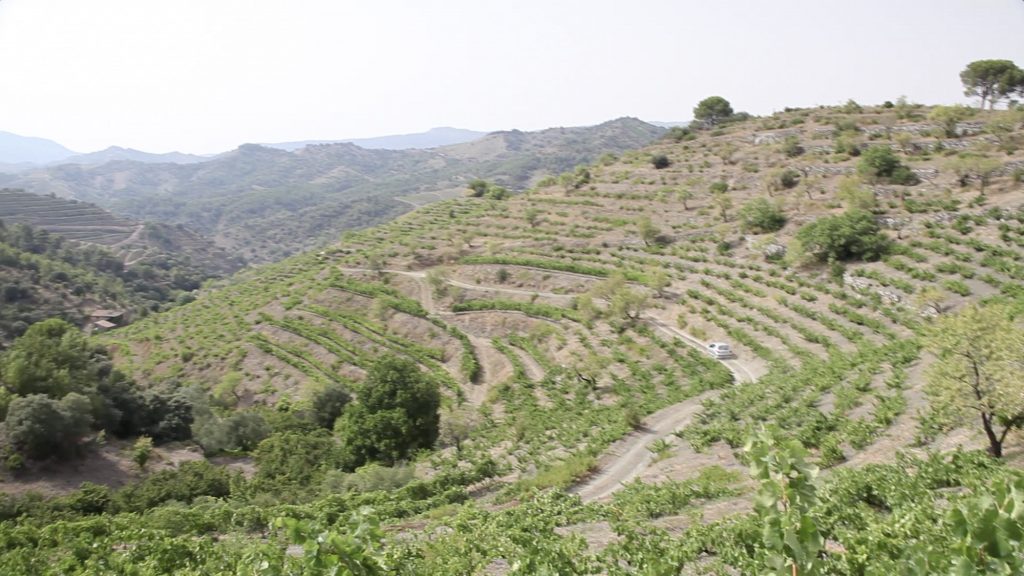
“Working on the book for so many years, spending time in vineyards out in the middle of nowhere, people became familiar with my little grey Peugeot buzzing around the hillsides.”
Q: What inspired you to write the book “Ethos Priorat”? What is its key message?
The subtitle for the book is: “Listen, the wine is talking.” That is the message. Wine is the voice of nature. A salad can taste fresh and delicious but it cannot tell you stories about its life.
The wines of the Priorat speak for nature with powerful distinction, but also a sense of time and human spirit that navigated the steep schisty slopes in the hot sun for centuries. They come together in a sensory experience that implores you to be present and participate in their story. I believe the story of the Priorat will encourage wine drinkers ask more questions of every wine they drink. Allow every glass to take them on a journey and forge a communion with other places and people round the world.
Q: What has the experience taught you?
I have come to realize how many words we use that are not necessary. And the greater, true communication, comes through the eyes (“windows of the soul” as they say) and the heart. The effort to create a bridge for connection is so very real and satisfying I almost fear when I am able to speak as well as I do in English because now I choose words I know are essentially what I mean and no more.
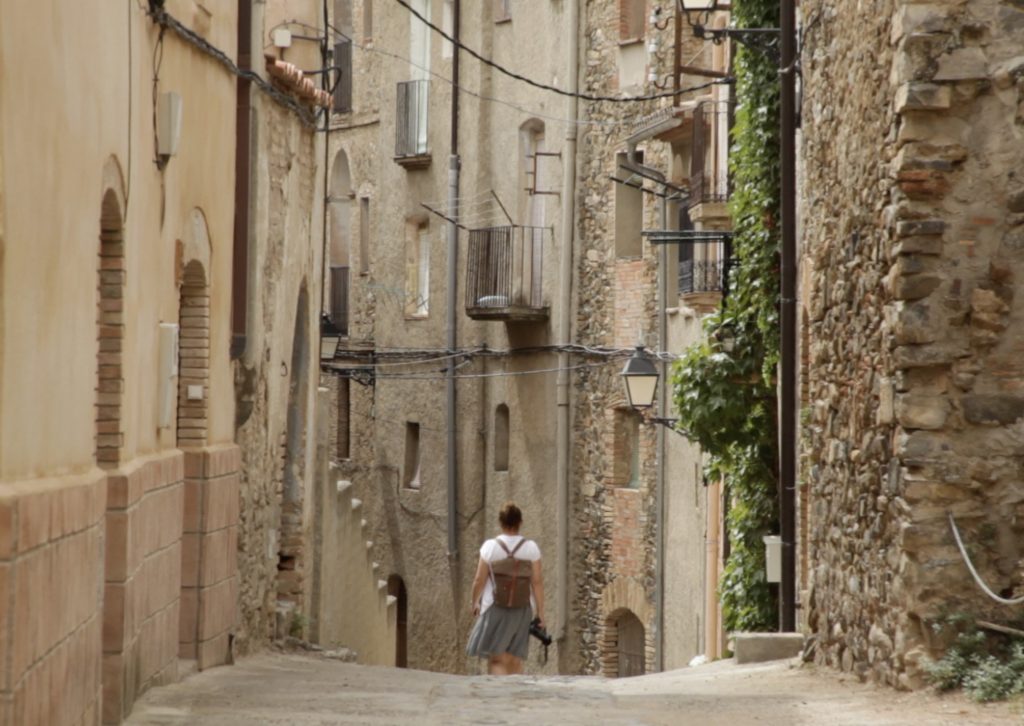
In Torroja: There are different reasons for visiting the Priorat besides wine.
Q: What are the top three things a traveller must do in Priorat?
There are different reasons for visiting the Priorat besides wine. Cycling, hiking and mountain climbing are really good here. And thanks to the wines, gastronomy is too. I would recommend a minimum of three days and more if you have the time.
If you are a wine enthusiast your trip must begin with a visit to Scala Dei, the Carthusian monastery dating back to the 12th century. The Priorat was scantily inhabited prior to the monk’s arrival. Little by little they were given the right to populate the particular areas and collect more taxes which is what led to animosity and being expelled in 1835. Its painstaking and impressive restoration is well underway.
Depending on how much time you have, you can hike up into the Montsant Mountains behind the monastery and get a panoramic sense of where you are.
The tiny village which you pass by on the way to the monastery is also named Scala Dei. It provided the services for the sequestered monks. There you can find two important cellars with tasting rooms, two restaurants, a wine shop where you can enjoy a variety of wines from around the Priorat, a delicious olive oil shop and a wonderful apothecary which has lotions and potions made from herbs gathered from around the landscape.
From Scala Dei you pass by Vilella Alta and Vilella Baixa on your way to Gratallops which is where the revival of the region began at the turn of the century. It is on the eastern side of the Priorat and gets more continental heat.
Farthest south is Bellmunt. This area is hot but also enjoys some Mediterranean cool coming up from the south. When phylloxera found its way to the Priorat and devoured the vines in the 1890s, lead mines provided work in the Priorat and helped many of its residents survive and even replant their vineyards. The largest mine, Eugenia is now part of a museum which offers an informative and engaging walk through this era in time. You can drive there from Gratallops by way of El Lloar and Solanes de Molar.
To complete the loop you can visit Porrera which is the farthest east with so much cooling from the Med that bud break and grape maturation is a month or more behind the rest of the Priorat and continue on back towards the Montsant Mountains to Poboleda and La Morera. The only thing you will have missed is Torroja del Priorat which sits in the middle of the region with the most moderated climate. Perched on top of a hill, the silence is broken only by the sound of the birds and the church bell.
All along the way you will see vineyards growing out of “llicorella” rock and the remnants of centuries old rock walls from a time when every surface was planted to take advantage of the high prices their grapes could command. Just be sure to take some dramamine if you need it because the roads are windy.
Q: How has travel changed your life?
I always wonder how it came to be that my brother built a life in Singapore (Robert Hecker is the managing director, Pacific Asia, of hospitality consultancy, Horwath HTL Corporate) and I wound up in Spain. We grew up in Fresno which was not particularly worldly. Our children’s books included stories about the kids growing up around the world. I spent a summer visiting countries of Europe with my grandparents in my teens and returned again in my 20s for more adventures with friends.
My annual visits to Singapore always included a side trip somewhere in Asia and Australasia. I was Creative Director for Crystal Cruises from in my 30s and conducted photoshoots on the ships around the world. Wine provides the opportunity to travel either by plane or on the wings of my senses providing my ongoing quest or exposure to life beyond my own.
For me, the operative word is not travel as much as truth. If you take away my opportunity to learn and grow as a human being, you take away the life force which fuels me. You might as well toss me off a bridge!