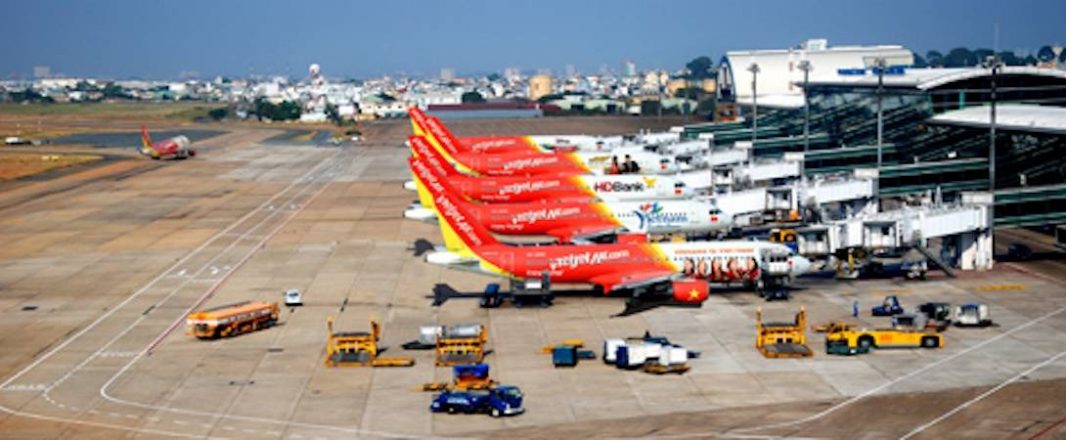

Fresh from its biggest aircraft order worth US$9 billion for 92 A320s, Vietjet, Vietnam’s only privately-owned lost cost airline is charting a course for “massive growth”, board member Cuong Viet Chu (left) told WIT.
When the aircraft deal was announced, managing director Luu Duc Khanh called it “a milestone” and said, “it means we are aiming to be a multinational budget airline”.
The purchase will be financed by a planned stock market listing in either Singapore or Hong Kong in 2015 as well as loans from foreign banksbacked by export credits.
The airline, which launched flights on December 11, 2011 and has a fleet of nine jets, claims to have 25% domestic market share and aims to grow that to 50% in three years.
But it is in the international sector that it hopes to leave a bigger mark – beyond Thailand, where it operates from Hanoi and Ho Chi Minh City, the airline is eyeing Taipei – there are 100,000 Vietnamese residents in Taiwan – Singapore and Seoul for immediate launches.
It also has its sights on China, Malaysia, Japan and Myanmar and it plans to pursue a strategy of alliances as it grows.
Owned by Sovico Holdings, it has formed a joint venture in Thailand, Thai VietJet – owning 91% of Kanair – and is about to sign a partnership in Myanmar, said Chu.
“Our load factors to Thailand are 92% and we are encouraged by the response,” said Chu, who said domestic load factors were also about 90%. (Khanh said the airline turned a profit in the first seven months of this year). In 2013, Vietjet expects to fly three million passengers and anticipates flying five million next year.
.png) Chu, who spoke to WIT on the sidelines of the CAPA World Aviation Summit in Amsterdam this week, makes no bones about the fact that Vietjet is modeling itself on the AirAsia model. It had a joint venture with the Malaysia-based low cost airline brand but that fell apart due to Vietnam’s regulatory environment.
Chu, who spoke to WIT on the sidelines of the CAPA World Aviation Summit in Amsterdam this week, makes no bones about the fact that Vietjet is modeling itself on the AirAsia model. It had a joint venture with the Malaysia-based low cost airline brand but that fell apart due to Vietnam’s regulatory environment.
On stage, he wears a red cap (ala Tony Fernandes) and the airline’s livery and collateral resemble AirAsia’s. “We learnt a lot from them, especially in sales and marketing, we love the AirAsia model”, said Chu. (When it received its second A320 Sharklet in October, it did a co-branding with Pepsi and the paint came painted with the soft drinks logo). 
With a population of 90 million people and only three locally-based carriers, Vietnam is seen as a market with huge promise. “Only 10% travel by air the moment, so it’s got huge potential,” said Chu.
It has the largest online population in South-east Asia at 16.1 million monthly Internet users, according to comScore and with smartphone adoption on the rise, it is said that nine out 10 Vietnamese access the web via mobile.
However Chu said Vietnamese still preferred the traditional way of booking through travel agents and “cash is king”.
Website direct accounts for 20% of its sales and Chu sees this number growing as customers get more used to online bookings.
“Internet is quite developed and we are working with two banks to help solve the payment issue. Vietnam is a cash country so far,”’ he said. “Mobile is also growing but it’s not easy in Vietnam – consumers still prefer traditional cash payments.”
Vietjet is also eyeing the premium traffic and has launched the “Skyboss” product which offers business class services “but the seat remains the same”.
It will launch a loyalty programme soon and it expands internationally, is also looking for a partnership with a duty-free retailer.
“In Vietnam, low cost airline translates to cheap airline, so the perception is not good. We want to be known not just as a cheap airline but one that offers high quality service, good pricing and comfort.”