“It will force humans to think more about what it is that actually makes us human”
Next week, the WiT Singapore conference will close on our Great Debate with the question, Will AI make us less or more human?
I’ve been mulling over the question for a while and there are days when I believe it will make us less human.
On my daily preambles, I am always walking into people with their noses in their phones and I have to confess, I myself have walked into trees a couple of times. Last night, on one of my night-time prowls, I literally bumped into a robot – I dub him “Robocop” – out for his nocturnal surveillance.
In the dark, he looks almost human, emitting a red, blinking light, just like humans do on their bicycles, so I wasn’t paying particular attention to him until I came up close. He’s also shorter, so it’s easy to miss him when you’re not being human and paying attention to the living nature around you, as you should.
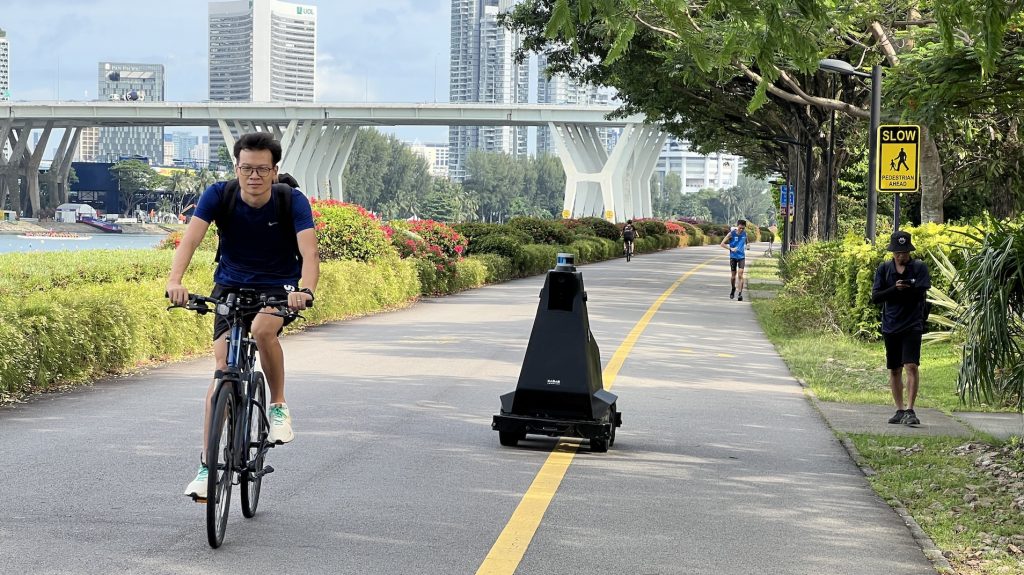
“Robocop” out by day in Singapore
In a small, ageing population like Singapore, these autonomous surveillance machines that move among us make sense and it won’t be long when there will be more of them among us that we will come to accept them as our everyday walking companions, much as we accept our robot vacuum cleaners these days.
Then there are days when I think this age of generative AI and big-small-and-everywhere tech will make us go the opposite way and fight against the machine to distinguish ourselves as humans.
Ahead of the debate next week, we asked a few of our speakers their opinions.
Rikin Wu, CEO at Dida Travel, thinks AI will give us more time to be human. “If we leverage AI to complete tasks more efficiently, it can provide us with more time to focus our efforts on activities that are more “human” – such as art, empathy, and social interactions.”
Nuno Guerreiro, Regional Director, South Asia, Oceania & Chains at Booking.com thinks it will enhance our humanity. “AI’s evolution provides exciting possibilities in improving the customer experience – such as making travel planning easier. In leaning on AI to take care of the mundane, people will have more opportunities to savour more experiences and moments in real life – where it isn’t a question about being less human, but how we can embrace new technologies to enhance the human experience, while enjoying more fulfilling moments.”
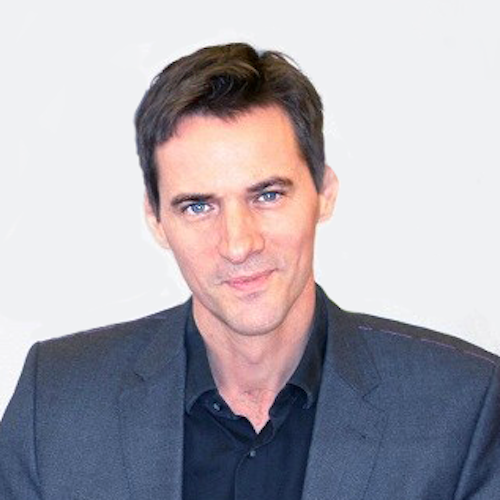
Ross Veitch: “It will make us question our humanity.”
Ross Veitch, CEO and co-founder of flight search and booking app Wego, thinks it will make us question our humanity. “For now AI is a powerful set of technologies that will help us humans become significantly more productive across many different endeavours. As AIs approach, and then surpass, human levels of intelligence and capabilities, it will force humans to think more about what it is that actually makes us human.”
So what is it that actually makes us human?
In last week’s column, I wrote about how cultural knowledge cannot be codified and that is humans’ edge over the machine, the softer power of cultural understanding that cannot be translated by the machine, and how fundamental that is to travel, over and above all other industries.
This week, I listened to a podcast where Joseph Henrich, the author of “The Weirdest People In The World”, was interviewed by Alan Alda in his “Clear and Vivid” series.
Henrich was talking about culture and how that shapes our bodies and brains and the conversation was around mixing cultures together to produce richer environments for innovation.
According to Henrich, WEIRD stands for the “Western Educated Industrialised Rich Democratic” segment and that accounts for 12% of the world’s population. For innovation to happen, WEIRD people need to not just mix with other WEIRD people but of different cultures, perspectives and backgrounds.
Debunking the “hero innovator” image – yes, we all have those “lone heroes” we admire, the podcast opines that “innovation thrives through the connections and collaborations of cultures”. Which really means, diversity is where innovations happen – and not just gender diversity, which, in my opinion, we tend to get too stuck on, but in cultures, beliefs and perspectives.
It’s no point if the group has the right mix of male and female but they are all white and come from similar backgrounds. Ditto with Japanese or Chinese or Indian teams.
The power, according to the podcast, lies in the collective brain and the collective brain is stronger and richer if there is diversity. “Fertile source of new ideas comes from different perspectives,” said Dr Henrich.
He spoke of research done in the US and of data that showed that “in areas of diversity of different surnames, that led to more patents per capita”.
Unfortunately, most of us have inbuilt bias – we are drawn to people who look like us, dress like us, speak like us – and who can blame us because as Dr Henrich says, conformity makes it easier to agree and to get things done – but actually the best thing for us is to work with people who are different from us.

And perhaps that is one of the things that makes us human – the ability to collaborate with each other – and what could make us more human is to be more open to diversity to collaborate in even richer environments which machines cannot replicate. Think not only about gender diversity but cultural diversity, as well as generational diversity. In music, there has been some rich generational collaboration – Joni Mitchell with Brenda Carlile, Tony Bennett with Amy Winehouse and most recently, Suzi Quatro with KT Tunstall in their latest release, “Face To Face”. Such collaborations make us more human.
As to how I will vote in the Debate on October 4, well, I’ll wait till both sides give their arguments. I am keeping an open mind till now, and that’s only human.
See you next week.
There’s still time to sign up here