As one of technology’s biggest disruptors of travel confirms from the US that its ‘biggest update’ is coming in November this year, indications at WiT Singapore 2023 are that the company is set to diversify its service offering in a way that could help shake up our city spaces.
In a Financial Times article on October 4, chief executive Brian Chesky stated that from 2024, the online rental company would “go a little bit beyond its core business”, including an expansion of its experiences and services. “There’s an eventual opportunity for Airbnb to become a greater part of your daily life. Not just once or twice a year,” Chesky told the FT. He noted that more could be done for the long-stay market, observing that rentals of between one month and one year represented a “huge opportunity”.
A broken system
Steven Liew, Head of Public Policy APAC for Airbnb meantime told WiT that while he was unable to elaborate on precise details, the changes would likely take advantage of the high vacancy rates in many of Asia’s urban CBD areas. Indeed, a shakeup of our cities looks to be in order.
“The past one year studying the impact of remote work and longer stay on Airbnb has led me to think that the traditional form of long-term lease is outdated and broken,” said Liew.
“The idea that you have to be locked in for a period of at least 12-months in a typical lease arrangement seems so archaic these days with people being so mobile,” he insists. Furthermore, from a landlords’ perspective, being “stuck with a tenant” for the same long period is also less than ideal, especially in a volatile real estate market.
Familiarity with Airbnb as a leisure brand may give it an edge in longer-stays. “Maybe there is something to be said of the blurring of lines between people who are traveling with Airbnb and those living on Airbnb. Our platform is actually quite agnostic as to how long our guests stay in a listing. The only difference is that the hosts usually offer some discounts for longer stays.”
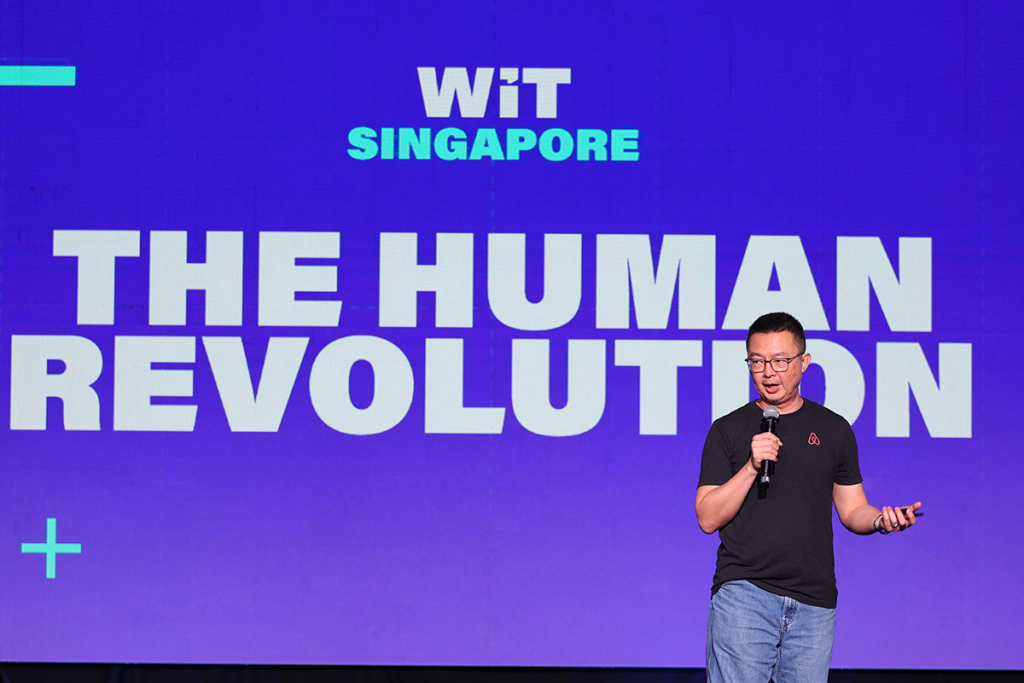
Steven Liew: “The past one year studying the impact of remote work and longer stay on Airbnb has led me to think that the traditional form of long-term lease is outdated and broken.”
In a recent white paper as part of its post-pandemic research, Airbnb has begun calling for rethink in terms of how we approach our city spaces. The company argues that urban communities can be strengthened by pursuing opportunities to repurpose existing real estate, by rethinking land use for both office and living spaces.
Likewise, accommodating new remote work practices can allow for new live-and-work-anywhere practices, such as workcations and digital nomadism, further helping companies win the global competition for talent. Overall, this merging of work-and-live functions, and a greater welcoming of short-term talent, can both encourage more enterprising cities, while encouraging travel dispersal away from traditional ‘hotel belts’: further giving communities greater benefits, and allowing work-visitors to better integrate with a local community.
As he reminded the audience at WiT 2023 in Singapore, Airbnb started out on the back of a room shortage in San Francisco during a conference, with the provision of “a free bunk with Brian and Joe, back in 2007”. A year later, the first version of the company’s site was launched.
Making space for guests
“Fast forward 15 years: we now have close to 1.5 billion guests that have stayed with us. We didn’t do this by ourselves: we did it because we had 4 million+ hosts open up their 7 million property listings around the world to all these guests,” said Liew. “So we’re now present in 220 countries.”
Its mix of hosts included home-owners and empty-nesters with space: as well as enterprising small business owners, trying to make a decent living. “The last couple of years have been very interesting,” he noted. Airbnb in Asia-Pacific hired Oxford Economics this year to delve deeper into its booking data. Already in Asia-Pacific, around 12% of bookings are for 28 days and above.
“A lot of people still work remotely. And their ability to work remotely comes despite all the return-to-office mandates that a lot of CEOs are trying to implement,” he noted. Gallup polling in 2022 found that only 6% of wanted to return to offices. A Federal Reserve survey meantime found that compelling your employees to go back to the office full time is as bad for employees as a 2-to-3% pay cut.
“At Airbnb we announced a living and working anywhere policy in April last year. During the first week of the announcement, we had 1 million visitors to our career page.” He noted that 20% of employees have taken up the live-and-work anywhere policy. “Because our policy allows them to live and work for up to 90 days, anywhere in the world.”
Property managers keen
On the supply side, Liew believes that many landlords in urban spaces see high office vacancy levels and record-high hotel rates, as signaling the right time for a shake-up.
“We have a lot of property owners, property developers and property managers coming up to us and saying, what do we think about having hybrid buildings? What do we think about having a mixture of long term and short term housing in the same building or the same neighborhood?”
“Kuala Lumpur has a 20% office vacancy rate: it’s very high,” he notes. “When we launched this report in KL, one property owner told us how he’s converting his 40-year-old office into a long-term rental and short term accommodation.”
A broader trend
In outlining its vision, Airbnb sees its latest push as a natural response to a market that is actively diversifying its travel preferences. As ASEAN integrates faster towards a common market status and pressure comes down on companies to reduce their emissions, more long-stay hybrid trends like ‘BLeisure’ or ‘Workcations’ are emerging, that provide people with an opportunity to gain deeper market exposure, while enjoying life ‘living like a local’ in a new city space.
Having spent three and a half months in Japan last year, Liew himself was one of the 20% of team who took up Airbnb’s “Live and Work Anywhere” policy, allowing those who can gain appropriate visas the chance to live anywhere in the world for up to 90 days. He says the policy has contributed to employee engagement score of close to 85%, while in a broader sense, helping the company to imagine a new way to work, live and play.
“These changes in travel, living, and working patterns enable us to think creatively about the future through a wholesale re-think about urban spaces and a reimagination of how these spaces can adapt to these trends,” says Liew.