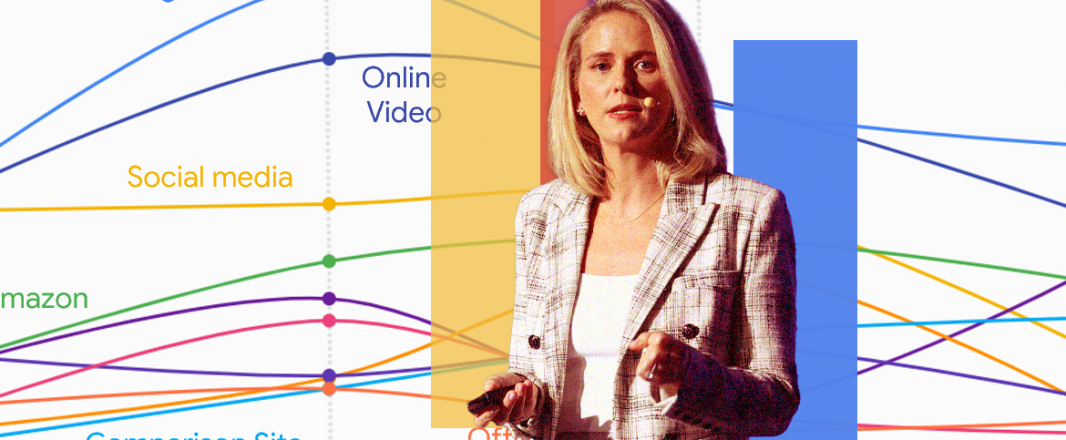
“Stability has returned and seasonality is back,” says Google’s Hermione Joye
While the travel industry flourished in 2019, it came to an abrupt halt in 2020 for obvious reasons. Over the past two years, the sector witnessed a series of closures, reopenings, the emergence of vaccinated travel lanes, and eventually, the rise of “revenge travel.” These tectonic shifts in the industry have resulted in some pretty interesting trends, with Asia Pacific emerging as not just a bright spot, but a trailblazer when it comes to certain recovery channels.
At WiT Singapore 2023, Hermione Joye, Google’s Sector Lead for APAC Travel, shared insights based on new IPSOS research during a session called ‘Travellers Are Only Human. Here’s What They Want.’ These findings, coupled with insights from Phocuswright among other data, outline growing consumer trends in the region and what travel professionals can look out for in the coming months.

Hermione Joye (Sector Lead, Travel & Vertical Search APAC, Google): “Recent search interest in the region is not only above 2019 levels but shows consistent growth in both international and domestic travel.”
APAC’s travel resurgence is a bright spot on the map
According to Hermione, recent search interest in the region is not only above 2019 levels but shows consistent growth in both international and domestic travel. Stability has returned, and seasonality is back, allowing for long-term forecasting. It’s a testament to how “normal” aspects of travel are now appreciated. Travel enthusiasts can once again plan their journeys well in advance.
Search interest in travel demand surpassed other regions, with APAC leading the way. As of July 2023, demand for international travel in APAC skyrocketed to 85% above 2019 levels, while domestic travel demand surged by 52%. According to Euromonitor estimates, APAC is poised to overtake the United States as the region with the highest online travel Gross Merchandise Value (GMV) by 2025.
Google’s research points out that this travel renaissance in APAC is not a fluke but the result of multiple factors contributing to the region’s growth:
- Digital Adoption: APAC leads in digital usage, with daily internet usage surpassing Western countries. Some APAC countries, like the Philippines, boast daily internet usage of up to 9 hours.
- Rising Middle Class: The burgeoning middle class in APAC can now afford discretionary spending, particularly on leisure and international travel. With households having disposable incomes exceeding $55,000 annually, this segment has been growing steadily, notably in China and India.
- Demographic Strength: APAC boasts the world’s largest Generation Z population, coupled with the fastest growing GDP in the world (+5.3% Asia’s GDP growth in 2023 vs. 2.7% RoW), highest mobile app penetration in the world (72% APAC vs. 57% RoW) and highest inter-region travel in the world, with 56% of travelers exploring beyond borders.
- Demand Surges from India, Japan, and China: India and Japan feature prominently among the top five countries globally for travel demand. APAC accounts for a quarter of demand in the top 20 countries, with India experiencing a 70% surge in search interest for international travel. Not only is India the third largest market globally, search interest in international travel in 2023 is more than 70% higher compared to 2019.
Meanwhile, Japan dominates in domestic tourism, with an 80% increase in interest. It may be the fifth largest travel market globally, but it is the third largest domestic market in 2023. This year, interest grew almost 80% versus 2019 and 30% year-on-year. Google believes this interest in domestic travel will continue to thrive, especially as Japanese travellers look inward due to the weakening yen. - China’s International Reopening: China, a major source of outbound tourism, witnessed 155 million Chinese citizens travelling abroad in 2019, according to the UN World Tourism Organization. They also accounted for $277B of tourism spending in 2019, which was one-fifth of total global spending.
According to the OAG, China’s international flight capacity is projected to increase to 55% from a mere 13% in January. This trajectory should take the market close to a full recovery by the end of 2024.

What motivates the new APAC traveller?
While stress relief and wellness were primary motivators during the pandemic, the stabilised travel industry has given rise to diverse motivations. Travelers now seek adventure, personal growth, and transformative experiences that go beyond sightseeing. While stress relief remained the top motivator in South Korea, travel as a life achievement or status symbol was a main motivator for close to 1 in 4 travellers in China, India and Indonesia.
Hence, based on the IPSOS-driven study, travel is no longer just a luxury; it’s considered the ultimate commodity. Travellers are willing to make sacrifices in other areas, such as gym memberships or dining out, to embark on adventures and create lasting memories. Also, those who have travelled recently have a stronger desire to travel more.
However, the travel landscape has become more complex, with travellers facing uncertainty and information overload. A confidence gap exists as travellers grapple with the authenticity of information and the difficulty of decision-making. For instance, more than three-quarters of Chinese travellers need high confidence levels before confirming bookings. In India, almost 70% of travellers feel overwhelmed due to the vast amount of available information, and almost 70% of Indonesian travelers fact-check the information they find online when researching their trips.
There’s also complexity in the booking process, but travellers are spoiled for choice when it comes to accommodating their budgets. 52% of surveyed APAC travelers decided on a different destination, airline, or accommodation during their planning of their trip. Cost was the #1 reason for switching flights, #2 for switching locations and #3 for switching accommodation.

How brands can help simplify the travel process
To assist travellers in their planning and decision-making, brands must be present where travellers spend a significant portion of their time: online. APAC residents spend an average of 7-9 hours online daily, offering a vast digital landscape. Travellers rely on approximately 140 touchpoints when researching brands they haven’t used before, presenting a significant opportunity for brands to tailor their digital strategies.
Key touchpoints include Google Search, YouTube, Maps, accommodation sites, airline sites, and trip experience websites.

Hermione emphasised that video is a critical format that must be in all parts of the communication strategy between brand and consumer, as the content enables travellers to create a connection with the brand, destination, or community. In fact, Google’s research with IPSOS shows that YouTube is the primary source of travel inspiration and it is a high trust and high value platform, in-line with Maps and Instagram.
According to Hermione, what sets YouTube apart is it is one of the only platforms where users shift seamlessly across formats from short to long, mobile to TV, and voice to video. Brands today should also capitalise on the fact that a single piece of video content can transcend all outlets and platforms, making it extremely scalable.
Google’s data also points out that brands need to meet consumer expectations. Travellers have spent a lot of time researching, saving money, and forgoing things to take a trip. If brands have collected data from consumers, it’s best to know how to use it to design a truly a personalised trip.
73%of travellers are willing to pay a premium for accommodation platforms that delivered positively. Meanwhile, 80% are willing to pay a premium for airline platforms that delivered positively.
AI can bridge the confidence gap in travel marketing
And last but certainly not least, here comes the talk of the town – Artificial Intelligence (AI).
AI plays a pivotal role in reaching travellers effectively, as it enables brands to show up at the right time, in the right place, with the right message, and in the right format. Generative AI also accelerates creative strategies and campaign deployment.
On stage, Hermione revealed that Google has invested significantly in AI advertising solutions such as Pmax, Hotel Ads, book-able ads on YouTube, and an evolving search experience. The newly launched Bard Extensions offer another solution to simplify travel planning, using relevant information from across Google’s suite of tools and apps.
Google’s new insights make one thing crystal clear – to make the most of this opportunity, businesses must be present where travelers are, speak their language through video and personalisation, and employ innovation to capture this burgeoning market. The APAC region offers promise, and brands that adapt to its unique dynamics are poised to thrive in this rapidly evolving travel landscape.