
The debate continues on its implications in wider tech and travel space
Read Part 1 of Travel Pros React to the Rabbit R1 here.
Earlier this month, tech startup Rabbit made waves with the launch of its R1, a pocket-sized AI assistant designed to do daily ‘smartphone tasks’ without the use of any apps… or even a smartphone. While skeptics compare it to offerings like Humane’s AI Pin or Meta’s smart glasses, Rabbit’s approach focuses on creating an app-free experience using its proprietary Large Action Model.
Our question from Part 1 of Travel Pros React to the Rabbit R1 remains – can the device’s widespread capabilities make it a significant tool in highly specialised industries such as travel, hospitality, and Tours and Activities?
A glimpse into the future?
“In the travel space, Large Language Models (LLM) are typically used to enhance the discovery and planning process through providing personalized recommendations and abundant travel information,” says David Liu, Chief Product Officer at Klook. Speaking to WiT, Liu explains that there are two key pain points – content credibility and relevance, and the booking process, which still requires manual input from the user.
He says, “From my understanding, the Rabbit R1 leverages Large Action Model (LAM) to manage apps and perform tasks on a single interface. However, it is still early days and the device may not solve the pain points highlighted and could in fact make it worse.”
So far, the $199 Rabbit R1 has 50,000 preorders totalling $10 million in the pipeline, making it a highly successful AI hardware launch. But the decision to design their own physical gadget is sparking discussions within the tech community about why the startup opted for a separate device instead of developing an app instead.
“The Rabbit is a lesson for all of us – they completely nailed 2 things,” says Christian Watts, Founder and CEO of Magpie Travel. “The demo showed us what is coming very soon through AI, albeit with a sprinkle of leaps between necessary steps, and simplification of some known problems, and how to maximise exposure from a demo at a conference.
“The part they got wrong is that none of those things are going to happen with a Rabbit. The hardware is completely unnecessary for the actual product, but is probably the only reason this thing got any exposure. Genius, or lucky, I’m not sure.”
Why not just make an app?
The questions about hardware have not gone unnoticed by Rabbit’s CEO, Jesse Lyu. Speaking to Fast Company, Lyu agrees that Rabbit could be a software offering. “In a perfect world, tomorrow, Siri will just do something like this, or even better,” he mused. “But from my perspective, how do I want to build a business?”
Lyu argues that if Rabbit were just an app, Apple could see his code, which he equates to sharing his company’s IP. Additionally, creating and maintaining scalable apps for both iOS and Android was deemed expensive, with the added risk of losing users to spinoff apps. Lyu emphasized the importance of protecting Rabbit’s unique AI model from potential imitation, making the decision to opt for a standalone device a strategic move to secure its position in a competitive market.
For Chan Chee Chong, CEO and co-founder of GlobalTix, the Rabbit R1 does “open up opportunities” for the Tours and Activities sector. “It’s like a personal travel concierge,” says Chan. “You can ask it to change your flights, make a hotel booking, help to search for things to do or recommendations for food.”

GlobalTix’s Chan Chee Chong’s R1 concerns are more people-centric rather than tech-focused. “Will it end up like an itinerary planner? People actually quietly love to plan for their holidays.”
However, Chan’s concerns are more people-centric rather than tech-focused. “Will it end up like an itinerary planner? People actually quietly love to plan for their holidays. They love to scroll through all the different hotels and flights to search for the best or personal favourite,” says Chan, bringing up a valid point about travel planning and anticipation being as exciting as the trip itself.
“Having said that, I still think there is an opportunity for the travel industry to tap into gadgets like the Rabbit R1.”
What does the Rabbit R1 solve?
The jury is still out on the R1’s ability to solve specific gaps when it comes to human-gadget interaction. As Watts explains, “The biggest problems with LLMs today are probably consistency and hallucinations. The Rabbit doesn’t solve anything at all. All of these things could be done today using an LLM like GPT4. There’s no real jump here in technology.
“Training a model to learn the UX and flow of various apps is difficult, but certainly coming. Much of this is already happening via APIs, and where the apps are not amenable to the idea, it’s probably for a reason, which would cause a headache for any builder trying to get around it via a browser.”
Liu adds that the limitations of the LLM may actually add time to a user’s workflow instead of reducing it. “The user’s interaction with the device is based on simple message dialogs. This requires users to either trust and accept anything the device suggests or go through multiple rounds of interaction to refine their commands. At some point, this may result in even more inefficiencies as compared to using travel apps or LLMs.”
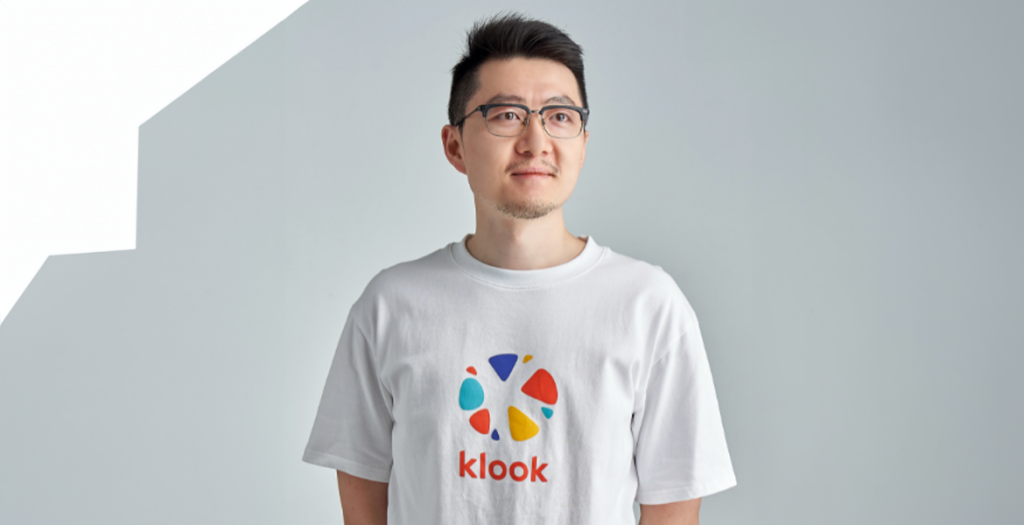
“From my understanding, the Rabbit R1 leverages Large Action Model (LAM) to manage apps and perform tasks on a single interface. However, it is still early days and the device may not solve the pain points highlighted and could in fact make it worse,” says Klook’s David Liu. Image credit: Klook
“For Rabbit to execute tasks, users will need to pre-authorise the apps used to book their trips through the support of ‘Rabbit Hole’, emphasises Liu. “If I’m searching for a hotel, I’m assuming the Rabbit device won’t provide me with as many options to compare and choose from, as compared to a travel platform or chatbots using LLMs.
“Where I think Rabbit can provide the most value is to users who simply want the convenience of getting things done, and are less concerned about having options and too many details. Although I’m not sure how many users are this ‘carefree’, especially when planning a trip, which can be quite subjective depending on personal preferences.”
Despite skepticism about carrying an additional device, Rabbit’s design choices, driven by a desire for reliability and analog feedback, aim to offer a unique and rather nostalgic user experience.
As Lyu himself admitted to Fast Company, “We’re not trying to replace your phone. It’s just a new gadget.”
Designing a good personal assistant for travel
With smartphone penetration reaching new milestones every year, it may only be a matter of time before Rabbit’s LLM capabilities are adopted by simple travel apps on everyone’s mobile devices.
In fact, personal assistants could be highly beneficial to the travel and booking process. “As shown in the demo, a personal assistant should be linked to preferred apps like ridesharing and restaurant booking,” says Watts. “Whereas I think personalisation is mostly something travel companies talk about, without making any progress, the personal assistant makes personalisation finally useful and very achievable. One of the solutions not enough people talk about is an assistant for in-destination. Like Google maps, but with a dialogue. That’s something all OTAs should be building, but probably none are.”
Candidly, Watts also emphasised that while there’s nothing stopping key travel players from having their own ‘R1’, speed in the industry could use some work.

Christian Watts of Magpie Travel says, “Training a model to learn the UX and flow of various apps is difficult, but certainly coming. Much of this is already happening via APIs, and where the apps are not amenable to the idea, it’s probably for a reason, which would cause a headache for any builder trying to get around it via a browser.”
“On a stage, OTA C-Suite folks love to talk about how they are using AI. I suspect most are about a year behind, which is fine, because a year is the most you can be behind right now. They should all be testing and releasing products like the Rabbit – but as software only, and as part of their regular app, or even a new app on iOS and Android. The biggest problems for most OTAs are that they are not dynamic enough, and even if they could develop great products quickly, they have a huge ‘innovator’s dilemma’ problem. Few are able to take chances.”
For Liu, it’s all about staying focused on what makes a good travel assistant. “The greatest value that personal language assistants can provide to travelers lies in the discovery and planning phase.
“By providing background information for points of interest and serving as quasi tour guides. In addition, personal language assistants integrated with Augmented Reality could potentially serve as navigators by reading road signs and identifying buildings. This could also enhance translation capabilities and help travelers understand menus and order food and drinks at restaurants.”
Now we wait and see
Rabbit’s success has garnered attention beyond the startup sphere, with Microsoft CEO Satya Nadella praising the R1 during CES 2024. Nadella compared the Rabbit OS and device to the launch of the iPhone, highlighting the potential for breakthroughs in natural interface and the pursuit of an agent-centric operating system.
“The way I see it, Rabbit’s main selling point is the LAM that it is built upon and less about the OS, although it does serve as a way to put the LAM model into application,” adds Liu.
He continues, “From an OTA perspective, the goal is to match users with supply and ensure that the discovery and booking process are seamless, and the actual experiences are good. Tech and product plays a part, and working closely with suppliers plays an equally important part. At the end of the day, it’s about what they focus on and prioritise.
“From a tech platform perspective, assuming they share a similar vision of enhancing user experience and simplifying processes, there are multiple ways to achieve this and an OS may or may not be the answer.”
As Rabbit prepares to ship its first batch in March, the tech community awaits the reception of the Rabbit R1. It may be an understatement to say that as AI hardware is still finding its definitive form, Rabbit’s success and strategic choices may influence the trajectory of the evolving AI market. Whether or not the R1 is applicable in all industries, like travel and hospitality, remains to be seen. However, the R1 may not be the only product that Rabbit is hedging its bets on.
“To be honest, I think there are other things in our mind we want to deliver. It’s just from a strategic point of view . . . AI is moving too fast,” Lyu tells Fast Company.
“So we have to come out now, when the timing is exactly right.”