The latest data from the International Air Transport Association (IATA) shows continued growth in global passenger demand for February 2024, indicating a strong start to the year for the aviation industry.
According to the report, total demand, measured in revenue passenger kilometers (RPKs), surged by 21.5% compared to the same period in 2023. Concurrently, total capacity, measured in available seat kilometers (ASK), rose by 18.7% year-on-year. The load factor for February reached 80.6%, marking a notable increase of 1.9 percentage points compared to February 2023.
The international segment of the aviation market experienced significant growth as well, with demand going up by 26.3% compared to the previous year. This surge was accompanied by a 25.5% increase in capacity, leading to a load factor improvement to 79.3%, up by 0.5 percentage points from February 2023.
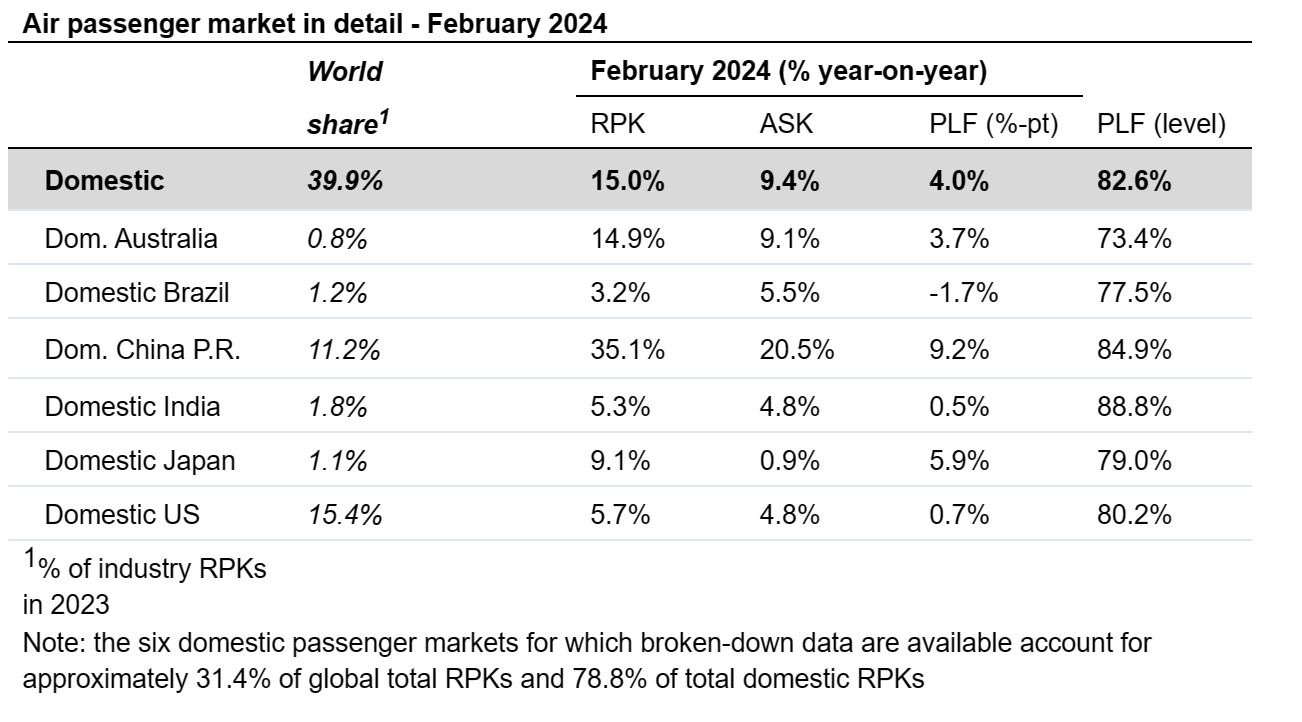
Meanwhile, domestic demand saw a respectable increase of 15.0% compared to February 2023. Although capacity rose by 9.4% year-on-year, the load factor for domestic flights climbed impressively to 82.6%, marking a notable increase of 4.0 percentage points from the same period last year.
It’s important to note that February 2024 had an extra day due to being a leap year compared to February 2023. This additional day slightly inflated both demand and capacity growth figures.
Willie Walsh, Director General of IATA, expressed optimism about the industry’s prospects in 2024. He highlighted the positive trend in passenger traffic across most markets, attributing it to airlines’ accelerated investments in decarbonisation and the resilience of passenger demand in the face of geopolitical and economic uncertainties.
“It is critical that politicians resist the temptation of cash grabs with new taxes that could destabilise this positive trajectory and make travel more expensive,” emphasised Walsh. He added, “In particular, Europe is a worry as it seems determined to lock in its sluggish economic recovery with uncompetitive tax proposals.”
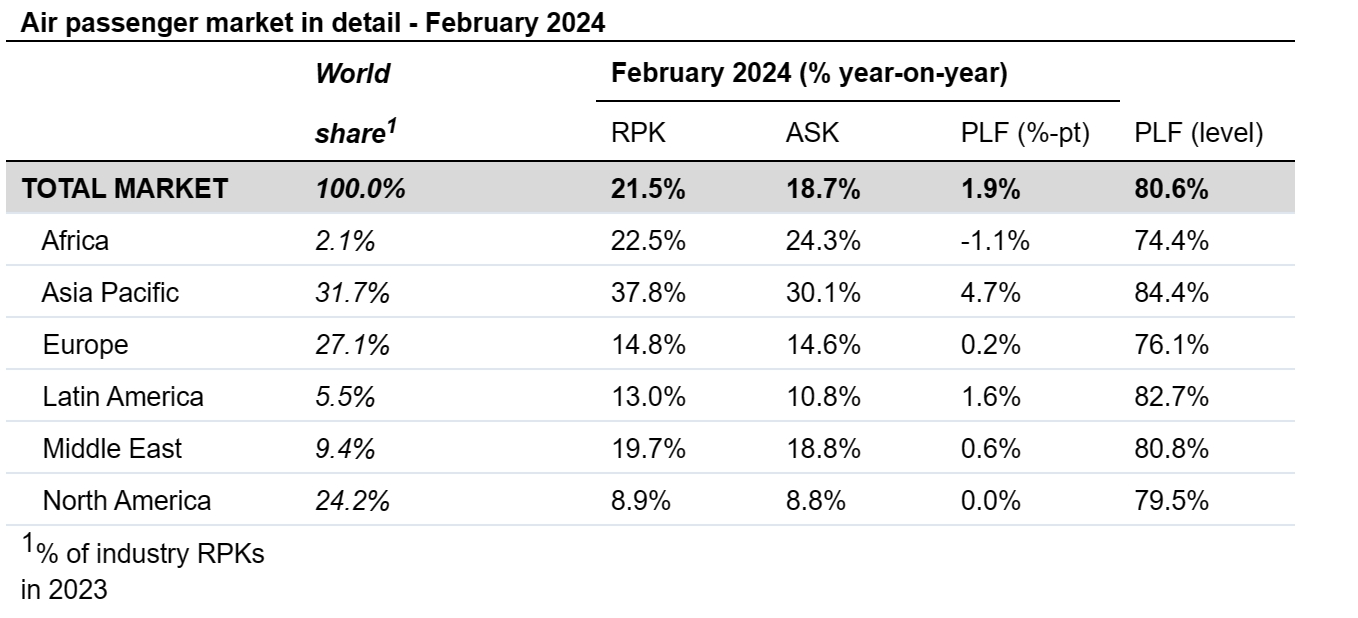
Regional performance highlights
- Asia-Pacific: The region experienced a 53.2% year-on-year increase in demand for international services. With capacity rising by 52.1% year-on-year, Asia-Pacific carriers achieved the highest load factor among all regions at 84.9%
- Europe: European carriers saw a 15.9% year-on-year increase in demand for international services, with capacity growing by 16.0% year-on-year. The load factor remained steady at 74.7%
- Middle East: Demand for international services in the Middle East surged by 19.7% year-on-year, accompanied by a capacity increase of 19.1% year-on-year. The load factor improved to 80.8%
- North America: Despite a 16.0% year-on-year increase in demand, North American carriers experienced a slight dip in load factor, which fell to 77.7%, down by 1.1 percentage points compared to February 2023
- Latin America: Latin American airlines recorded a notable 21.0% year-on-year increase in demand, with capacity climbing by 18.6% year-on-year. The load factor rose to 84.2%
- Africa: African airlines saw demand for international services rise by 20.7% year-on-year, while capacity increased by 22.1% year-on-year. However, the load factor experienced a slight decrease to 74.0%
Domestic markets
China led the growth in domestic demand with an impressive 35.1% increase compared to February 2023. The surge in domestic travel was attributed to unrestricted Lunar New Year travel within the country.
The positive momentum observed in global passenger demand for February 2024 underscores the resilience of the aviation industry in the face of challenges. As the industry continues to recover and adapt, stakeholders remain cautiously optimistic about the trajectory ahead.