
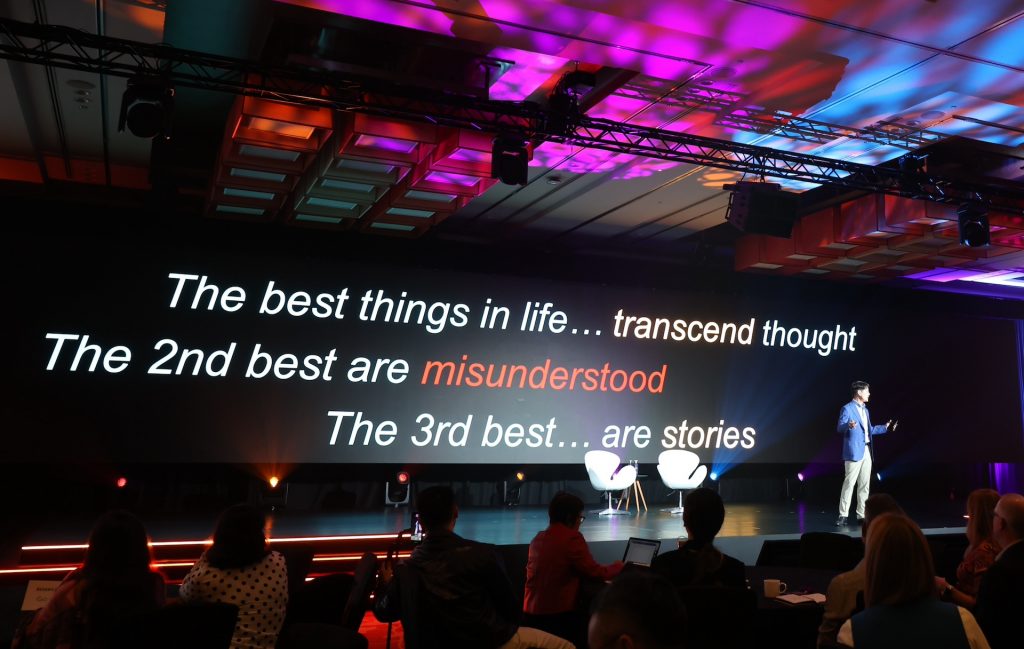
“We travel to know we’re not alone”, says actor, entrepreneur, traveller, Power Ranger Jason Chan
Editor’s note: If you want to be rich, make good memories and there’s no better place than travel to make good memories. Yet, are we in the industry doing enough to create those emotional connections, to make people feel for places and people they visit? Here’s how a real-life Power Ranger Jason Chan challenged thinking at WiT Singapore, Luke Clark reports.
“There are few catastrophes, in our own lives or in those of nations, that do not ultimately have their origins in emotional ignorance.” So wrote Swiss-born British author and public speaker, Alain De Botton in his 2019 best seller, The School Of Life.
Indeed, to De Botton, our societal obsession with knowledge seems to wildly outweigh our efforts to attain genuine human connection: “Much anxiety surrounds the question of how good the next generation will be at maths; very little around their abilities at marriage or kindness,” he argues.
For many people today, life as we know it is defined by a similar imbalance. Increasingly today, our news, our leaders and our daily discourse, are dominated by endless points of conflict – wilfully ignoring humanity’s innate ability to find compromise and common ground.
Look around, and symptoms of this imbalance seem numerous. Globally, it is estimated that in our lifetime, half of our global population will experience mental illness. Increasingly today, millions of people actively avoid daily news altogether. Meanwhile post-pandemic, one of music’s most popular teen genres today, is so-called ‘sad girl music’.
So what do most of us do to stay away from a daily ‘sinking feeling’? Many turn to nature and enjoy the fresh air. Others still, choose to volunteer within our community. Indeed, during the Covid pandemic, many of us baked bread in record numbers. And now that our national borders are open once again, the lucky ones amongst us, turn again to travel.

“I got to see people on their first breath, and their last.”
Chasing human connections: What I learnt as a doctor
What better place to look for respite then, than to WiT Singapore’s keynote presentation, entitled ‘We Want to Feel’. Film maker, actor, and “green ranger” Jason Chan has, in own words, spent his life so far on a quest to better understand how he and others are wired emotionally.
While Randy Crawford famously sang that “I’ve been to paradise / But I’ve never been to me”, Chan feels distinctly different. “I’m kind of the opposite,” he noted.
Even before he could afford to travel to escape from the real world, the Malaysian-born Australian hid himself away in movie theatres: “As a teenager, I used to watch 20 movies a week. I was addicted to how they made me or how they transported me – the high would stay with me for days. And I just couldn’t get enough: I was that sole cinema goer watching Cinema Paradiso or Amelie – crying.”
Though not apparently, crying in a bad way: “It was cathartic,” he explained. He wondered: “What kind of magic was this?” As Chan described, he was the type of kid whose desire to be a medical doctor, first came from his favourite American TV medical drama, St. Elsewhere.
“By the end of the first season, I knew that I wanted to become a doctor – so I became one.”
Completing high school, Chan entered medical school at the University of Western Australia. Soon, he confessed, he realised that a real doctor’s life was different to what he’d seen on television.
“It wasn’t quite as glamorous as in the dramas,” he recalls. “But I witnessed some amazing things. I got to see people on their first breath, and their last. And it was there that I learned that it was terribly, terribly hard for the human spirit to let go – we always want more.
“I also learned that when babies first come out (I delivered quite a few), they’re incredibly silent,” he described. “They’re just taking everything in, looking, seeing – feeling this world for the first time. What an amazing expansion of the mind – millions of connections being made for the first time.”
It is from this “mind-expanding” moment at birth, Chan suggests, that humans constantly seek a similar “rush” of connections from real life, and are frequently disappointed. “We spend the rest of our lives chasing that high, I think.” He recalls having a secret chat to each newborn he delivered: “I used to say to it, ‘This moment is your moment of greatest potential. From now on, it’s kind of downhill. So choose carefully’”.
Chan soon began realising that this downhill slope was a personal one too: “I hadn’t chosen that carefully.”. Indeed of being an actual medical career that he hankered for, he yearned for the chance to slip in and out of different life roles, thanks to a career in the performing arts.
“I realised that I shouldn’t have become the doctor. Instead, I should become the actor playing the doctors.” He switched paths, deciding to go to Drama School instead, initially paying his way through the course by doing medical house calls to rich North Sydney residents.
Watch the full session here:
“I used to drive down these rows of mansions, and I noticed something really peculiar. Every second or third house, there’d be a figure standing at the front gates. And when I visited some of them, I realized that they were these frail old men staring out of the road, waiting,” he recalled. “But waiting for what?”
Many years and acting roles later, that image returned to Chan while he was far afield, camping under a star-lit sky. “On a recent trip in Mongolia, we stayed in these yurts: which of course, have really thin walls,” he recalled.
“You could hear any child playing outside. So whenever my shy, introverted son heard that, he would say, ‘Dad, can I play outside too?’ I said, ‘Of course’. And I realised, even when children play outside in parallel, as they do at a certain age, they want to be together.”
At the end of the trip, Chan asked his son what he thought of the whole trip. “We’d seen eagles, rode on horses, rode camels. We’d seen the Milky Way plastered over the Mongolian sky. He said, without the other kids, it would have been horrible – with the other kids, it was the most amazing trip he’d ever had,” he recalled. “And we got messages from six other parents, saying their kids said the exact same thing.
“I realised then that those kids – just like the men standing at their gates – were all yearning for the same thing: to make memories through emotional connection with people,” he said.
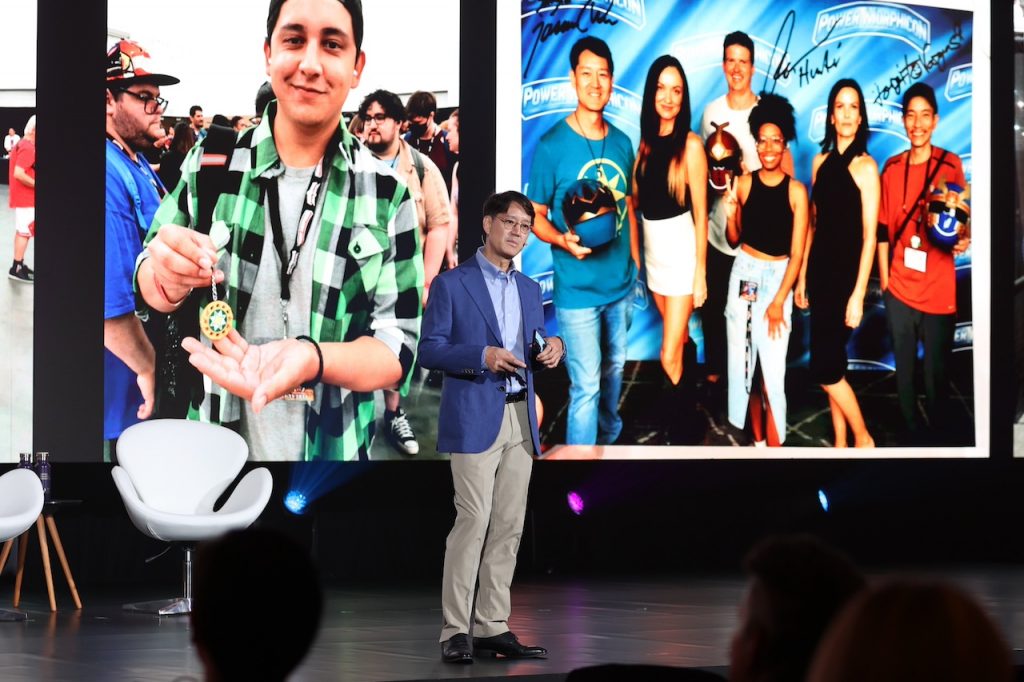
At his first Comic Con Convention: “Powerful stories stay with you forever.”
Becoming a Power Ranger: “Not just a TV show for kids”
Straight out of drama school, Chan received an offer that some aspiring actors might have sniffed at. “I got this wonderful opportunity when my agent said to me, ‘Hey, they want you to be a Power Ranger. It’s this B-grade TV show for kids. Do you want to do it?’ I said, ‘Hell yeah’.”
Curiously, playing Cam Watanabe, the Green Samurai Ranger, on Power Rangers Ninja Storm in 2003, would in time become a defining moment in Chan’s journey towards human connection.
“Just last month, I went to my first Power Ranger Convention,” he noted. Over three days, around 1,000 people approached him with their stories, many telling him how the character had helped changed their life: “Some of these people had learning and emotional difficulties growing up. A couple of mothers teared up, saying how when they discovered Power Rangers, it kept their family together,” he recalls. “Another shared how a simple message from me on Facebook got someone through suicidal depression.”
“Not only was I really humbled, but I realized that powerful stories stay with you forever. This wasn’t just a TV show for kids.”
Instead, our emotional connections provide us with a playbook to turn to in tough times.
“Emotional moments, whether through story or life, get repeated through memory,” he realised. “And if you want to be rich, make good memories. Which is what I decided to do. Instead of taking jobs for career trajectory or riches, I chose for adventure.”
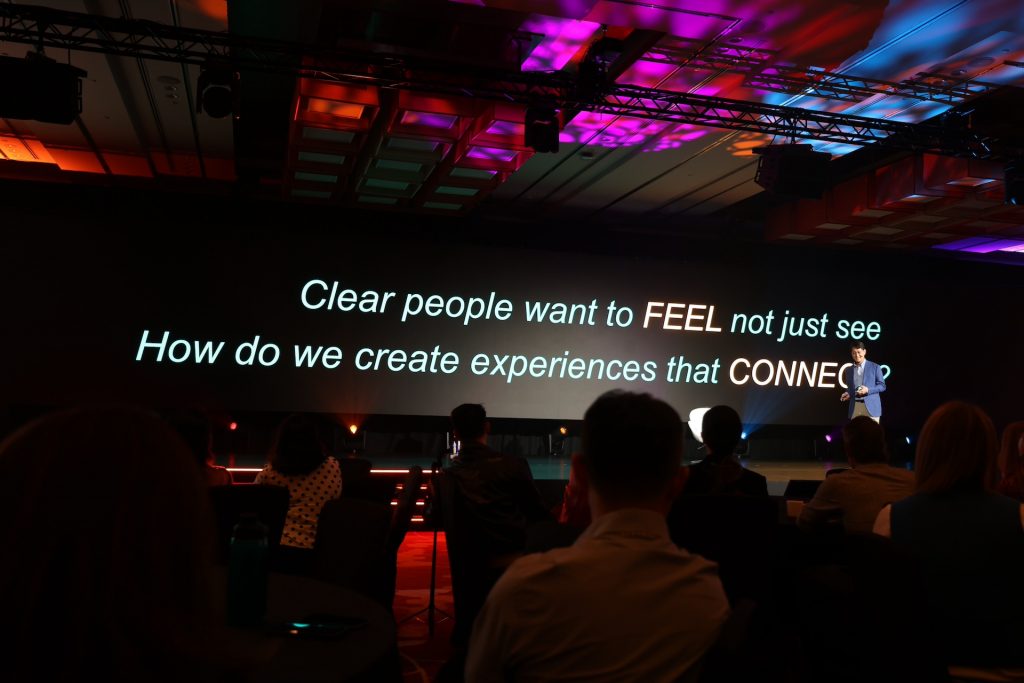
“The very best stories, from cave paintings, to audio tours, to opening ceremonies, they transform, they transcend.”
Emotive experiences, powerful memories: Travel is the perfect transformative vehicle
After experiencing a moment of profound cultural awareness at the Beijing Olympics, thanks to director Zhang Yimou, he realised that travel was one of the means to deliver the deep connections that he’d long been craving.
“I kind of believe that we travel to know we’re not alone,” Chan shared. “And the very best stories, from cave paintings, to audio tours, to opening ceremonies, they transform, they transcend. They create emotive experiences, and those emotions turn into powerful memories.
“We are essentially just the sum of all our memories – and without them, we become a shell.”
Chan is now co-founder of tech startup Cinewav, a scalable audio solution that delivers immersive high quality audio to audiences using their own mobile phones and earbuds.
“I believe we travel to feel and remember – and I feel like most trips fall far short. That’s why we’re kind of betting our company or trying to create emotive experiences that elicit powerful memories.”
Just as Alain De Botton recognised a deficit of emotional intelligence that needs addressing, Chan is convinced that combining emotional connections, engagement and travel, can help lead us to a perfect pairing of repeat visits, together with respect for people, place and culture – a combination that will ultimately prove transformative for people. “And that’s the best value-add we could ever give.”