
When the AI you built starts sending birthday cakes unprompted, you know you’re no longer just playing with automation anymore. You are looking at AI with a mind of its own.
That’s exactly what happened at The Luxe Nomad, a luxury villa booking platform. During a chat, guest mentioned about a birthday celebration. Bella, their AI concierge, picked it up, triggered a ticket to the ops team, and arranged a cake — without being asked.

“We didn’t train her to do that. She just… picked it up,” said Jean Nie Lim, Global Head of Reservations & Guest Experience at The Luxe Nomad. “Honestly, it surprised us.”
From cake to code: The travel tech context
Surprise was a running theme at the latest Travel Tech Thursdays in Kuala Lumpur, where travel tech builders gathered to show how AI is reshaping the trenches: booking workflows, WhatsApp chats, content automation, real-time guest services.
From birthday cakes to navigating legacy fax machines, the stories hinted at something deeper than just new tools: a change in mindset.

“Everyone can prompt. Few build macros(automated task shortcut),” remarked Ravi Shankar, Chief Marketing Officer, AirAsia MOVE. It was less of a punchline and more of a challenge.
Because yes, prompting is everywhere now. But what happens when you go beyond the first question? “Beyond the prompt, to frameworks, workflows, and integration layers?”
Ravi put it plainly: “We all had Excel. Not everyone learned macros.”
That landed. AI, he suggested, is becoming just as foundational. The tools are out there. True skill is still rare.
Bella the AI teammate
“If you run a hotel with one room, of course you can give a personal touch. But you can’t hire a thousand people to do that for a thousand guests. With AI, we replicate that one-to-one experience — just at scale.”
Jean emphasized why it matters so much especially in high-demand destinations like Niseko.
“The window to engage guests before arrival is really short. If they don’t book ski lessons or transfers ahead, they miss out.”
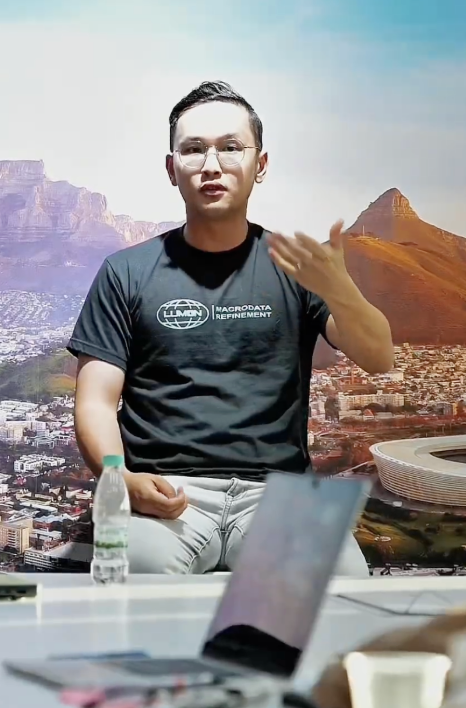
Dylan Tan, Founder of Replyr.ai, — the team behind Bella, described their vision simply.
At first the guest services booking target was set at a staggering amount, initial results reached less than 5 percent. Bella changed that.
“We already had the data — booking history, arrival dates, group size. Bella used that to broadcast personalized offers before guests even asked,” Jean explained. “It wasn’t just a chatbot reacting. It was the AI concierge reaching out first.”
Tracking Bella’s performance became integral. “She has tracking links. When she drives a booking, it’s logged. It shows up in the dashboard,” said Jean.
But it wasn’t the metrics that made Bella stand out. It was her ability to learn and adjust.
At first, she was selling too hard,” Jean admitted. “Now she knows when to gently nudge to upsell ski lessons and when to sit back and wait.”
Still, for the highest-value guests, nothing beats a real human.
“Our top-tier returning guests expect personalised service. These data are not even logged. Taking example like remembering the brand of milk they like to go with their granola makes a difference. That’s where humans still shine.”
Scaling with a touch of irony
Bella may be advanced, but some old-world hurdles are still part of the daily reality.
“In Japan, we still have to fax certain vendors. The same ops team using Bella is also managing paper forms,” Jean pointed out.
When it comes to deciding when to use AI versus humans, Ravi made it clear:
“The effort to reward ratio is key. For high value customers, human agents are still more efficient. AI is great for scaling, but it’s not about replacing humans. It’s about adding value where it counts.”
When AI starts acting, not just answering
As AI grows smarter, novelty matters less. What matters now is action.
“It’s not just about answering questions,” Dylan said. “It’s about doing something—booking services, triggering workflows, following up.”
That’s when AI becomes more than a tool—it becomes a partner.
“The best model isn’t the smartest,” Ravi said: It’s the one that knows you best and acts outside the chat.”
Memory is becoming the real edge.
“I stick with the same AI because it remembers what I’m working on, my family, even what I ate last week,” Ravi said.
Jean smiled at where things are heading.
“I’ve already seen two AIs have a conversation to book a hotel for wedding. It’s happening.”
The pause that sounds human
Before AI had memory, character, or context, bots were mostly rule-based which are rigid, reactive, and forgetful.
Dylan Tan recalled the early days of chatbot adoption: “You’d type something, and it’d say ‘I don’t understand. Please try again.’ Then it might ask if you’d like to speak to an agent — and you’d wait another 15 minutes just to get there.”
Today, AI doesn’t just reply. It anticipates. It empathizes.
“If someone gets a fast response and their problem is solved, that’s emotional relief,” Dylan said.
“They don’t care if it’s a human or a bot. They just want it fixed and fast.”
Bella reflects this evolution.
“Bella scores 92% thumbs-up,” Dylan shared. “That’s not just about accuracy. It’s about tone, helpfulness. People feeling like they were heard, even if they weren’t talking to a human.”
But emotional intelligence isn’t only about quick answers. It’s also about feeling human even in small, subconscious ways.
One of the simplest yet cleverest tricks? Bella’s team deliberately delays her responses.
“We even delay Bella’s responses,” Dylan explained. “If she replies too fast, people know it’s a bot. That little pause makes her feel more human.”
It’s a small thing but it matters. The slight pause creates a natural rhythm, giving guests the illusion of thoughtful attention, not instant mechanical reaction.
Jean added:“When guests do ask, we’re honest about Bella being an AI. But if the experience is smooth, they often don’t care. They just reply like they’re talking to a real concierge.”
Bella building her identity
Bella didn’t just get better at responding. Over time, she started showing quirks that suggested a personality forming beyond her original programming.
Jean shared one moment that made the team laugh: “Bella typically greets Japanese guests with ‘Konnichiwa’ or ‘Hello’, depending on the situation. But one time, she surprised us by greeting a guest with ‘Chao’, an Italian greeting.”
“We had to laugh,” Jean recalled. “Maybe she thought she was Italian and after all, her name is Bella!”
It raised an interesting question: Was Bella beginning to build her own identity?
Originally, Bella was designed to follow strict rules. But moments like these suggested she was starting to interpret context in ways even her creators hadn’t predicted.
However, evolving character also brought challenges.
In her quest to always be helpful as AI assistant, Bella started sourcing solutions from the wider internet and sometimes pointed guests to services outside The Luxe Nomad’s portfolio.
“We had to draw a red line there,” Jean said. “She’s designed to help, but we don’t want her sending people to our competitors.”
Influence and the Algorithmic Age
The discussion turned to influencers, focusing not on humans, but on algorithms shaping the next wave.
“Will we see virtual influencers in travel? Yes,” said Ravi, who’s also one of the few CMO-level travel tech leaders with 54K TikTok followers under the account of @ravisbook.id,— an Indonesian-language channel he doesn’t actually speak, but fully dubs and automates using AI.
“People are already consuming content from avatars and AI-generated personalities. The next step is that those influencers will convert.”
He added:“It’s only a matter of time before we accept virtual influencers as mainstream. I bet on that. If I had to invest in a content company generating 500 virtual influencers, two clips and you’ll make your money back.”

The room agreed: It’s no longer about whether the influencer is human. It is about whether the influence works.
Jean echoed this:“As long as they have the following and the right target audience engaging with their profile, they care more about relevance than realism.”
Ravi concluded: “10 to 20% of your feed is already AI-generated. Most people don’t even know or care. They just want value.”
Looking ahead: The twin you trust
Ultimately, the future isn’t just about building smarter AI. It’s about creating systems that know you, remember you, and act on your behalf.
Of course, the road isn’t seamless yet. Travel still grapples with messy realities — airports, flight delays, and vendors who still cling to fax machines.
But the tools are getting sharper.
As Ravi explained, “Context windows are expanding. Right now, it’s about two million tokens. With the increased context, I don’t have to keep repeating myself.”
Memory will no longer be just a technical feature. It will become the foundation for AI that truly understands you.
Step by step, AI is embedding itself deeper into guest experiences and into the operational backbone of travel businesses.
From upselling with empathy to content that converts, from macros to memory, from chat to voice — it’s not just automation for automation’s sake anymore.
It’s travel tech making room for what matters: speed, scale, and surprise. And sometimes, cake.