
While the major OTAs are largely driven by scale, their travellers are increasingly seeking indie travel experiences, which explains why almost all of them are entering the tours and activities space.
With the market inching closer to a projected US$279 billion market size by 2025, and only 30% of that is online, it’s a massive white space for OTAs to grow into.
It’s also a space everyone’s watching, given the recent buzz about Klook’s imminent IPO – when the 10-year-old Asia-based tours and activities marketplace does so, it will be the first pure tours and activities OTA to go public globally, and how it performs will set the tone for the sector.
On stage at WiT Indie in Penang last week, the message from OTA power players, from Trip.com to AirAsia MOVE, Traveloka, Agoda and Booking.com, was clear: They are coming after the experiences market, and there’s room and a need for the indie edge.
Digital natives, silver nomads, and everyone in between
Nadia Omer, CEO of AirAsia MOVE, said, “We’re seeing the biggest shift in how travel demand is shaped,” said Nadia. “What and how people travel is changing drastically – just like how we went from eating out as a rarity to a norm. Travel is becoming a lifestyle essential.”
For Ru Yi, Assistant VP, International Markets, Asia Pacific for Trip.com, the diversity of emerging traveller cohorts, from Gen Z K-pop pilgrims to China’s increasingly adventurous silver generation, is creating new demand curves. “The over-50s are energetic, eager, and they travel during low seasons. But their digital behaviour is different—they trust recommendations forwarded by friends. Personalisation has to account for that.”
In North Asia, she pointed out, China’s recent visa waivers and more user-friendly payment systems are drawing inbound travellers from across Asia. Meanwhile, Japan’s overtourism is pushing Trip.com to promote lesser-known cities, spreading the tourism footprint more sustainably.
In markets such as Malaysia, domestic travel is booming, thanks to economic headwinds and shifting geopolitical sands. “People are more cautious. Shorter breaks, staycations, and budget-focused travel are trending,” said Nadia. But it’s not just about pinching pennies – “our fastest-growing cohort is the younger audience, and they want affordability with meaning.”
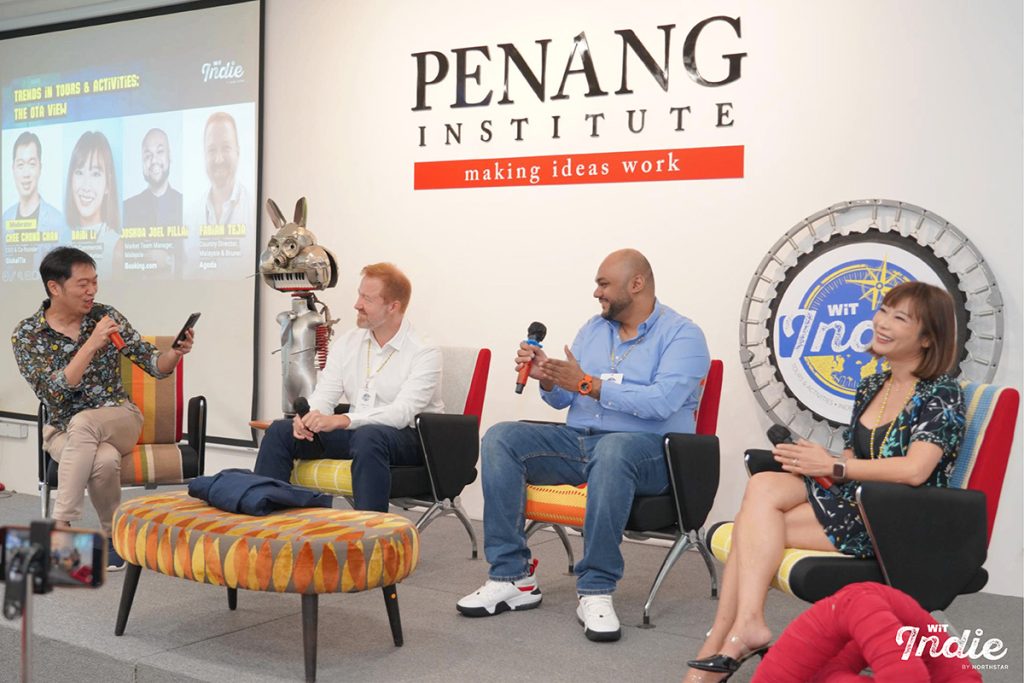
From left: Chan Chee Chong (Moderator, CEO & Co-Founder, GlobalTix | Fabian Teja, Country Director, Malaysia & Brunei, Agoda Interviewer | Joshua Joel Pillai, Market Team Manager, Booking.com | Baidi Li, VP Commercial, Travel Activities, Traveloka
AI will unlock more budget and indie travellers
For all the AI buzz, both leaders agree it’s not just hype. It’s already rewiring the user journey.
At AirAsia MOVE, AI is powering “persona marketing” to better match deals to user intent. “Our travellers often start with a budget, not a destination. So, our AI needs to answer: What kind of holiday can you plan within this budget?”
Trip.com’s TripGenie is going further, offering contextual suggestions based on a traveller’s past bookings. “If you’re a parent with a toddler, we won’t recommend a midnight flight or hotels without family amenities,” said Ru Yi. “The more you use it, the more it understands you, sometimes better than you know yourself.”
And in a telling insight about cultural openness, she noted: “Asian users are more willing to share information in exchange for better experiences. Western users? They’re still more reserved.”
Growth in curated small group trips
Specific to their plans for growing in the tours and activities space, Nadia noted the challenge is bridging online reach with offline fulfillment. “We’re launching a marketplace for tours and activities that’s inclusive of local operators. The big OTAs have marketing budgets that small agents can’t match. But there’s real value in bringing travel data and demand to those on the ground.”
Trip.com is seeing demand across three tiers: plug-and-play attractions, scalable group tours, and high-margin custom experiences. “We’re getting more requests for curated small group trips, especially from Gen X travellers who want comfort, control, and someone to organize it all,” said Ru Yi.
Meanwhile, in a moment of mutual respect, the two women lauded each other’s bold moves. Ru Yi praised MOVE’s evolution “from airline to super app,” while Nadia was struck by Trip.com’s ability to adapt to ASEAN’s complexity. “China is homogeneous. ASEAN is fragmented. What Trip has done here is not easy; it’s impressive.”
Asked what the next-generation travel app must have, both women answered without hesitation: community and customer centricity.

From left: Nadia Omer, CEO of AirAsia MOVE | Yeoh Siew Hoon (Moderator), Founder, WiT | Ru Yi, Assistant VP, International Markets, Asia Pacific for Trip.com
OTAs hungry for operators with unique inventory
Meanwhile, in another panel, Baidi Li, vice president, tours and activities, with Traveloka but with Viator and Go City roots, summed it up best: “Customers today are tired of chaos, of crowds, of the world. They want to recharge, reconnect with nature, with communities, with themselves.”
She shared that over 30% of Traveloka’s customers now travel primarily to rest, not just to sightsee, a shift echoed across the panel.
Joshua Pillai, market team manager for Malaysia, of Booking.com noted a growing appetite for “shared experiences with family” in neutral destinations, along with surging demand for insurance as travellers go off the beaten path. “Safety, wellness, and flexibility are top priorities now,” he said.
Agoda’s country manager, Malaysia and Brunei, Fabian Teja backed that up with numbers: while 50% of attractions bookings remain ticket-based, activities, especially ones involving connection, novelty or nature, are growing fast. And yet, there’s a supply gap. “It’s not lack of demand,” he said. “It’s lack of content. We need more indie operators with unique inventory. The platforms are hungry for it.”
The rise of the longtail, powered by AI
Traveloka is placing its bets on the longtail. “We have a dedicated team working with indie operators, especially in Indonesia, to bring authentic experiences to our ecosystem,” said Baidi. “We’re now using AI to better match customer intent with operator supply. It’s not about spending money to advertise. It’s about surfacing the right content at the right moment.”
That philosophy is echoed across the board. While Booking.com once pulled back from the attractions space during the pandemic, Joshua said they’re now back in build mode, leaning on content, reviews, and their global reach to bring the right customers to the right doors.
How to spend zero and still win
When the discussion turned to marketing, the crowd leaned in. Can indie operators tap into the OTAs’ billion-dollar budgets without paying a cent?
Agoda said yes. “We’re not just marketing Agoda. We’re promoting destinations and regional stories,” said Fabian. “Our Visit Borneo campaign was driven by the team here. Next up? Penang.” Operators were encouraged to get involved, especially with Agoda’s new CEO-level focus on tours and activities.
Traveloka, meanwhile, underscored its open-door policy for independent suppliers. “We’re not just here to scale,” said Baidi. “We’re here to curate and collaborate. The infrastructure is in place. Now we need your stories.”