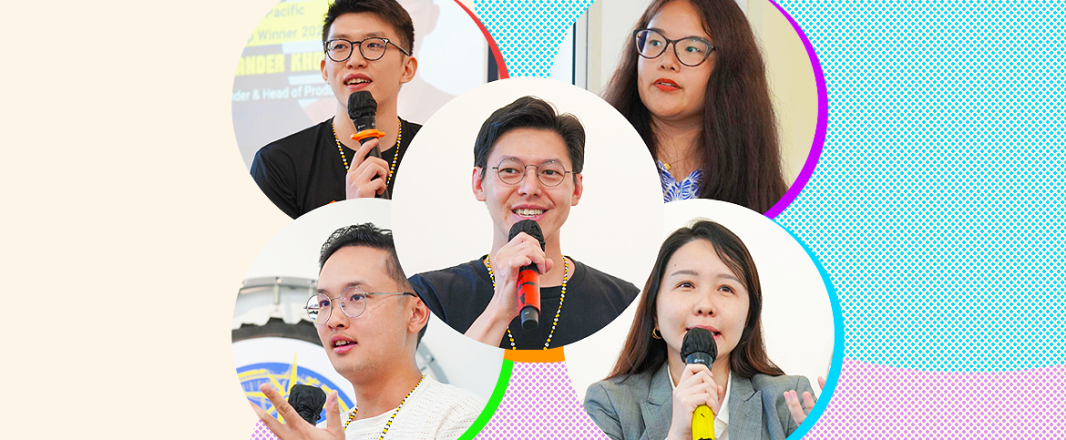
At WiT Indie, five startup founders took the stage, each tackling a different challenge in travel and tech. What they shared: courage, creativity, and a relentless drive to build from the ground up.
What do a lawyer-turned-AR entrepreneur, a molecular biologist-turned-cargo software builder, a theater kid-turned-ticketing platform CEO, a communications specialist-turned-social impact founder, and a split-pay survivor-turned-AI whiz have in common?
They’re all rewriting the travel script.
At this year’s WiT Indie in Penang, five founders from across South-east Asia’s startup spectrum – Bell Beh (BuzzAR), Alexander Khor (Belli), Dylan Tan (Replyr.ai), Dennis Lee (CloudJoi), and Angelica Handover (SocialSeal) – gathered to share the highs, lows, and pivots of building companies from scratch. Each brought a unique lens, but their stories converged on three truths: timing is everything, resilience is essential, and market size matters, but so does personal purpose.
BuzzAR: Bringing joy and inclusion to MENA travel
Bell Beh launched BuzzAR to create what she calls “inclusive joy”. Originally from Penang and trained as a lawyer, she left a high-flying corporate job to build a travel company with two arms: BuzzAR, focused on immersive travel experiences, and BuzzPay, a fintech platform serving Muslim travellers navigating trips to the MENA region.

In the startup world, Bell is no stranger to hard knocks and challenges. It’s taught her the value of thick skin. “Every day I talk to regulators across Indonesia, Malaysia, Saudi, Oman… Licensing is tough, but that’s my job now,” she said. “I started as a lawyer. Now, I sell.”
Belli: Solving the 85% empty plane problem
Air cargo is one of the world’s least sexy but most essential logistics segments and it’s where Alexander Khor, co-founder of Belli, is making his mark. “Planes fly with 85% of their belly space empty,” he said. “We help airlines digitize and optimize that process to increase revenue.”

A molecular biology graduate who cut his teeth at AirAsia’s Teleport, Alex joined his co-founder Jeff Pan to tackle this legacy problem. “We raised US$2.3 million at seed, and closed our first airline client in four months, with no product, just our CVs and some wireframes.”
His biggest challenge? “Airlines are not startups. Sales cycles are brutal. You convince one person, then they convince the next. You need a thick skin and a dictionary of 200 cargo acronyms.”
Replyr.ai: Turning WhatsApp into revenue
For Dylan Tan, the path to success started with a spectacular failure. His first startup, a travel BNPL service, went under. But he bounced back with Replyr.ai, which builds AI agents that convert WhatsApp chats into paying customers.
“We launched in two weeks with an MVP,” said Dylan. “I learned not to be a perfectionist. You don’t wait a year to ship something – you ship, get feedback, and iterate.”

Operating in the generative AI space before it was cool, Dylan now targets a market that spans virtually every vertical. “Everyone texts. Every business needs to manage that conversation. We automate that.”
CloudJoi: Making southeast Asian arts discoverable
Dennis Lee is on a mission to put South-east Asia’s performing arts on the global stage, literally. With CloudJoi, he created a discovery and ticketing platform that serves as a one-stop shop for theatre, film, and dance.

“During COVID, I realized the need for digitization in the arts,” said Dennis. His platform now supports over 3,500 shows, and he’s building tools to make local productions not only discoverable, but monetizable.
What drives him? “Artists create magic, but they often lack the tools to sustain it. CloudJoi gives them a digital backbone to grow.”
SocialSeal: Redefining reviews as a force for good
Angelica Handover’s journey into startup land began with a personal question: How do we create trust in travel when platforms are saturated with fake reviews and algorithms?

Her answer is SocialSeal, a platform that verifies and showcases positive impact stories, from sustainability to inclusivity, in tourism and hospitality.
“We want to help businesses showcase values that resonate with the next generation of travellers,” she said. “It’s not about the stars or the filters. It’s about meaning.”
From scrappy to scaling: The founder mindset
Despite differences in product and market, all five founders wrestled with the same dilemmas:
- To stay scrappy or scale fast? Dylan and Alex bootstrapped early, while Bell raised millions.
- To fly solo or find co-founders? Dylan is still looking for his, while Bell dreams of a four-founder team.
- What’s the exit? “It’s the last thing on my mind,” said Alex. Bell hopes for a meaningful exit that rewards her team. Dylan wants to build optionality by focusing on value.
What They’d tell their younger selves
The closing round was rapid-fire and revealing:
- Dylan: “You don’t need permission.”
- Bell: “Know yourself, focus on your strengths.”
- Alex: “Immerse in AI – or whatever you want to be #1 at.”
The indie X-factor
What makes an indie founder? It’s not just grit. It’s vision without ego, failure without shame, and optimism that borders on the irrational.
Whether they’re helping airlines fly smarter, empowering artists, building trust, or converting chats to customers, these five are proof that the future of travel isn’t just being shaped by giants – it’s also being hacked together, lovingly and scrappily, by founders with heart.