


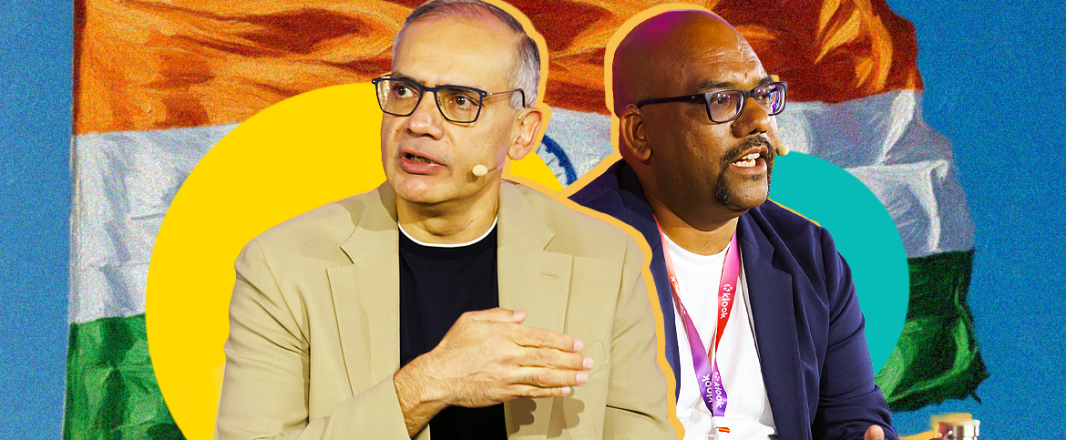
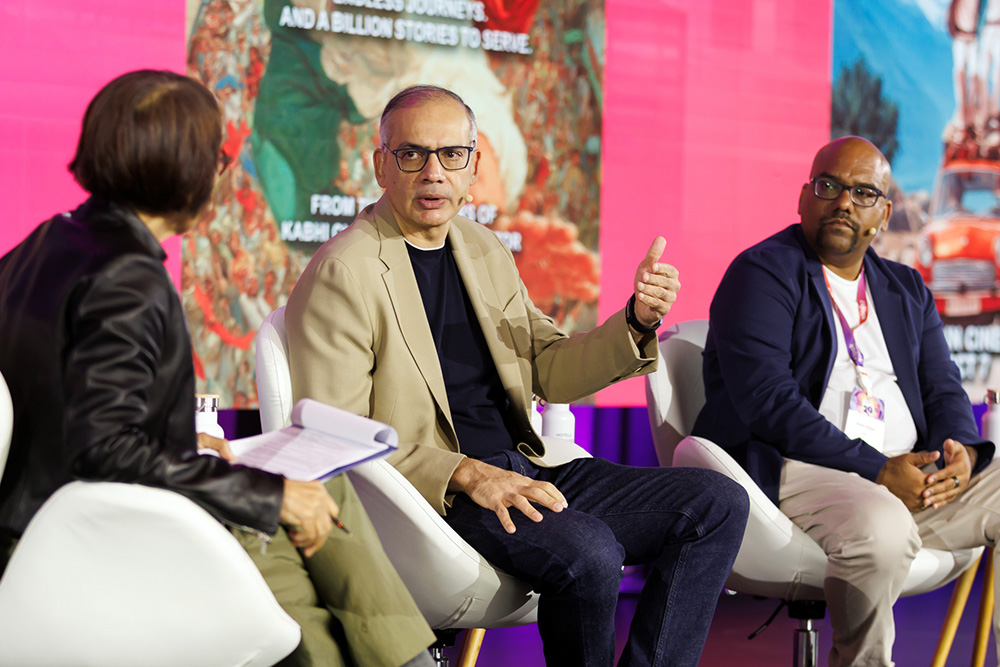
India’s two most iconic travel founders – Deep Kalra of MakeMyTrip and Aloke Bajpai of ixigo – reflect on their journeys, rivalries, and hopes for the next 20 years of travel. Their dialogue captured not just how far India has come, but how much further it can go.
If Bollywood were to make a movie about India’s online travel story, what would it be called?
At WiT, the audience chose: “Two IPOs and a Billion Travellers.”
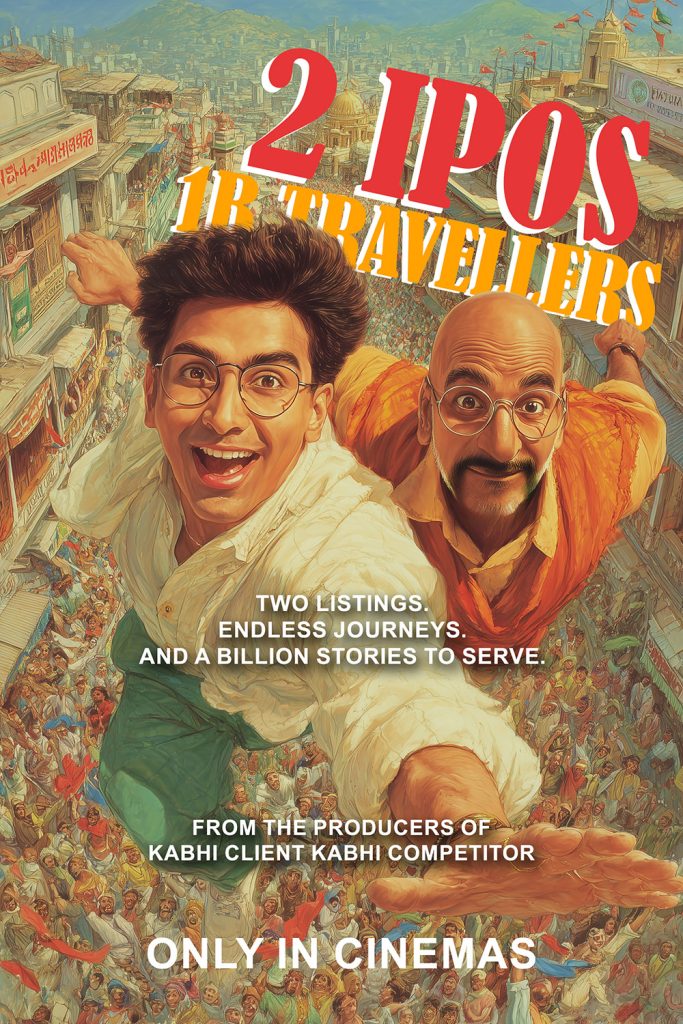
Fitting, really – because when Deep Kalra and Aloke Bajpai share a stage, you’re watching the original blockbuster and its spiritual sequel. One ignited the movement that took travel online in India; the other turned that spark into a second wave of innovation – scrappy, product-driven, and built for Bharat.
Twenty years after MakeMyTrip first appeared on the WiT stage in 2005, Deep and Aloke returned as India’s dual protagonists in a story that’s still being written, one that could define the next 20 years of global travel.
The sequel begins: India’s time to drive
When Deep Kalra first told investors that MakeMyTrip could be “the Ctrip of India,” the comparison was both strategic and symbolic – a way to signal India’s potential to mirror China’s growth.
But as he told the WiT audience, “If China drove the last 20, India will drive the next 20 — and it’ll do it differently.”
Different because India’s building blocks are already digital. “UPI has done a phenomenal job enabling micropayments,” said Deep. “People without bank accounts can transact freely. Smartphones and apps are pervasive. The payment rails are ready, the youth are online, and the skies are open.”
But there’s still one missing piece: hotels.
“India has one branded hotel room for every 10,000 people,” Deep noted. “China has one for 300. That’s the gap.”
For Aloke, who’s been decoding India’s complexity for 17 years, the opportunity and the challenge lies in its diversity.
“India isn’t one market,” he said. “It’s a thousand micro-markets. By geography, culture, language, and transport. If you think of it as one, you’ll make the biggest mistake of your life.”
While China’s online penetration jumped from 4% to 37% in two decades, India’s curve may take longer. But that’s also its advantage. “You have to build differently here,” Aloke said. “You’re solving problems unique to India – from trains to long-tail hotels to the small-town user. It’s hard, but it’s also why the next 20 years will be exciting.”
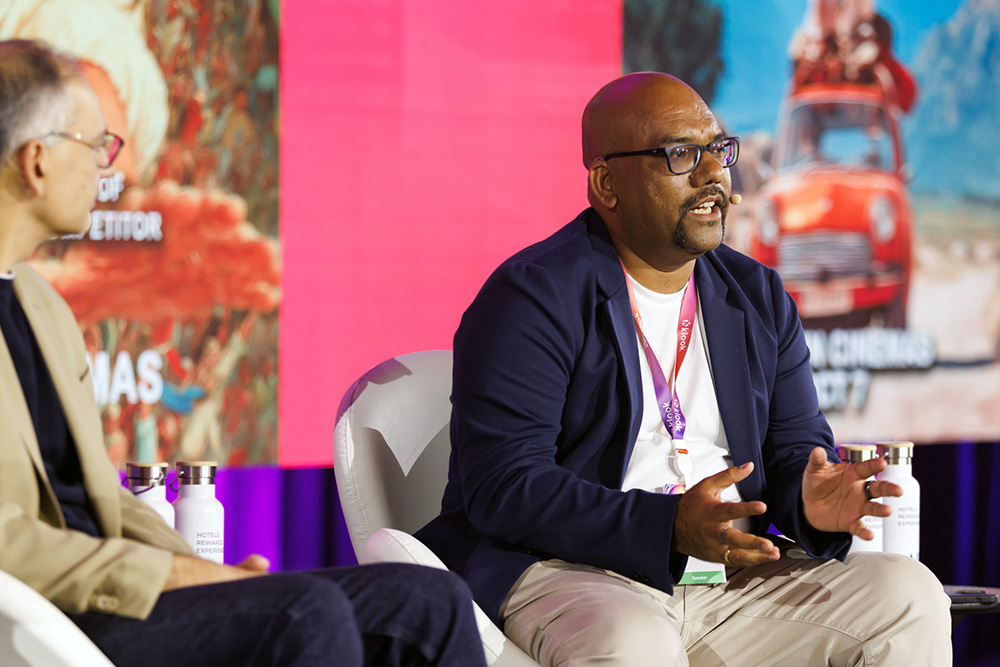
The home game: Domestic rules, outbound booms
For now, domestic travel is India’s backbone, growing 15% year on year, and still largely offline.
“There are three billion domestic trips a year,” said Aloke. “Most are still booked offline. Hotels are under 20% online. Homestays? Five percent. The market hasn’t even happened yet.”
Outbound, meanwhile, is India’s fastest-growing segment, outpacing even domestic air. “There’s a billion-plus aspiration to see the world,” Deep said. “But inbound – just 12 million visitors – is where we’ve under-delivered.
“Singapore gets more inbound in a month than we do in a year,” he quipped. “India has the luxury hotels, the culture, the heritage but not yet the consistency or infrastructure to attract the middle-class global traveller.”
AI: The next great disruption
When Deep appeared in WiT’s documentary, “Online Travel in Asia: The Untold Story”, he said online travel shifted power from agents to consumers. Two decades later, both he and Aloke agree: the next shift will be powered by AI.
“AI is the Internet moment to the power of the smartphone moment to the power of the app moment,” Deep said. “It’s that big.”
He calls it both “an opportunity and a threat” for intermediaries.
“It’s going to be fantastic for customers – more choice, less pain – but intermediaries who don’t adapt fast will be at risk.”
Aloke, ever the engineer, added urgency: “I think we’re underestimating how fast it’ll happen. What we think will take five years will happen in six months. Two guys in a dorm room can now build faster than most big companies.”
Both are betting on AI-powered agents — Deep with Myra, a Hindi-speaking travel chatbot, and Aloke with Tara, ixigo’s voice-enabled assistant launched in 2017.
Deep recently made his first booking entirely in Hindi through Myra. “It’s amazing and scary,” he said. “That one leap could bring 200 million more Indians online.”
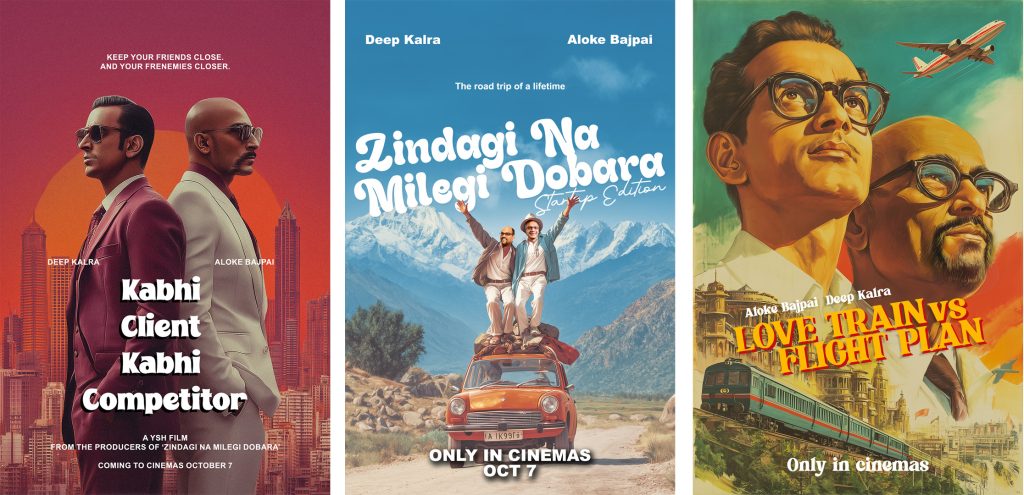
Some of the faux Bollywood movie posters shown at WiT Singapore. Delegates were asked to vote for the best one.
Buy, build, or both?
Both entrepreneurs agree that acquisitions are essential to scaling travel in India, not just to buy growth, but to buy entrepreneurial energy.
“It’s not about picking up brands,” Deep said. “It’s about acquiring teams that still have fire. When we bought BookMyForex, I learned more in six meetings than in six months.”
Aloke echoed the view. “No company in travel has scaled without acquisitions,” he said. “Each vertical – flights, hotels, buses, experiences – is an ocean of complexity. Our acquisitions like ConfirmTicket and AbhiBus still have their founders running the show. That’s the only way.”
The soul of travel: Meaning over material
For all the talk of markets and models, both leaders returned to something deeper — the meaning of travel itself.
I reminded Deep of what he said in our documentary, that once material needs are met, travellers will chase meaning. He nodded. “That’s happening now. People are travelling not to escape but to reconnect, through yoga, Ayurveda, meditation. To detox and re-energize. To be with themselves.”
Aloke cited India’s “mind-boggling” pilgrimage numbers. “Varanasi gets 100 million visitors a year. The Mahakumbh saw over 600 million footfalls. The scale is staggering and the opportunity to serve those travellers with better infrastructure and digital access is still untapped.”
A billion stories, one journey
As the session closed, the poll results flashed onscreen – Two IPOs and a Billion Travellers – the audience’s cinematic verdict.
Fitting again, because both Deep and Aloke are still writing India’s travel script: one that fuses ambition with authenticity, technology with humanity.
In his final rapid-fire, Deep predicted that within 20 years, travellers might no longer visit endangered species like polar bears, a reminder that the planet’s fragility runs parallel to travel’s growth.
Aloke’s pick for the next trillion-dollar opportunity? “Spiritual and wellness tourism,” he said. “Because the internet once helped us escape the world, now we travel to escape our screens.”
And with that, the curtain fell – on two leading men, one shared legacy, and a story far from over.


