


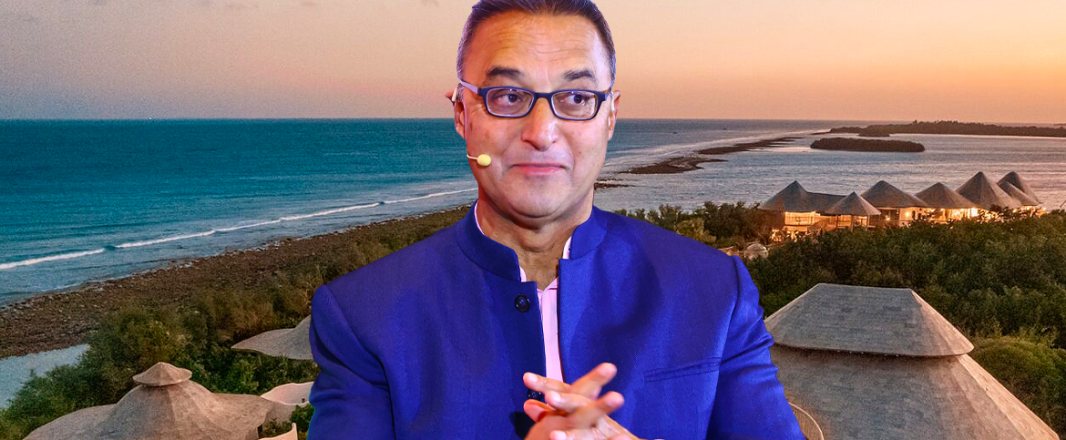
From barefoot luxury to mindful rebirth, the founder of Six Senses and Soneva reflects on his mother’s lack of love, letting go, healing, and creating again, in an interview with Yeoh Siew Hoon (Founder, WiT) on the HICAP stage in Singapore.
When I first met Sonu Shivdasani in the early 1990s to talk about the opening of Soneva Fushi, I could sense then he was a man with a mission to change hospitality. I felt there was a fire in his belly to change the idea of luxury travel.
Well, turns out that fire came from his mother.
When I asked him how the Sonu today is different from the Sonu then, he said, “As an individual, I’m slightly more patient. I think I had a little bit of a chip on my shoulder because my mother, she wasn’t a very loving parent to her children.
“Unlike my father, we didn’t really get unconditional love from her. The opposite. I think she really tried to make us feel inadequate. So at 30, I wanted to prove a point, I was trying to prove something, but I think I got over that now.
“In a way, I’m grateful to her, because she stimulated me to take risks and do things I might not have done if I had unconditional love. But at the same time, I think it sort of undermined me on a few occasions where I just took too many risks because I kept on trying to prove a point.”
Well, the founder of Soneva and Six Senses has more than proved his point because over the last three decades, he has changed the rhythm of luxury travel. He invited people to take off their shoes, slow down, and live with intention. It was radical then, and it remains even more relevant now.
And he still speaks with the same conviction – only now, his tone is softer, deeper, grounded by experience.
“I still have a passion for hospitality and wellness,” he said. “But I’ve learned detachment. You have to give up who you are to become who you will be.”
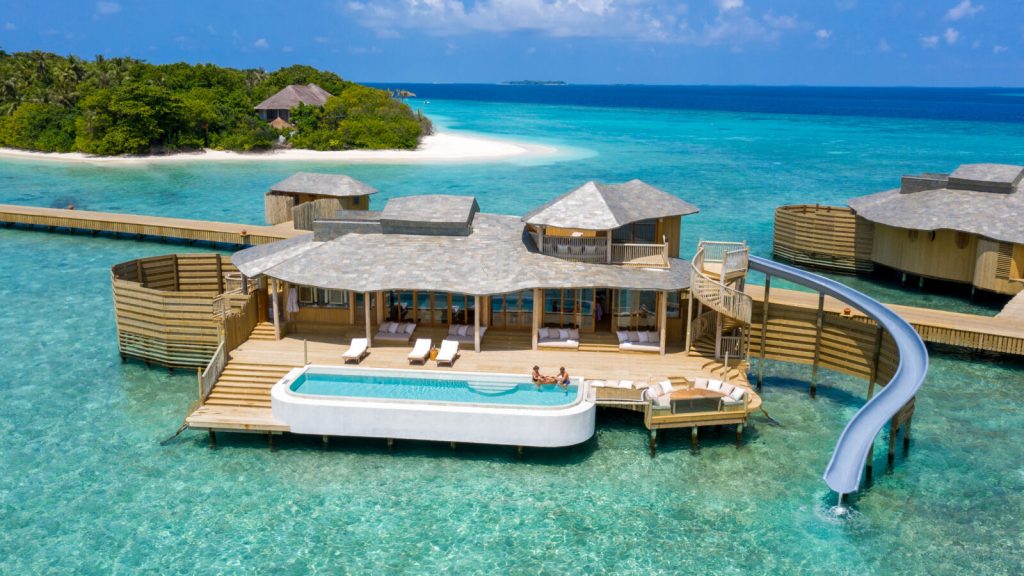
Soneva Fushi
Letting go to begin again
Sonu has lived many lives within one – a creator, seller, and rebuilder of brands that have redefined how we think about travel, wellness, and sustainability. He sold Six Senses more than a decade ago. In 2025, he passed the reins of Soneva to KSL Capital. And now, he is creating again – this time, something even more personal: Sosei.
The name is Japanese. It means rebirth or renewal. The logo is an ensō, the Zen circle that captures both emptiness and wholeness – an emblem of beginnings and endings, perfectly incomplete.
“Every end has a beginning and every beginning has an end,” he said. “I’ve realised that a successful soul is one that renews itself.”
But the path to renewal has not been easy. In January 2024, Sonu was diagnosed with cancer – a diagnosis that became the ultimate test of body, mind, and faith.
Healing the body by healing the mind
“I decided not to go straight to the oncologist,” he said. “I wanted to understand what was causing it.”
Already disciplined in diet and exercise, he doubled down – cutting out sugar, tracking his MRI scans every six weeks, meditating daily. When the tumour grew despite his efforts, he travelled to South Africa, where an integrative doctor combined oncology with alternative therapies – hyperthermia, antioxidants, high-dose vitamin C – and psychotherapy.
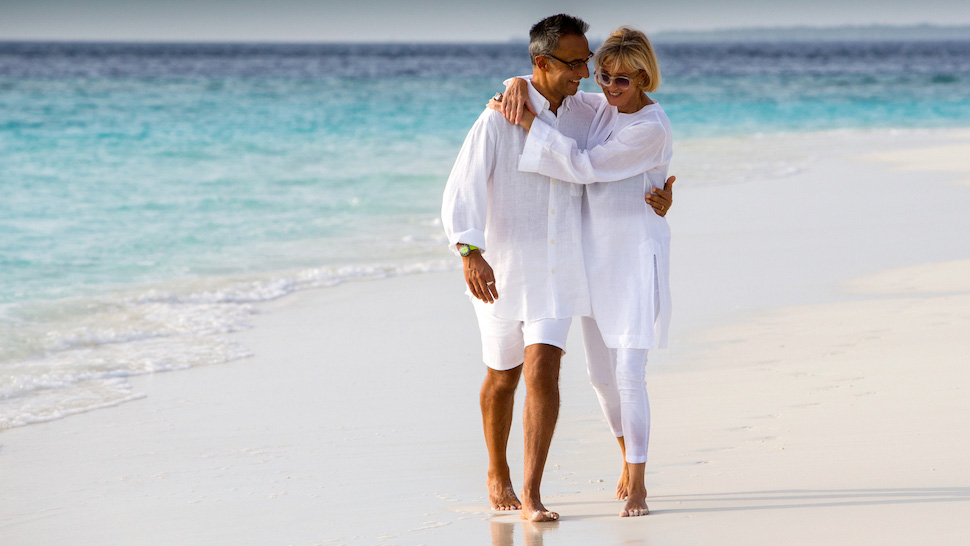
It was there he learned, as he puts it, the art of detachment.
“Behind every tumour is a trauma,” he said, quoting the physician-philosopher Gabor Maté. “I used to pay lip service to that, but now I see it clearly. When you control your mind, you heal your body.”
This realisation forms the heart of Sosei. It will be a brand, he said, “that brings mental wellbeing and renewal into the core of every experience.”
The soul of service
For all his architectural feats – villas over lagoons, tree-top cinemas, open-air baths – Sonu insists that true luxury is never physical.
“It’s the software, not the hardware, that defines luxury,” he said. “Guests remember the people, not the buildings. Magical service can only be instilled, not trained.”
That ethos – “hosts over hotels” – shaped Soneva’s identity. Each host wasn’t merely an employee but a storyteller, a neighbour, a guardian of experience. Now, he wants to infuse Sosei with the same spirit, through Japanese values such as kaizen (continuous improvement) and ichi-go ichi-e (treasuring each fleeting moment).
“Japan epitomises ultra-luxury hospitality,” he said. “Its reverence for silence, craftsmanship, and mindfulness aligns perfectly with what we want to create.”
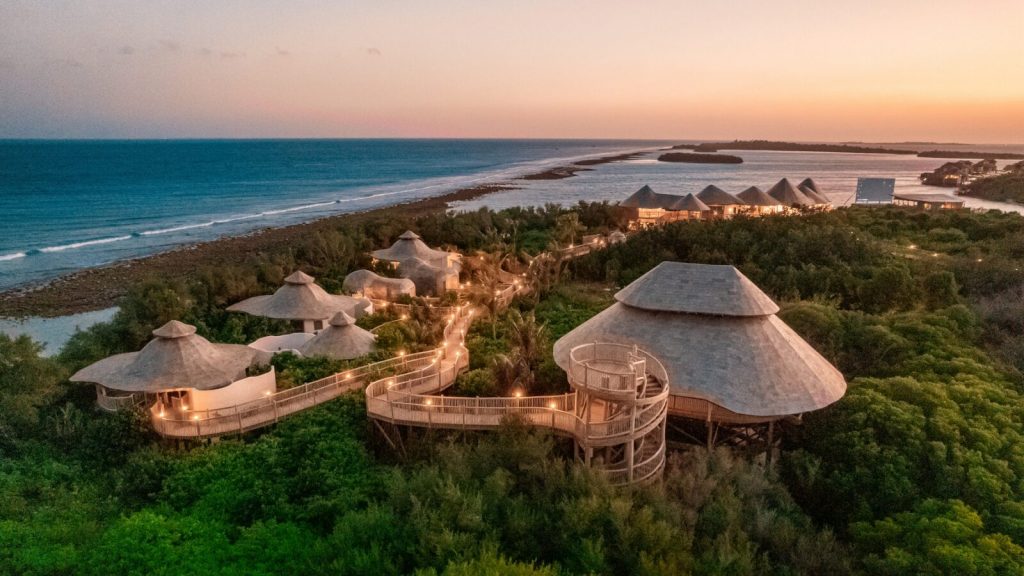
Soneva Jani
Spreading Sosei: Japan’s on the radar
Sosei is still in its infancy. Talks are underway with developers in Costa Rica, South Africa, Botswana, and Switzerland – and while he acknowledges the irony that a Japanese-rooted brand does not yet have a location in Japan, he said, “it’s a bit slower but we’ll get there.”
He envisions city sanctuaries as well as retreats. “There’s a huge opportunity to bring leisure-style hotels into cities like Tokyo,” he said. “You can’t look after a holidaymaker one day and a businessman the next – they’re different species. One’s a sports car, the other’s a truck.”
Lesson learnt: A different kind of capital
Having learned from experience, Sonu is building Sosei differently. “No private equity this time,” he said. “The timelines are too short. I’m approaching friends, long-term investors who believe in the mission.”
He also plans to step back from the CEO role. “I’ll be CEO of the holding company, but not of the operating business,” he said. “There are great people I’ve worked with who can do a better job in specific areas.”
For a man once driven by what he calls “a chip on my shoulder”, this is evolution – the acceptance that creation doesn’t always mean control.
Japan, Maldives and India, according to Sonu
Our conversation drifted across continents – Japan, the Maldives, India – and across questions of scale, sustainability, and soul.
Asked if he believes Japan could hit 100 million inbound visitors by 2045, he said, “It wouldn’t surprise me. It’s such a beautiful destination. The challenge is population decline –one day, there may be more tourists than Japanese. Immigration and cultural preservation will have to coexist.”
He sees the Maldives not as saturated but as immature. “Ninety percent of visitors travel 12 hours to get there. But 2.5 billion people live within short-haul distance. If the Maldives captured regional travel the way France does, it would have 500 million visitors – impossible, of course, but it shows the potential.”
He is equally bullish on India, where he’s advising several hotel groups. “The rise of spiritual and religious tourism is enormous,” he said. “The domestic demand alone is transforming the landscape.”
AI and the alchemy of creativity
For all his love of nature, Sonu is no technophobe. He sees artificial intelligence as an amplifier of human creativity, not its enemy.
“It’s a productivity win,” he said. “What once took six hours on Google now takes fifty-five seconds on Perplexity.”
He uses it for everything — from medical research to wine pairings and menu design. At Soneva Fushi, the food and beverage team is experimenting with AI-generated food combinations inspired by The Flavor Matrix, a scientific study of why ingredients work together.
“That’s how the team came up with coconut ice cream with olive oil and caviar,” he said, laughing. “People say it’s the best thing they’ve ever tasted.”
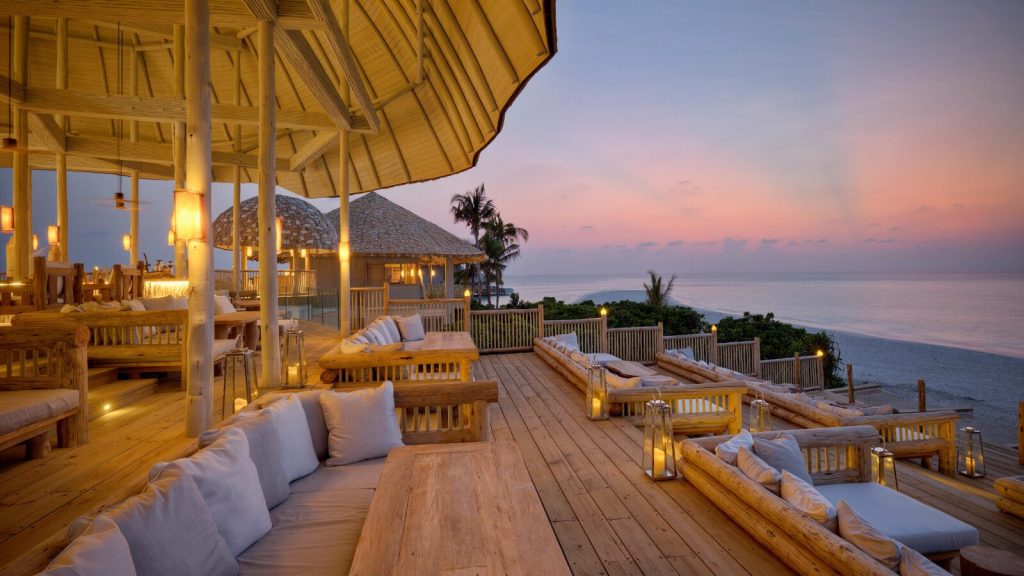
Soneva Secret
On passion, purpose and people
When asked what advice he would give the next generation of hoteliers, Shivdasani didn’t hesitate.
“You’ve got to be passionate about what you do,” he said. “That passion will always come through. And you’ve got to love people – your guests and your hosts. Hospitality is about connection. Understand that, and you’ll go far.”
He quoted Isadore Sharp, founder of Four Seasons: “Treat others as you want to be treated yourself.”
“That’s why Four Seasons is such a successful brand,” he said. “Culture built on kindness.”
The paradox of sustainability
No conversation with Sonu would be complete without confronting the contradictions of luxury and sustainability.
He smiled when I brought it up – the irony of building multi-million-dollar villas in remote islands while preaching environmental balance.
“People sometimes accuse me of catering only to the ultra-rich,” he said. “But even the cheapest resort in the Maldives caters to the richest 20 percent of the planet – at the cost of the poorest 80. Tourism is resource-intensive by nature. The question is not whether we stop travelling, but how we travel better.”
He believes travel is still “a force for good.”
“Without tourism, the turtle and shark populations in the Maldives would have been wiped out. In Africa, without tourism, there would be no conservation economy. The challenge is balance – to ensure communities benefit as much as guests do.”
The lightning round
Before we wrapped, I threw him a few playful prompts.
- My eyes roll when I hear: “People claiming how green they are.”
• My heart dances when I hear: “Someone launching a new, innovative concept.”
• My brain sounds an alarm when I hear: “It’s going to be easy.”
• My bare feet tap when I hear: “The sound of the sea.”


