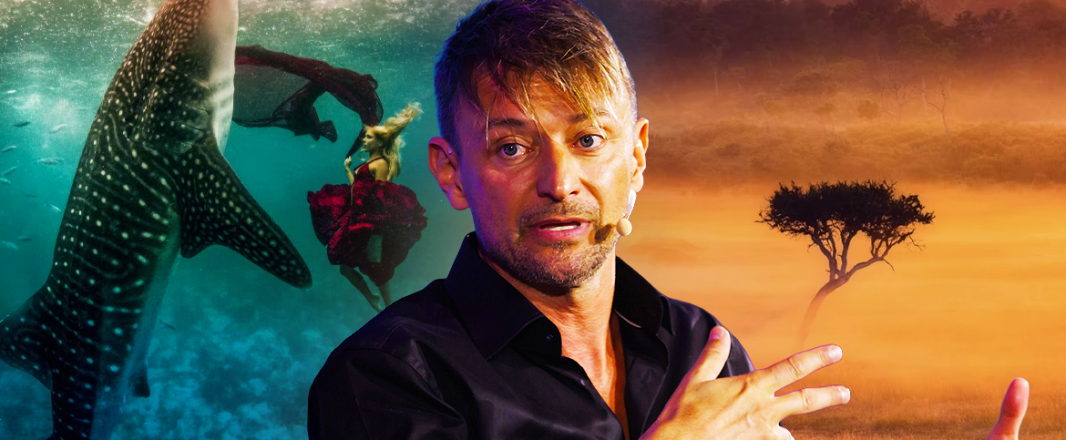
At WiT Singapore, celebrity photographer Kristian Schmidt spoke about the art of creating meaningful images, how AI will never take away that meaning and now he’s bringing his images to life with a new venture, The Livingstone Club, taking small groups behind-the-scenes of his shoots. Art comes full circle – from print to life.
In the age of Generative AI where anyone can create prompt images out of nothing, you have to wonder how artists who capture images in the real world feel about it all.
Well, speaking to celebrity photographer Kristian Schmidt at WiT Singapore, you can feel that he is as serene and sanguine about it as his images make you feel.
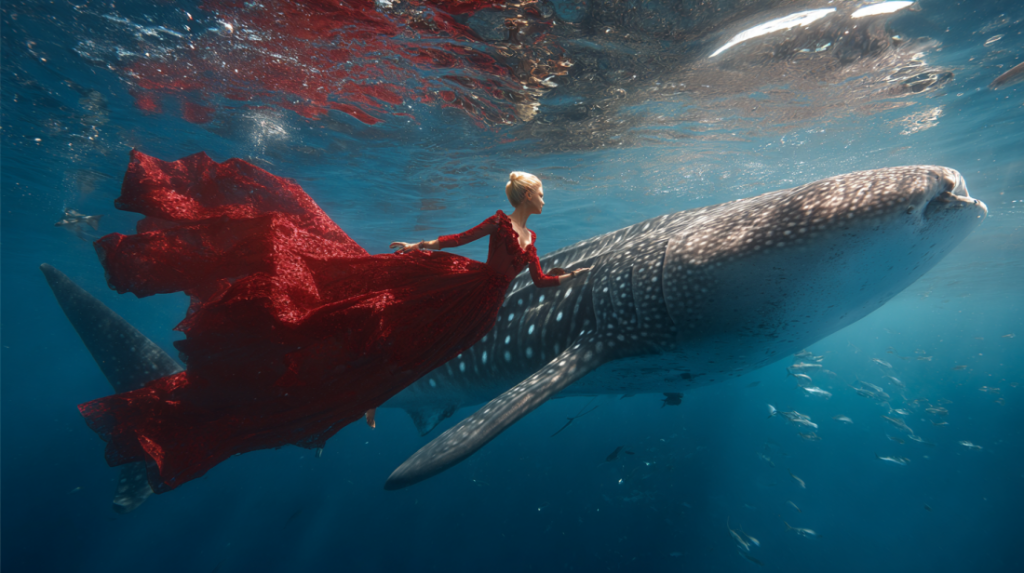
Schmidt shot to fame with his image of a model in a red dress, floating serenely beside a whale shark.
How it started: Serendipity, curiosity, adventure
That winning shot was born out of serendipity, curiosity and adventure.
As he told me, it was very random how it happened.
He recalled, “I was diving with a charity called WildAid and Richard Branson with Virgin Unite in Isla Mujeres in Mexico, which is incredible. Everybody should go there. In July, there are about 200 whale sharks which come feeding. It’s amazing, very impressive. I really wanted to do a photo shoot with that, but it was too choppy and too many whales.”
Branson then recommended a small island in Oslob, Philippines, “where whale sharks are feeding vertically and there’s no one there”.
Two weeks later, in Miami, he met an underwater model who could hold her breath for seven minutes. “Quickly we put a crew together to get this project going, we didn’t really do it for any reason but to have the experience and had no idea it would blow up so big. It got released in 200 publications worldwide and put in some of the most well-known galleries. We were very lucky.”
Behind the scenes: Chaos and comedy
Beyond the luck and behind those ethereal images however lies chaos, especially when you’re working with animals and in nature.
“It’s full comedy and chaos. Everybody’s drowning, the lights are falling. I never know what I’m going to get. I have an idea of a shot I want. I’ll never get that shot. I get something different, but better.”
He has full respect for animals and the elements. “You’ll know if something is wrong, so you don’t really shoot or do anything if something is up with the animal.”
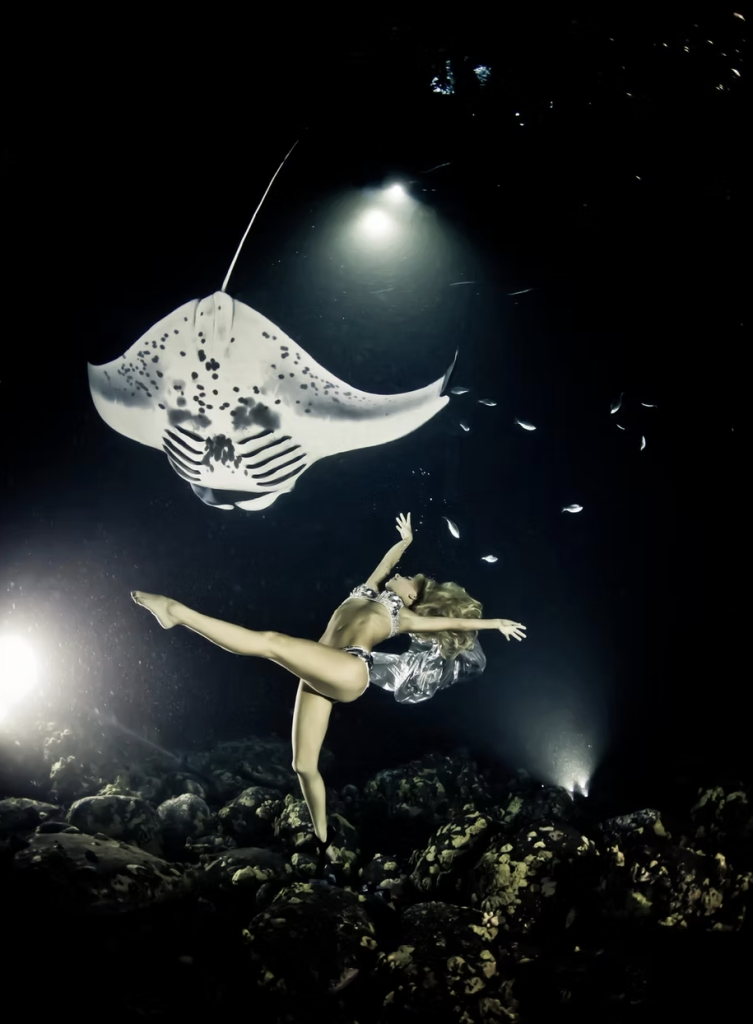
Confessing “I’ve been whacked by whale shark tails”, he shared that that shoot with the whale shark was not as challenging as the one with the manta rays. “That’s 40 feet underwater and the model is tied down, it’s dark, there’s a lot of currents and the manta rays go around. That was a difficult shoot.”
Childhood & celebrities: A global palette of influence
Schimdt’s ease with chaos probably stems from his childhood. Born in New York and raised between Paris, Sweden, and Japan, Schmidt’s world was a kaleidoscope from the start. His father was theatre producer Lars Schmidt and his stepmother, legendary actor, Ingrid Bergman.
“I think each culture gives you so many ideas – visuals, way of thinking, languages, sense of humour. That’s really helped me with my work nowadays. I kind of pick and choose from each one and merge them into a global palette of ideas.”
His celebrity parents were workaholics. “Vacation was torture for them. They worked non-stop. It was only in their Gotland island home that they could escape and be by themselves.”
He added, “The theatre was really interesting to grew up with, you learned lighting, colours, aesthetics, how things should look.”
Mostly, he remembers their friends, “an influx of celebrities coming in and out of our house. Everybody had the same common thread, no one really knew what they were doing, but they’re all pretending and it made you more comfortable with the world.”
That exposure gave him an instinct for drama and an obsession with aesthetics. “Photography, directing, theatre – they all mix and match,” he said.
Japan, in particular, became his muse. “Every time I run out of ideas, I go to Tokyo. By the time I leave, I have a new set of ideas. I don’t know why, but it always works.”
He calls Japan his “canvas” – a place where fashion, architecture, and nature collide. “The lines, the light, the food, the quiet – it all feeds my creativity.”
The post-visual world: Real still matters
Asked how AI affects his work, Schmidt was pragmatic. “It hasn’t disrupted me. The clients who buy my prints – they want something real. They want a story behind it. Something that was hard to make.”
He does use AI tools, but only to enhance colour or composition. “AI helps make images more exciting,” he said, “but for me, it’s about the experience. I want to be there. If I made it on a computer, I’d miss the whole point.”
While commercial photography may shift to automation, he believes meaning will endure. “Corporates might replace shoots with AI, but they can’t replace the human connection behind meaningful art.”
Timelessness over trend
In an era when TikTok celebrates “flawsome” authenticity, Schmidt stands firmly by elegance and craft.
“Trends swing back and forth,” he said. “Right now, it’s casual and raw. In a few years, style will return. I try to make my work timeless – subdued colours, soft fabric, no logos. Something you’ll still want on your wall 15 years from now.”
He laughed when I complimented his own stylish look: “That’s just Japan’s influence.”
Livingstone Club: Bringing his prints to life through experiences
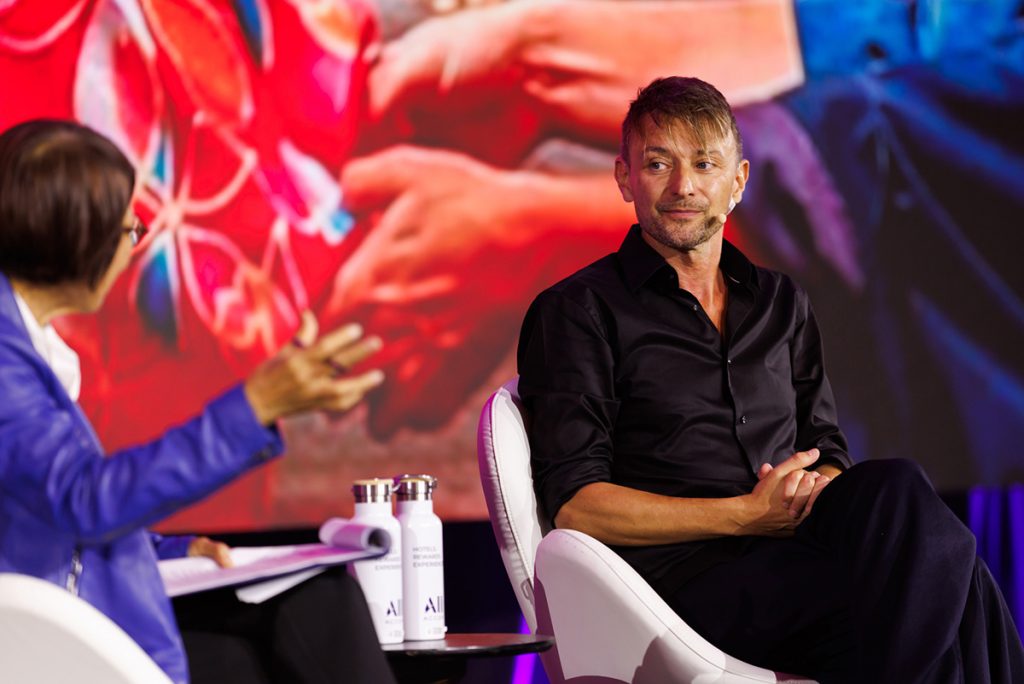
Schmidt’s latest venture blurs the line between art and adventure. He recently launched the Livingstone Club, a private travel concept that takes small groups on immersive expeditions inspired by his photo shoots.
“We started in June, we’ve done four trips already,” he said. “Tonga, Africa, and next week, Japan. Guests get access to researchers, conservationists, and the same locations where we shoot.”
Trips range from US$40,000 to $150,000, and participants are often collectors of his art. “They buy a print, then come experience the story behind it,” he said. “It’s the full circle – from image to emotion.”
Next dreams: Lava and zero gravity
When asked what he hasn’t yet captured, Schmidt grinned. “Lava meeting the ocean at night,” he said. “It becomes this whirl of light and chaos – I want to shoot it underwater, with a model in flowing fabric. It’s dangerous and impossible, so of course we want to do it.”
He’s also exploring a zero-gravity shoot. “In anti-gravity, water becomes spherical. Imagine fabric and light floating in space — that’s what we’re planning.”
“Keep it real and do your own thing”
For all the spectacle, Schmidt’s message is simple: stay human. “The world is obsessed with simulation,” he said. “But I want to keep feeling the water, the chaos, the fear. That’s what makes an image real.”
His motto remains unchanged: “Step outside the box and do your own thing.”
Because in a post-visual world, perhaps the most precious moment is not the perfect picture, but the imperfect, unforgettable story behind it.