



How Ngāi Tahu Tourism is navigating a complex travel landscape by focusing on people, place, and purpose
Jolanda Cave, General Manager of Ngāi Tahu Tourism, spent most of her career in experience-led tourism like cruises, attractions, and guided tours. “I’ve always been drawn to people in place,” Cave told WiT, “Whether it be through cruise or attractions or bus tours throughout New Zealand. What really attracted me to Ngāi Tahu Tourism was their purpose.”
Ngāi Tahu Tourism is owned by Ngāi Tahu, the Māori people of Te Waipounamu, the South Island of New Zealand, and one of the largest iwi (tribes) in the country, with more than 80,000 registered tribal members. The group’s origins in tourism trace back to 1999, when Treaty of Waitangi settlement funds were used to build a diversified commercial portfolio.
“It’s not just about commercial success,” says Cave. “It’s about people. It is about culture. It’s about future generations.” That long-term thinking, she adds, is what drew her in.
The first tourism acquisition? A jet boat operation on the Shotover River in Queenstown. Today, Ngāi Tahu Tourism spans nine businesses across Aotearoa, from the All Blacks Experience in Auckland to Franz Josef Glacier Guides on the West Coast, Dart River Adventures in Glenorchy, the Dark Sky Project in Tekapō, and the National Kiwi Hatchery in Rotorua, among others.
It’s a portfolio that spans adrenaline, culture, nature, and wildlife and it sits within a much larger Ngāi Tahu group. “The whole portfolio is a $2.8 billion portfolio, and tourism is probably one of the smaller ones,” Cave explains. “We’ve also got farming, property investments, seafood.” What tourism lacks in scale within that group, it more than compensates for in reach. “While Ngāi Tahu Tourism is probably not one of the largest of the group, why we’re important is our voice and our ability to connect people with place.”
Profits from the tourism arm are funnelled back to the iwi to support cultural, educational, social, and wellbeing initiatives, a structural commitment that gives the business a fundamentally different mandate from a typical commercial operator.
Shotover at 60 — still the flagship
Ask Cave what the group’s biggest drawcard is and there’s no hesitation. “Shotover Jet is definitely our flagship experience.” The 60-year-old jet boat ride through the narrow Shotover River canyon has become one of Queenstown’s most recognisable attractions, and arguably one of New Zealand’s. “It’s iconic. It’s high energy. It’s globally known,” she says. “It’s been operating for 60 years, so it’s premium, and everything that it does is fine-tuned.”

Shotover Jet, Queenstown
What gives Shotover its staying power, according to Cave, is its genuine accessibility. “It’s something that everybody can do, whether you’re a child, elderly, whether you’re adventurous or not adventurous. It’s one of those experiences that you can do, feel really proud of yourself and tell your friends and family.”
The challenge, and the ambition, is to bring that same gravitational pull to the rest of the portfolio. “What is important for us is making sure that we evolve all of our businesses to have the same draw card and be as relevant and world class as what Shotover is today.”
Quality over volume, and the numbers back it up
Post-pandemic, Ngāi Tahu Tourism is operating at roughly half its pre-Covid visitor volume. Pre-Covid, the group was welcoming around a million customers a year. Today, that figure sits closer to 560,000. But Cave isn’t particularly troubled by that gap because the profile of who’s coming has changed significantly.
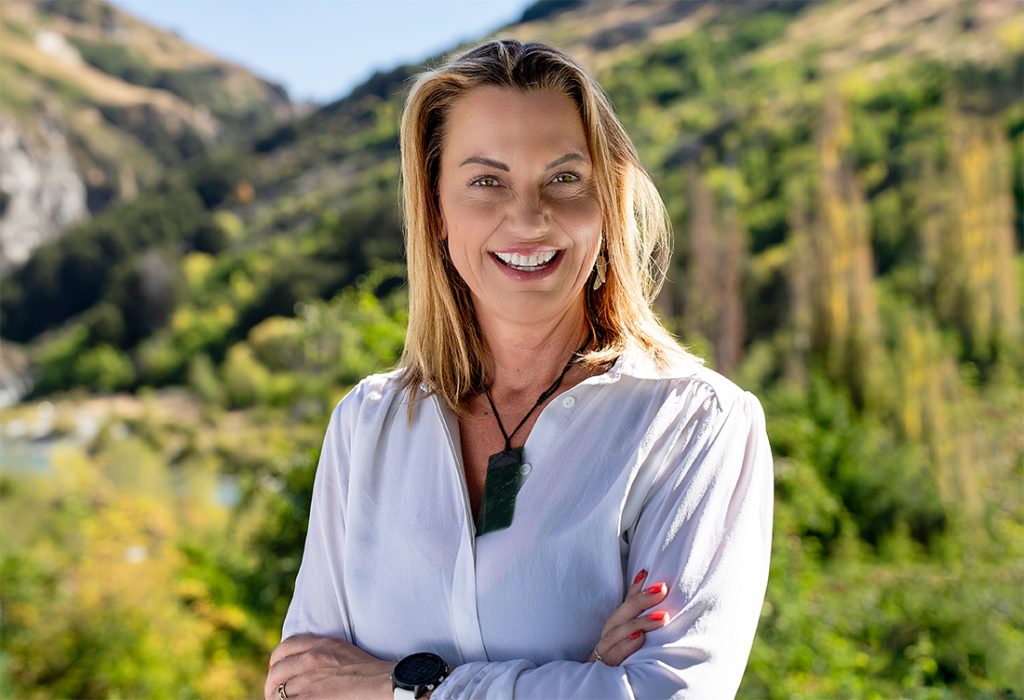
“It’s not just about commercial success,” says Jolanda Cave. “It’s about people. It is about culture. It’s about future generations.”
“It’s the depth of the customers and their absolute aspiration for unique experiences,” she says. China is a useful case study. Previously the group’s largest market by volume, Chinese visitors are returning… but differently. The traditional group tour market has given way to what Cave calls the FIT (fully independent traveller) segment, which means higher-spending, more adventurous, more time-generous visitors who want an authentic New Zealand experience rather than a packaged one. “They’re a higher-yielding market that spend a little bit more time,” adds Cave.
The same shift is playing out across US, Australian, and European markets. “It’s quality versus quantity,” Cave says plainly. For a long-haul destination like New Zealand, she argues this is actually a structural advantage: “Those that do commit to come to New Zealand are here for an experience of a lifetime, and as long as we’re delivering that, they’ll continue to come and continue to tell their friends and family.”
Weather, climate, and the harder conversations
Not everything is upward-trending. Cave is candid about the growing pressure that climate change is placing on several of the group’s businesses. Dart River Adventures, the Dark Sky Project, and Franz Josef Glacier Guides are all highly weather-dependent and the weather is becoming less predictable. “We’re seeing more and more weather impacts,” she says. “How do we sort of evolve ourselves to be able to operate under different situations, or have alternative products?”
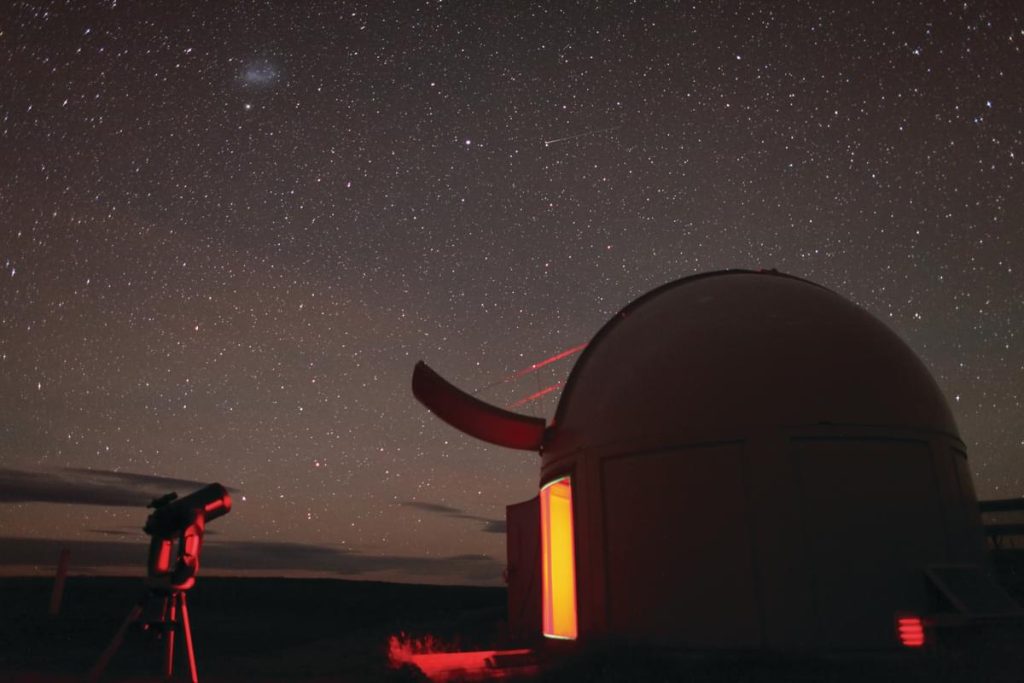
Dark Sky Project, Takapō / Tekapo
The answer, at least in part, involves leaning into operational data. Ngāi Tahu Tourism has decades of operating records across varied conditions, and Cave sees AI as a practical tool for turning that history into foresight. “How do we actually use the long-term data that we’ve got from decades of operating in different conditions to help predetermine impacts in the future, using tools such as AI to help us do that?”
On the technology side, Cave acknowledges that right now, most AI usage in the travel industry is still concentrated at the research and itinerary-planning stage. “What we’re seeing change every week is the actual conversion and booking that’s happening in AI and who we should be partnering with, and who is leading the field?”
For a small destination with a big story to tell, she sees an opportunity to get New Zealand’s voice into AI-driven discovery channels early and to do so collaboratively. “It’s a really good opportunity for us to make sure that we’re on the same path of what we are as a destination and why you’d want to come here.”
Internally, AI is already being applied to staff training, customer journey improvements, and operational procedures. The goal is making complex processes more interactive and accessible, “something quite interactive and easy to follow,” as Cave puts it.
OTAs and the new channel reality
On the distribution side, OTAs are becoming an increasingly central part of the mix. Cave says the group has significantly strengthened its OTA partnerships in recent years, recognising that platform-side agility is hard to replicate in-house. “They have the ability to grow and move a lot faster than we would ourselves,” she says.
The shift echoes a broader industry movement. Tourism New Zealand and Air New Zealand are both, as Cave notes, “leaning a lot stronger into OTAs and understanding that it’s a very good partnership to strengthen.” That said, traditional trade and domestic channels remain important anchors, particularly for markets where trust and relationship-driven distribution still do the heavy lifting.
Where to from here
“I’d love to see New Zealand just continue to move towards quality over volume,” says Cave. She sees a real opening for the country to lead on regenerative tourism, saying “We’re small, agile, we’ve got a good voice, and we’ve got 100% Pure as a lean brand.”
For Ngāi Tahu Tourism specifically, the work is about deepening what’s already there, which is connecting customers through people, to place, and to Ngāi Tahu. That’s been the operating philosophy since Shotover Jet was acquired in the early 1990s. It’s still the one.
Jolanda Cave will be joining us at the inaugural WiT Queenstown on July 20 – 21 to discuss tourism, conservation and travel tech in the region. Get your tickets now.


