


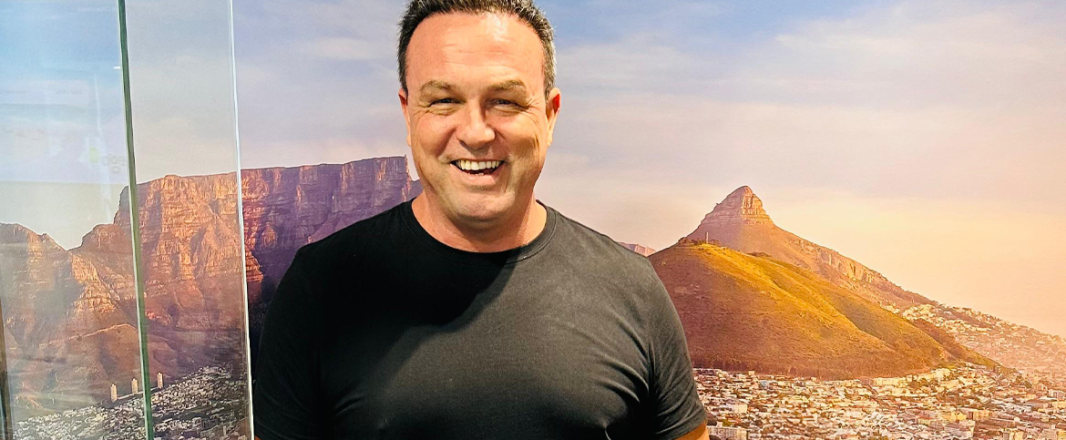
At WiT Africa, the Wego co-founder returned home and in doing so, revealed a story not just about building a global travel company, but about resilience shaped by place, crisis and the long arc of time.
Craig Hewett rarely steps on stage to speak. In fact, after more than 20 years of building Wego, the co-founder of the largest online travel marketplace in the Middle East and North Africa (MENA) has never stepped onto a WiT stage but when it came to WiT Africa in Cape Town, he couldn’t refuse.
After all, this was where he was born, where he lived his formative years, where he attended high school, where he grew up, surfing until he left for Australia in the late 80s.
The emotion of the homecoming to speak about his 20 years of building a travel business in South-east Asia and the Middle East was evident – even the title of the session “From Sandy Bay to Singapore and Dubai” was inspired by his father.
“When I was growing up, Sandy Bay wasn’t really a residential area, it was more of a nudist beach,” he recalled. “My dad and I used to go diving for crayfish there.”
Back then, he said, “Tourism wasn’t a thing in South Africa because it was the apartheid era and there were a lot of sanctions but I always had the ambition to promote tourism to South Africa.”
Thus, while in university in Sydney, he studied tourism marketing. But then, as they say, life happened. Well, actually the Internet happened and “I got into the vortex of the digital space” and that led him to Singapore where he co-founded Wego with Ross Veitch.
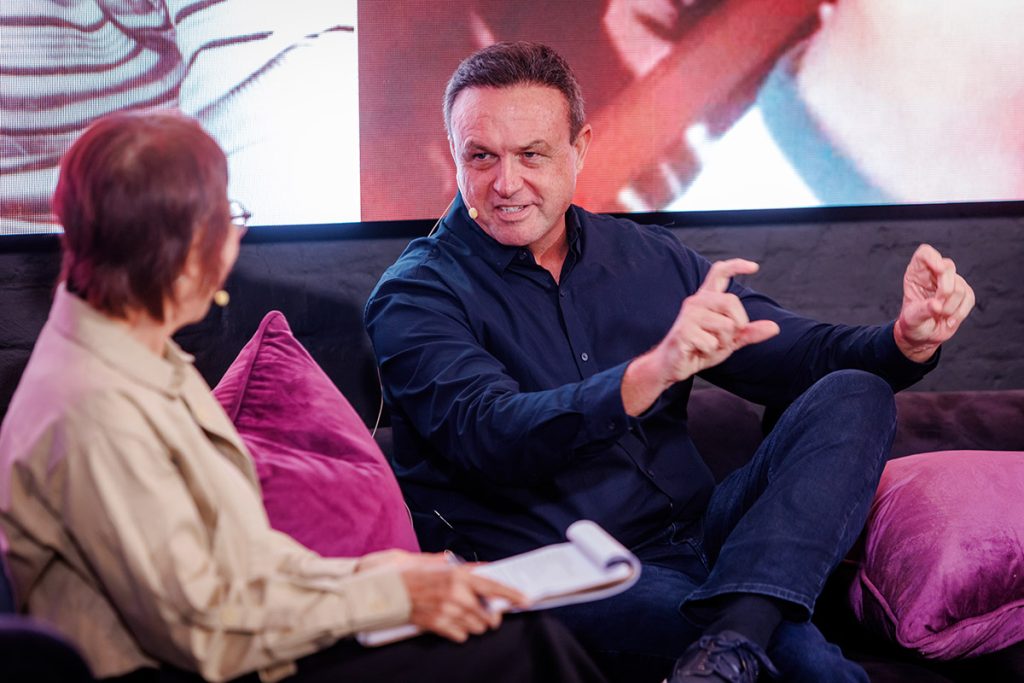
Craig Hewett: “Tourism wasn’t a thing in South Africa because it was the apartheid era and there were a lot of sanctions but I always had the ambition to promote tourism to South Africa.”
The security blanket of Table Mountain and the Middle East impact
But his passion for promoting Cape Town never left him. In all of Wego’s offices, from Singapore to Kuala Lumpur to Dubai, an iconic image of Cape Town and Table Mountain takes centre stage.
“In all our offices, you’ll see Table Mountain. I find a reason to put my home everywhere,” he said.
Indeed, he said, whenever he finds things too overwhelming and stressful, that image calms him. “Table Mountain, Cape Town, is my security blanket,” he told the audience.
And he’s never needed that more than now – with the Middle East conflict continuing to dominate headlines and the uncertainty spooking travellers in the region, Wego’s business has been adversely impacted.
“We saw the decline overnight,” he said, with the impact now hovering around the 40% mark.
But he’s taking it in his stride. “At least, it’s not 100% down like it was during COVID.”
Hardened by crisis over its 20-year-history, Wego is pulling out the COVID playbook. Cost-cutting is of course part of it but the company is doubling down on building tech and product – in particular strengthening its customer service operations – and pivoting towards domestic travel in Saudi Arabia, staycations within the UAE, expanding its presence in Egypt and the Haj and Umrah market.
Wego is one of eight OTAs that have been granted the licence to issue Umrah visas. “Religious, spiritual travel is resilient,” said Hewett. Wego will tap on its strong base of customers in Pakistan, Egypt and South-east Asia.
The crisis has also accelerated Wego’s AI adoption, particularly around customer service infrastructure. “We were forced to innovate,” he said.
Indeed, when asked what drives innovation most – capital, culture or crisis – Hewett didn’t hesitate. “Crisis.”
“One of my investors told me: you do way better when your back is against the wall. We have no complacency. We have energy. We’re in survival mode and that works better for us”
Lessons from emerging markets
Asked how building in emerging markets shapes founders differently, Hewett was direct.
Going up against global giants in markets such as South-east Asia and the Middle East forced WeGo to go hyper-local – building a fintech stack capable of integrating local payment clearing houses, navigating 15 to 20 different government jurisdictions, and solving the kind of market fragmentation that large Western platforms simply aren’t designed to handle.
“You’re multitasking, problem-solving, hacking things together to get MVPs to market. You become a lot more resourceful, a lot more creative. And if you don’t accept no, you find workarounds.”
Egypt is his go-to example: Wego is one of the only platforms where Egyptian users can transact using local payment methods. That single capability unlocked meaningful market access no global player has been able to replicate. “It’s not one size fits all,“ he said. “That’s how we differentiate from the big players — we find ways to get things done.”
Founders in emerging markets, he said, tend to be more resourceful, agile and more comfortable with uncertainty.
For young African founders, his advice was clear: don’t limit yourself to one market. “You need scale to appeal to investors. If you can connect Africa to the Middle East — or to Asia — you’ve suddenly got two markets, two stories, two revenue streams.”
He acknowledged the parallel Wego is now navigating itself, diversifying into India and South-east Asia as Middle East volatility persists.
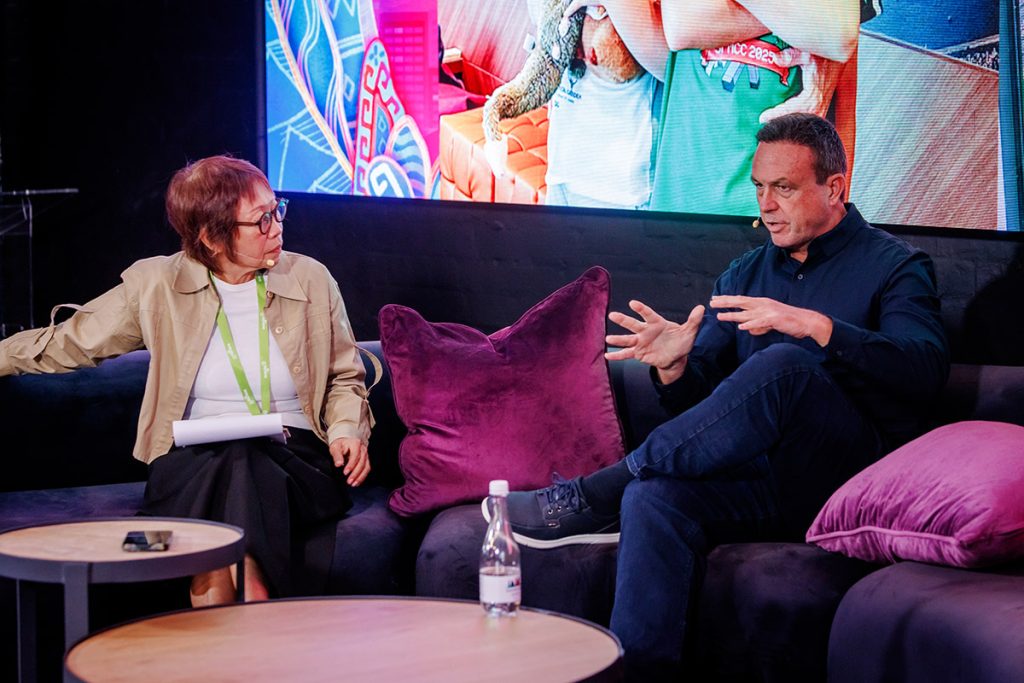
Craig Hewett: “One of my investors told me: you do way better when your back is against the wall. We have no complacency. We have energy. We’re in survival mode and that works better for us”
B2B, AI and the next decade
On the question of which model will own the future — meta, OTA, or B2B — Hewett’s answer was unambiguous: B2B. It’s where he sees Wego’s biggest growth runway, and where the company is directing meaningful strategic energy alongside its AI investments.
On AI specifically, he struck a notably optimistic tone. “I’m not worried by AI – we’re excited by it. It’s a reset. It allows us to make some leaps.”
For a company that has always had to outmanoeuvre better-resourced competitors, the levelling effect of AI tools feels less like a threat than an opportunity.
Asked which region will move fastest in the next decade, he answered without hesitation: the Middle East. For all the turbulence of the current moment, Hewett’s long-term conviction in the region’s travel growth story hasn’t wavered.
And neither has his love for his hometown. When asked which holds the biggest place in his heart – Cape Town, Singapore or Dubai, he said, “Cape Town. Always.”
That last answer drew the warmest response from the room.
After 38 years away, Table Mountain and Cape Town still loom large in Hewett’s life, and in Wego’s offices. “I ended up promoting it anyway,” he said.


