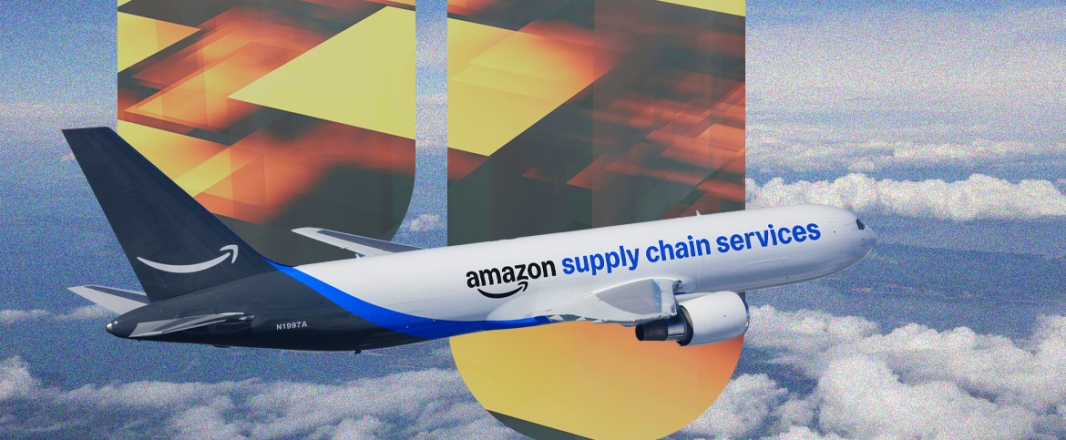
Amazon has just done something not quite so quietly disruptive: it has taken another piece of its logistics engine, put a price on it, and handed the market a benchmark. That matters far beyond e-commerce. Which is why we should all be paying attention.
For travel, the lesson is obvious. The industry has spent years unbundling everything from fares and ancillaries to servicing and payments. Once a service becomes transparent and priced as a standalone product, the pressure shifts fast: margins tighten, comparisons get easier, and competitors are forced to justify every layer of value. At the time of Offer and Order with Agentic becoming mainstream this is big news.
Now add Asia-Pacific.
Amazon is not the dominant regional logistics player in APAC in the way Alibaba’s ecosystem or Flipkart’s network shapes parts of Asia’s commerce landscape, but Amazon’s reach still matters. And that reach could act as a stimulus for more Amazon-style operational thinking in APAC: more modularity, more transparency, more unbundling, and more price pressure on services that were once bundled and opaque.
That is where the travel angle should get us all thinking (and doing quickly). If Amazon can help normalize transparent pricing for logistics and supply chain services, then travel’s own unbundled layers — especially payments, fulfillment-like servicing, and backend infrastructure — may become even more exposed to competition. Bring on AI agentic based processes and the walls of the silos don’t look quite so intimidating.
Peter Larsen as vice president of Amazon Supply Chain Services head honcho framed the move as Amazon bringing “the infrastructure, intelligence, and scale” of its supply chain to businesses everywhere, “much like Amazon Web Services did for cloud computing.” That is the real signal here: not just logistics, but platformization. Not just fulfillment, but a model for how entire service layers get exposed, priced, and competed.
Of course, there is a warning label. This is not a zero-sum game. Amazon has a habit of entering markets with efficiency, scale, and lower prices — and then changing the rules of engagement for everyone else. Competition is good, but only until one player has enough power to make the rest of the market play by its terms.
And what’s next? Will FedEx and UPS enter the passenger market? After all they have far better Global branding than any passenger airline or travel company.
So yes, Amazon Supply Chain Services is a logistics announcement. But for travel, it is also a signal. In APAC especially, it may accelerate the next wave of Amazonification (I know I dislike that word too): more transparent, more modular, more competitive commerce. And if that happens, the real winners will be the players that can adapt fastest — not the ones that merely hope the old bundle comes back.
About the author: With over 40 years of experience in the travel and distribution technology industry, Timothy O’Neil-Dunne is the Principal at T2Impact, LLC, an analysis and consulting firm that specializes in aviation, travel, and leisure.