
Key takeaways from WiT Japan 2026
A Samurai performance at the start, love robots at the end and in between one-and-half-day of conversations about “The Next 20: Precision, Reinvention and Quiet Power”.
Only in Japan could the precise sit comfortably with poetry, the quiet power of a centuries-old warrior tradition not be at odds with futuristic robots designed to make people happy and AI be mentioned in the same breath as “omotenashi” (the unspoken Japanese spirit of hospitality).
Such was what unfolded at WiT Japan this week in Tokyo and, as luck or destiny would have it, as the 12th edition wrapped up on Tuesday, along came Typhoon Jiangmi which ended up disrupting hundreds of flights in and out of Tokyo – which reminded all of us about what Filip Filipov, CEO of OAG, had shared in his talk about “Data: The Light Behind AI”.

A multimedia performance to kick-off WiT Japan that blended martial arts and dance choreography.
In reinforcing to us how massive and dynamic aviation is as an industry, Filipov had cited these data points – 130,000 flights and 10 million passengers a day, 8,000 planes airborne at any given moment, 190 billion prices generated every single day – and that one single flight delay cascades into 48 rotational adjustments, affecting 3,000 passengers.
Which is why, he warned, it is critical data be precise and accurate when entered into AI systems – otherwise, imagine the velocity and magnitude by which one mistake can be amplified.
Thus, as my flight, delayed by five hours, finally took off from Haneda Wednesday night, I couldn’t help but wonder at the chaos and disruption Jiangmi had caused – and yet travel continued to flow, smoothly and calmly, just like the spring water in the forests and mountains of Japan.
Here are the key takeaways from the 12th edition of WiT Japan 2026.
1. The front door has moved, big bets are being made
It is always good to start with some numbers. Japan welcomed 43 million inbound visitors in 2025. The Japan Tourism Agency expects 60 million by 2030. The Japanese travel market will grow from 14.1 trillion yen to 16.3 trillion by 2029 (Phocuswright). By any measure, demand is not the problem.
But how that demand arrives, discovers, decides and books – that is changing fast.
In presenting three years of data based on usage of its AI assistant, TripGenie, Amy Wei, senior product manager, Trip.com Group shared that AI-assisted bookings are up significantly year on year, real-time tool usage has grown 3,100% year on year, and the share of users asking booking-related questions (as opposed to general questions) has shifted from under 50% to over 60%.
Adoption is not coming, it is here, she said. And Trip.com introduced Agentic AI – AI that takes actions, not just answers questions – in March, based on a specific data observation: users who asked eSIM-related questions had a 6.8% conversion rate within 48 hours. They already knew what they wanted. The gap was execution, not information. When you can see that clearly in the data, building an agent to close that gap is the obvious next step, she said.
Booking.com’s consumer research shows a similar story across the region, with excitement high among travellers in using AI for their trips and pretty high usage across different stages of the trip journey. In Japan, the level of excitement was slightly lower – 91% versus the region’s 97% – and usage on the trip also skewed lower. The gap between aspiration and action is, Booking’s Regional Director North & South APAC, Nuno Guerreiro argued, fundamentally a trust problem and in Japan, that problem is sharpened by cultural context.
This changing front door to AI is prompting incumbent OTAs to make big bets on self-disruption. Agoda’s CEO Omri Morgenshtern said, “Over the years, we became glorified optimisers, and in ages of disruption, you need to move from optimisers to leapers. Take leaps of faith. That’s not intuitive. It’s not what we’re used to.”
But “I cannot live with missing the biggest opportunity in the last 20 years. Can I live with putting 20% of my investment in the wrong bucket? Probably. Can I live with missing this? Absolutely not.”
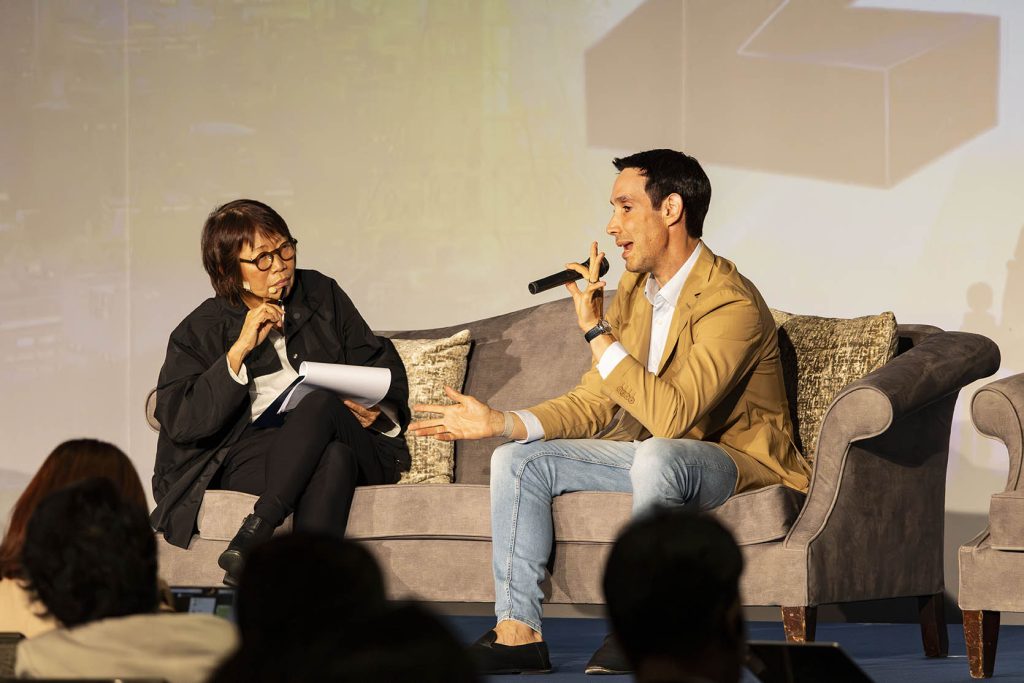
Agoda’s CEO Omri Morgenshtern said, “Over the years, we became glorified optimisers, and in ages of disruption, you need to move from optimisers to leapers. Take leaps of faith. That’s not intuitive. It’s not what we’re used to.”
2. Data is the thing under the thing
Back to OAG’s Filip Filipov – he said that, into the rich and dynamic data environment of travel, the industry is deploying AI systems that, in less volatile domains like legal contracts, get things wrong approximately 30% of the time.
Air Canada was found liable after its chatbot invented a bereavement fare. Zillow lost $500 million on stale pricing data. The lesson is not that AI is dangerous. It is that AI is only as good as the data flowing into it, and in travel, data that is one hour old is problematic and data that is one day old is, in an agentic world, essentially useless.
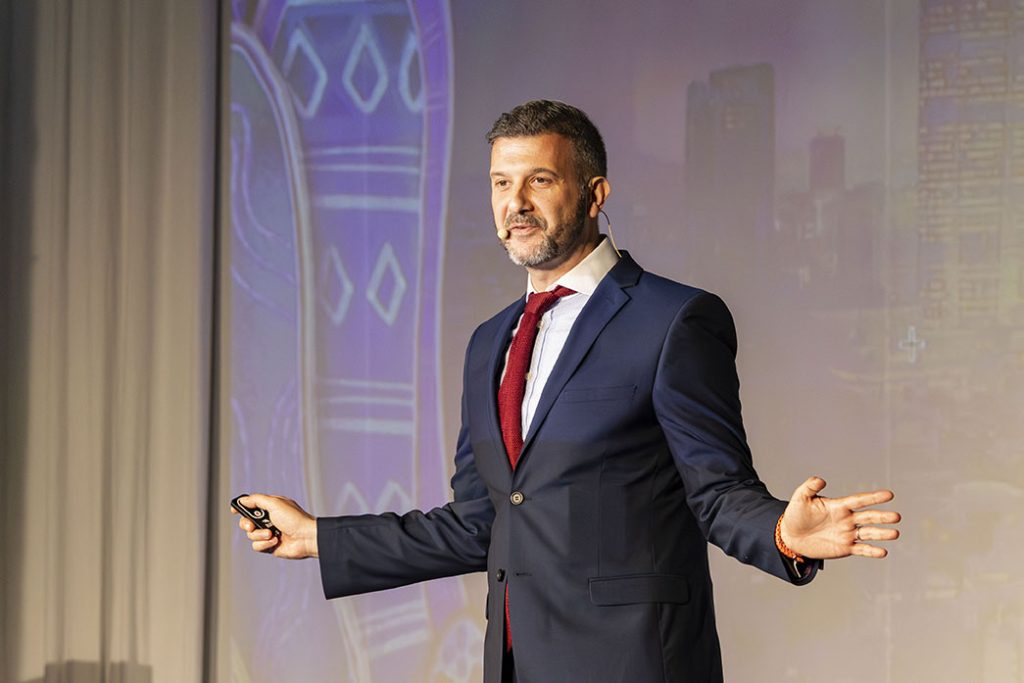
In reinforcing to us how massive and dynamic aviation is as an industry, OAG’s Filip Filipov had cited that one single flight delay cascades into 48 rotational adjustments, affecting 3,000 passengers.
The models are converging, he observed. OpenAI, Gemini, Anthropic, DeepSeek – their capabilities are approaching parity. When every model is equally powerful, the differentiator is not the model. It is the data, he said. “Real-time, verified, structured, grounded. Not generated, not stale, not siloed.”
Trip.com’s Amy Wei arrived at the same conclusion from the product side. Three years of TripGenie taught her one lesson above all others: “A grounded answer is more important than a fluent one.” An answer that confidently states the wrong cancellation policy is worse than no answer at all. In travel, hallucination is not a minor inconvenience. It costs real money and destroys real trips. “Fluency without grounding erodes trust rather than building it.”
The infrastructure conversation – who owns the data, who structures it for AI consumption, who builds the pipes that connect airline systems to hotel systems to ground transport to payment rails – is the most important conversation in travel right now.
3. Trust is the real currency. It always was.
The word appeared in almost every session.
WebBeds’ APAC president Brett Henry on B2B relationships – “I might not have the best content or the best pricing, but if you trust me to take care of your customers, you will give me your business.”
Klook’s CCO Wilfred Fan on creator networks – “Validation is needed. If that person’s taste matches yours, you trust the recommendation.”
HeyMax’s co-founder Joe Lu on loyalty – “People are loyal to programmes that build the highest trust, reduce the most friction.”
OAG’s Filip Filipov also called it out, saying, “Travelers don’t have a technology problem. They have a trust problem. We always find it really hard to trust a machine make choices, especially when we travel.”
This has a specific implication for the battle between global and local. The Korean mother trusts Naver Blog reviews written by Korean mothers before she trusts a global OTA’s star rating. The Indian family arriving in Japan trusts reviews from other Indians about which ryokans understand their dietary needs.
Trust is not one thing. It is contextual, cultural, layered – and the companies that understand its local texture will outperform those that assume a global product is a trusted one.

Trip.com’s Amy Wei said three years of TripGenie taught her one lesson above all others: “A grounded answer is more important than a fluent one. Fluency without grounding erodes trust rather than building it.”
4. The B2B layer is where the battle is actually being fought
What’s visible to travellers represent only the surface. The B2B infrastructure beneath them is where the competitive dynamics of the next decade will be determined – where the quiet power lies.
The B2B space in travel is growing at 18 to 25% annually in an industry growing at six to eight percent. The growth is explained by one structural shift: the number of entities that want to sell travel is expanding fast.
Banks, fintechs, super apps, loyalty programmes, credit card portals – everyone wants to be in the travel game. Grab wants to distribute travel. Revolut has a travel booking system. Sumitomo Mitsui Credit Card Company powers its travel proposition through HTS. Capital One, HSBC, Lloyds, all running travel platforms on B2B infrastructure they did not build themselves.
The data that powers these platforms is, critically, not free for AI to access. It sits behind API keys, inside warehouses, structured in proprietary formats. This is not a problem to be solved. It is a moat to be maintained and leveraged. The B2B players who own normalised, real-time, structured travel data will be indispensable to any AI agent that wants to book a real trip at a real price with real availability.
“AI platforms are just one more constituent that wants access to travel data,” said WebBeds’ Brett Henry. “We are the people who will provide that normalised data layer.”
Dida’s co-founder James Jin brought it down to earth when he said, “Most hotels are not even digital yet, let alone AI-ready.” The supply-side digitisation problem, after 30 years of online travel, remains stubbornly unsolved at scale. When asked what he would build if he could build one startup today, he said without hesitation: supply chain.
5. The experience economy is not a trend, it is the reason.
Tours, activities and experiences will reach $271 billion globally in 2025, projected to climb to $342 billion by 2029. Asia Pacific is the fastest-growing region. Wellness tourism will hit $1 trillion in 2026. Sports tourism is projected to grow by $701.6 billion between 2025 and 2029.
But the more important story is qualitative. Is the industry building the right products for the aspirational traveller in Asia?
JTB’s president and CEO, Eijiro Yamakita, said the shift had gone from seeing to experiencing, and he proposed a third stage – sensing. “We used to promote ‘you can experience this and this and this’ – very visible things. But now it’s feeling satisfied, feeling comfortable, sensing the world. That is the new experience.”
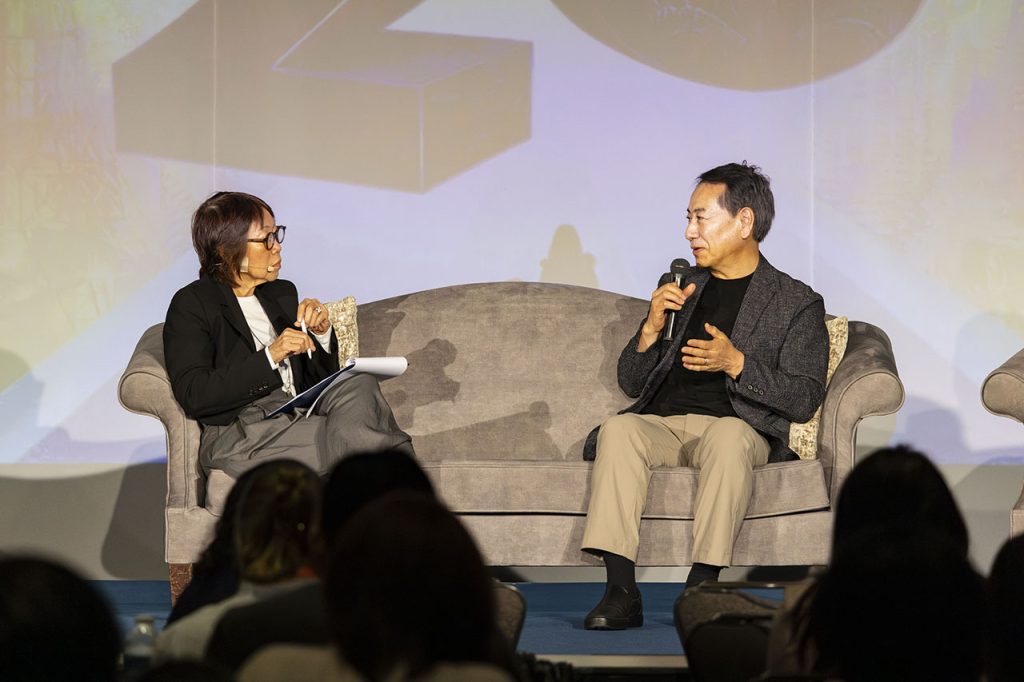
JTB’s president and CEO, Eijiro Yamakita, said the shift in travel had gone from seeing to experiencing, and he proposed a third stage – sensing.
Seek Sophie’s co-founder Jacinta Lim described the moment in Tanjung Putting, Kalimantan, Indonesia where orangutans played in the trees above her and “every single bit of me just came alive – this is what it means to be human.”
Trambellir’s So Iizuka, shaped by four intestinal surgeries, is building platforms to democratise access to health and wellness travel. Goldwin’s Takero Kaneda, who holds the trademark rights to North Face in Japan and Korea, speaks of scarcity – the private lake in Niseko that almost nobody knows about – as the foundation of value. The Luxe Nomad’s COO Patrick Ohtani describes guests who are “not coming for the room. They’re coming for the experience from the minute they land to the minute they leave.”
The throughline is consistent: accommodation is a small part of what luxury travelers are actually buying. The room is infrastructure, the experience is the reason. And the experience, at its best, cannot be manufactured. It has to be found, curated, connected – through local relationships, careful matching, and the kind of contextual intelligence that neither an OTA algorithm nor an AI agent has yet mastered.
Morris Sim, executive director of Montara Hospitality, which owns Trisara, the luxury resort in Phuket, said differentiation is even more critical today when everyone is doing the same thing and everything becomes beige.
For him, the difference between “curated” and “meaningful” lies in asking two questions – “Can this experience only happen here, and can procurement from another hotel copy this experience next week? If the answer is yes to the first and no to the second, then it’s meaningful.”
6. Japan is not a problem to be solved. It is a laboratory to be studied.
Japan offers more paradoxes than most, something that shone through in economist Jesper Koll’s presentation on “Destiny”.
It is the world’s most rapidly aging society and one of its most technologically sophisticated. Its population declines by nearly 3,000 people every day, and it is simultaneously the world’s largest creditor nation for the 41st consecutive year. It has the strictest hospitality quality standards on earth and some of the most technologically automated hotel experiences. It is deeply traditional in ways that make it frustratingly slow to work with, and wildly innovative in ways that produce 1,300 new non-alcoholic soft drinks every year, including sparkling mayonnaise.
Koll’s bullish case for Japan rested on three foundations. Scarcity – of labour, of time, of patience – is forcing the innovation that abundance never would. Geoeconomic repositioning is making Japan one of the world’s most trusted stable actors at precisely the moment when trust has become scarce globally. And soft power – Hello Kitty generating twice Disney’s annual revenue, manga and gaming and food capturing the imagination of every generation – is a structural demand driver for travel that compounds silently and continuously.
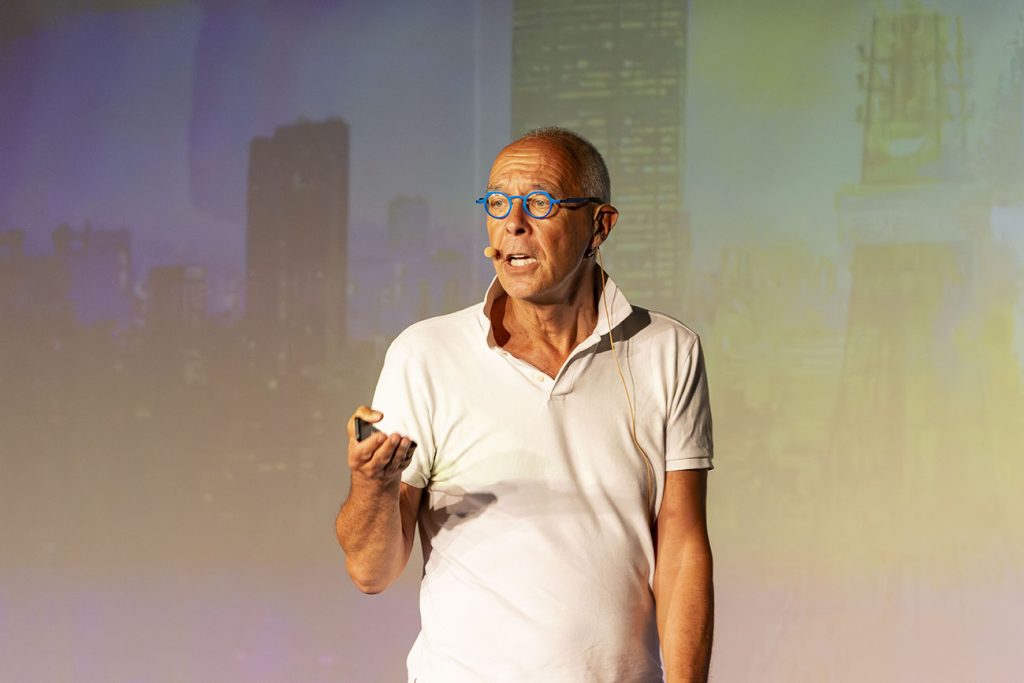
Jesper Koll’s bullish case for Japan rested on three foundations. Scarcity – of labour, of time, of patience – is forcing the innovation that abundance never would.
The corporate generational change is real and underreported. The average Japanese CEO exits at 69 and is replaced at 51. Starting salaries are rising 40% at leading companies competing for young talent. Mid-career hiring by listed companies exceeded graduate intake for the first time in post-war history. The rigidity is softening. The walls are coming down, not dramatically, not overnight, but structurally and irreversibly.
Veltra’s chief transformation officer, Mayumi Nakamura Birt, back in Japan after two decades running a SaaS company in the US, described a country on the edge of something. The pain of labour scarcity, demographic pressure and technology disruption is reaching the threshold that historically forces Japan to change.
“When the pain gets too much, that is when you move.” She drew the analogy of Commodore Perry’s black ships in the 1850s – the external shock that forced open a society that had been closed. “Japan can be very creative in showing the rest of the world how to manage all these challenges.”
The demographic burden, properly understood, is an inadvertent innovation lab and the solutions it produces could be exportable to every developed economy facing the same curve in the decade ahead.
7. The tourism redistribution imperative is real, urgent and largely unsolved.
Forty-two million visitors to Japan in 2025. Eighty percent of Korean tourists still only visiting Tokyo. A cherry blossom festival near Mount Fuji cancelled because the crowds became unmanageable. Niseko land prices up 70% in five years. The restaurant capacity in rural onsen towns overwhelmed while accommodation sits empty.
The conference was clear-eyed about the problem and honest about the difficulty of the solution. Overcrowding is not overtourism – the word that Ascent Partners’ Mike Birt argued should be retired from the travel lexicon.
Japan at 42 million visitors is receiving two-thirds of what France and Spain receive. Orlando alone receives 75 million visitors per year, from a single city. The problem is not the number of visitors. It is where they go, when they go, and whether the infrastructure and community relationships are ready to receive them with dignity.
Catalunya Tourism Board’s APAC director Raul Guerra talked about the shift his destination is undergoing and the new framework it is adopting: stop counting arrivals, start counting the concentration of arrivals. Stop thinking by markets, start thinking by mindsets. Match visitor psychology to destination character rather than pushing the same travelers to different postcodes. Measure success by resident sentiment, not by room nights.
Catalunya has built a quadrant of visitor mindsets it wants to attract – and a parallel quadrant of mindsets it quietly declines to market to. Not by saying “you are not welcome,” as Amsterdam has done, but by simply not building the marketing pathways that would bring the wrong match, he said.
Airbnb’s Japan director Atsuo Mori noted 30% growth in rural area listings and 20% growth in stays outside major cities – the market redistributing itself, partly. EY’s Tomotaka Hirabayashi’s data showed that repeat visitors distribute themselves significantly more widely than first-timers, and that the distribution gap between first and fourth-plus visits is substantial and growing.
The implication is clear: marketing Japan to first-time visitors and directing them to Tokyo is the least efficient use of marketing budget from a redistribution standpoint. The best candidates for regional dispersal are the repeat visitors who already trust the destination and are ready to go deeper.
Mike Harris of Canyons, who lives and works in rural Japan, offered the most practical advice for government: stop designing redistribution programmes with six-month delivery timelines. “The first year should be all about planning – community-based sustainability planning, getting the right people involved.”
Redistribution is not a campaign, he said. It is structural change in communities that have operated a certain way for generations. It takes longer than a fiscal year, and the government grant cycle that demands completion by February having started in August is, he said plainly, how well-intentioned initiatives fail.
Klook’s CCO Wilfred Fan put the distribution challenge plainly when he spoke about using social to influence and disperse visitors: “What goes viral and what doesn’t go viral is beyond anyone’s control. But we want to make sure that places that are less explored, undervisited, get the chance.”
He shared a case study. More than 100 creators, from Klook Kreator’s 30,000 strong network, activated for a three-day campaign in Hiroshima, generated 35 million impressions and a 1,200% increase in bookings for a locally developed travel pass. Social, used intentionally, with destination readiness confirmed in advance, can redistribute demand.
But it requires investment, continuity, and a clear-eyed understanding that the spike lasts about a month before it needs to be renewed.
Klook’s CCO Wilfred Fan put the distribution challenge plainly when he spoke about using social to influence and disperse visitors: “What goes viral and what doesn’t go viral is beyond anyone’s control. But we want to make sure that places that are less explored, undervisited, get the chance.”
8. The front line is still human – for now
Across every session, in every format, the same tension surfaced: the efficiency case for AI is overwhelming, the trust case for humans is resilient, and the industry is somewhere in the middle, trying to figure out how to honour both.
Scoot’s Hidetoshi Yasutake: “AI is for speed decisions. Human is for trust – especially for edge cases, flight disruptions, weather, emotional travellers.”
Trip.com’s Amy Wei: “More automation does not mean less accountability.”
JTB’s Eijiro Yamakita: “The combination of omotenashi as a human philosophy and AI technology is a powerful one – AI will help Japanese people communicate more logically and express themselves better, and will enhance omotenashi, not detract from it.”
Kyohei Yamamoto, third generation ryokan owner, Beniayu echoed it: “I think AI will become a big turning point for Japanese ryokan. Of course, using AI for marketing is important, but I also realized that we should use AI to share the unique charm and special characteristics of Japanese ryokan with more people around the world.”
Montara’s Morris Sim made this observation – he noted that luxury hospitality’s problem is not that it is getting things wrong, it is that it is getting things right, but all in the same way.
“When you are flawless all the time, you become very forgettable.” The IQ – the competence to deliver excellent service – is widespread. The EQ – the warmth, the care, the sense that someone at this hotel actually sees you – is the scarce resource. And it is, for now, irreducibly human.”
Koll urged: “Optimise your processes, embrace AI – but never ever lose track of the key issue: how do you motivate your team to provide the best customer service? Walk into a 7-Eleven in Japan. Look at the egg sandwich. Someone thought about that. Someone cared. That caring, multiplied across an economy, across an industry, across a hundred years of accumulated hospitality wisdom, is what no algorithm has yet learned to replicate.”
9. But, is love and care limited to humans?
But is love or care limited to humans? Can machines love and care back? Silicon Valley “prophet” Stewart Brand, in a podcast with New York Times’ Ezra Klein, expressing a level of disenchantment with AI in its current state, had said that perhaps it is time AI gives us something that cares back.
Well, perhaps he should have attended WiT Japan because he would then have met Japan’s love robots, LOVOT, two of whom came on stage during the interview between new LOVOT owner, Aya Aso, and LOVOT’s product designer, Kota Nezu.

“Technology can be warm,” said Kota Nezu (right). “I wanted to make something that moves hearts.”
Asked the inspiration behind this “companion” robot, he said that he wanted to use technology to make people happy, then he also had to design a product that people could hold and cuddle in their arms and feel its warmth and (almost) a heartbeat.
“Technology can be warm,” he said. “I wanted to make something that moves hearts.”
According to Nezu, each LOVOT is held and cuddled for an average of one hour a day by its 18,000 owners, and it has a retention rate after three years.
To him, LOVOT and travel do pretty much the same thing – it takes away loneliness, gives you companionship when you want it, and gives you love – even better than human love actually, it is unconditional. All you have to do is charge it.
Japan, the place where you treasure the past but you also see the future clearly.